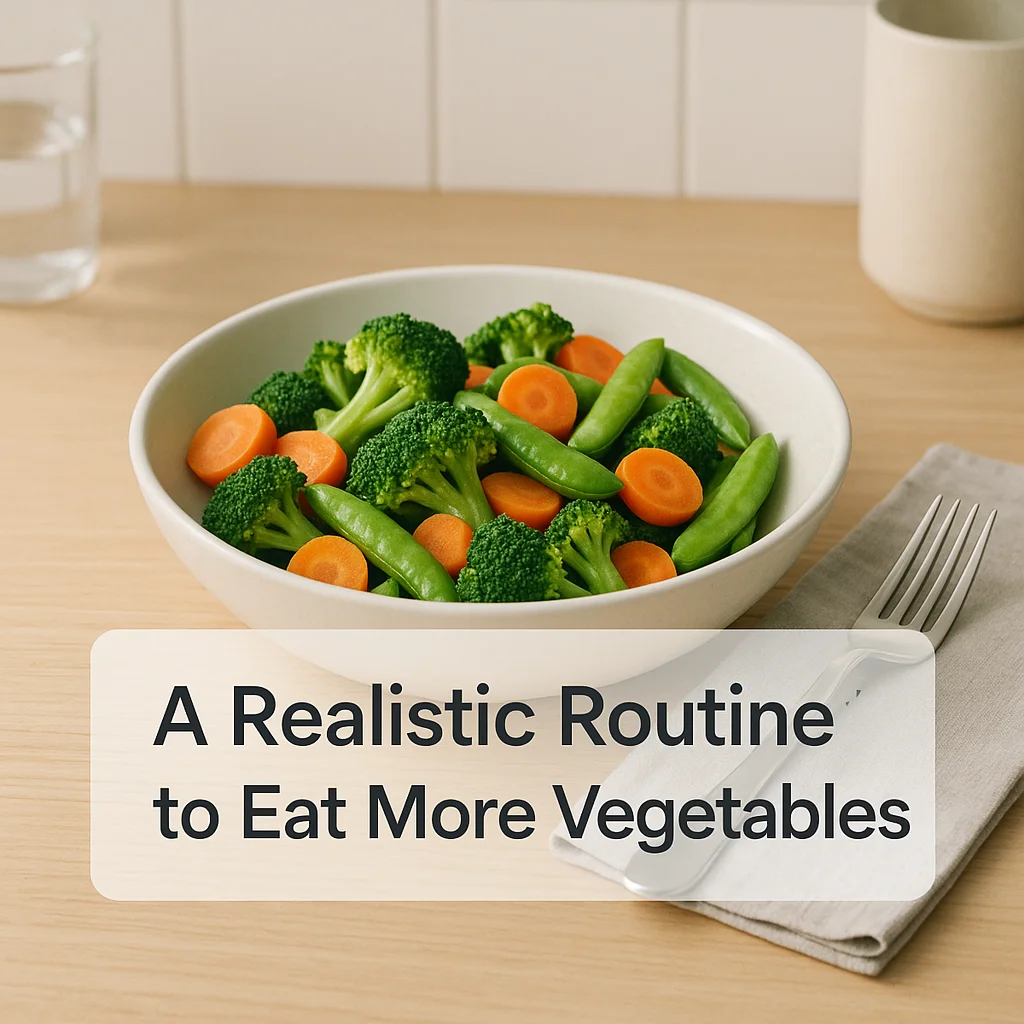
🥗 A Realistic Routine to Eat More Vegetables
✅ Key Takeaway
Incorporating more vegetables into your diet can enhance your overall health by providing essential nutrients, fiber, and antioxidants. The best approach is to integrate them gradually and consistently into your daily meals, ensuring a diverse intake of different types and colors.
- Good for: Most people looking for better nutrition.
- Be cautious: Those with certain digestive issues should consult healthcare providers.
- Best simple way: Start small by adding a serving of vegetables to one meal a day.
- Biggest mistake: Overcomplicating meal preparation, leading to burnout.
- Next step: Plan your meals to include a vegetable-based dish once a week.
🧠 Why This Matters
Vegetables are packed with vitamins, minerals, and fiber that support various bodily functions, including energy production, digestion, and immune defense. Many people struggle with including enough vegetables in their diet due to time constraints, lack of culinary skills, or simply not prioritizing them. Creating a routine to incorporate vegetables can help improve energy levels and support long-term health.
🔬 What the Science Says
Vegetables are a key part of a balanced diet, offering nutrients like vitamins A, C, and K, as well as potassium and fiber. Fiber aids in digestion and can prevent constipation, while the variety of vitamins and minerals supports immune function and skin health. Consumption of vegetables is linked to a lower risk of certain chronic diseases; however, the degree of impact can vary based on individual dietary needs and overall lifestyle.
⚖️ Benefits vs Downsides
- Benefits:
- Rich in essential nutrients.
- High in dietary fiber.
- May lower the risk of chronic diseases.
- Supports digestive health.
- Contributes to satiety and weight management.
- Downsides/Cautions:
- May cause digestive discomfort for some.
- Allergies to specific vegetables.
- Potential pesticide exposure if not organic.
- Storage and freshness can be challenging.
🎯 The Best Way to Apply This
- Start your day with a veggie-packed smoothie or omelet.
- Include a salad or vegetable soup at lunch.
- Make vegetables the main part of your dinner plate.
- Snack on raw veggies with hummus or a yogurt dip.
- Experiment with different cooking methods like roasting or grilling to enhance flavors.
⏰ Timing, Portions, and Frequency
Aim to include vegetables in each of your main meals. A convenient serving could be a small bowl of salad, a handful of baby carrots, or a palm-sized portion of steamed vegetables. Frequent, smaller servings spread throughout the day can be more manageable and enjoyable than larger servings all at once.
🤝 Best & Worst Pairings (Food Combos)
- Pairs well with:
- Lean proteins like chicken or tofu.
- Whole grains such as quinoa or brown rice.
- Healthy fats like olive oil and nuts.
- Be careful combining with:
- Heavy dressings that add excessive calories.
- Excessive spices if you have a sensitive stomach.
- Dairy, if lactose intolerant, unless you opt for lactose-free options.
🚦Who Should Be Careful
- Those with digestive disorders like IBS should introduce vegetables slowly to avoid triggering symptoms.
- Individuals with allergies to certain vegetables need to be mindful of what they consume.
- Anybody on medications that affect digestion or nutrient absorption should discuss dietary changes with a healthcare provider.
- If unsure, ask a pharmacist/clinician.
🧩 Common Mistakes and Fixes
- Buying more vegetables than can be consumed → Plan meals and purchase appropriately to avoid waste.
- Not prepping vegetables in advance → Wash and cut them as soon as you buy them for quick use.
- Sticking to the same vegetables → Try different kinds each week for variety.
- Overcooking vegetables → Steam lightly to retain nutrients.
- Ignoring fresh herbs and spices → Use these to enhance the flavor without additional calories.
- Relying only on raw veggies → Combine cooking methods for better taste and texture.
- Using too much dressing → Opt for simple olive oil and vinegar dressings.
- Easily getting bored → Look for new recipes regularly to keep meals exciting.
📋 Quick Checklist
- Add a handful of spinach to your morning smoothie or omelet.
- Keep pre-cut veggies in your fridge for easy snacks.
- Include a side salad with lunch most days.
- Try a new vegetable each month.
- Experiment with stir-frying vegetables with a little olive oil.
- Use vegetables as a main dish base, like zucchini noodles.
- Freeze leftover vegetables for later use in soups or stews.
- Grow your own herbs for fresh flavor enhancements.
- Incorporate vegetable-based soups or stews weekly.
- Pack carrot or celery sticks for an on-the-go snack.
📌 Summary
- Create a habit of including vegetables with every meal for better health.
- Start with small, manageable steps to add more vegetables into your diet.
- Be aware of issues if you have digestive problems or allergies.
- Best method: Gradual integration into meals.
- Pay attention to freshness and storage to minimize waste.
- Use herbs and spices to keep flavors interesting.
- If buying fresh is challenging, frozen vegetables are a nutritious alternative.
- Avoid heavy dressings to keep calories in check.
- Adjust portions based on personal preferences and nutritional goals.