🥗 Calcium + Iron: Why Taking Them Together Can Backfire
✅ Key Takeaway
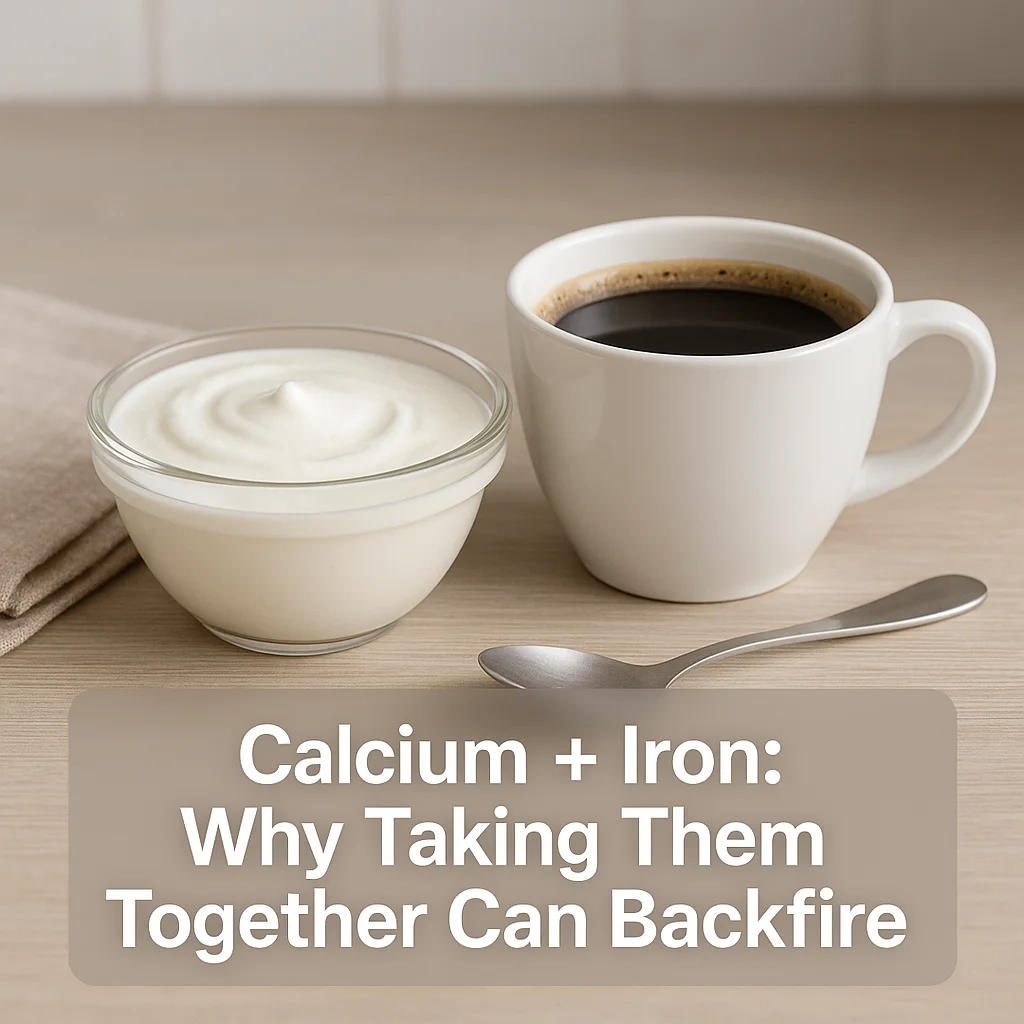
Taking calcium and iron together can inhibit the absorption of both minerals, which could compromise the benefits you seek from each. To maximize their efficacy, it's often better to take them separately during the day.
- Good for those looking to improve bone and blood health separately.
- Caution for those with specific deficiencies or absorption issues.
- Best practice is to space doses a few hours apart.
- Biggest mistake: taking them together thinking it saves time.
- Next step: Check your supplement regimen to separate calcium and iron.
🧠 Why This Matters
The effective absorption of minerals like calcium and iron is crucial for maintaining strong bones, healthy muscles, and preventing anemia. Many people unknowingly take these supplements together, thinking they'll boost their overall nutrient intake, only to find out they might not be getting the full benefits. Understanding how these minerals interact can improve energy levels, reduce fatigue, and provide overall better health outcomes.
🔬 What the Science Says
Calcium and iron both require certain conditions for optimal absorption. Calcium needs an acidic environment, which is prevalent when taken with meals. Iron, especially in supplemental forms, is best absorbed on an empty stomach in the presence of vitamin C. When taken together, calcium competes with iron for absorption in the intestine, often leading to reduced uptake of both minerals. While some studies show variable results, most agree on the antagonistic interaction.
⚖️ Benefits vs Downsides
- Benefit: Calcium strengthens bones.
- Benefit: Iron supports red blood cell production.
- Benefit: Separate intake can enhance individual absorption.
- Benefit: Potentially reduces fatigue from better nutrient uptake.
- Downside: Combined intake may impair absorption.
- Downside: Mismanagement could lead to deficiencies.
- Downside: Requires mindful scheduling of supplements.
- Downside: Possible digestive discomfort if taken improperly.
🎯 The Best Way to Apply This
- Take iron supplements on an empty stomach, ideally with vitamin C-rich foods like oranges.
- Take calcium supplements with meals to aid absorption through dietary factors.
- Space supplements a few hours apart to ensure optimal uptake.
- Monitor your dietary intake to complement your supplement schedule.
⏰ Timing, Portions, and Frequency
Iron supplements are best taken in the morning on an empty stomach with a small glass of orange juice. Calcium is well-absorbed when taken with meals, so a serving with lunch or dinner is beneficial. It's important to separate the timing by at least two hours. For parts, rely on visual cues like 'a small bowl' for calcium-rich foods and 'a handful' for iron-rich nuts or seeds.
🤝 Best & Worst Pairings (Food Combos)
- Pairs well with:
- Iron with vitamin C-rich foods like kiwi, berries, or red peppers.
- Calcium with lactose-free milk or dairy options.
- Leafy greens alongside both nutrients since they usually contain non-heme iron.
- Be careful combining with:
- Calcium with tea or coffee immediately, which may inhibit absorption.
- Iron with dairy since calcium and dairy can bind the iron.
- High-fiber foods with iron that can slow absorption rate.
🚦Who Should Be Careful
Those with digestive issues or conditions such as Crohn's disease may need individualized advice on taking minerals. Pregnant individuals or those on medications impacting nutrient absorption should be cautious. People with known mineral imbalances should consult with a clinician to tailor their intake.
🧩 Common Mistakes and Fixes
- Mistake: Taking both supplements together.
- Fix: Separate into different times of the day.
- Mistake: Taking iron with dairy or calcium-rich foods.
- Fix: Pair with vitamin C-rich foods instead.
- Mistake: Not monitoring dietary iron and calcium.
- Fix: Keep track of your daily food intake, and supplement as needed.
- Mistake: Ignoring gut-related symptoms.
- Fix: Check supplement dosages and consult a professional if issues persist.
📋 Quick Checklist
- Separate calcium and iron intake by at least two hours.
- Take iron with vitamin C-rich food or drink on an empty stomach.
- Take calcium with meals for better absorption.
- Check if current medications affect these minerals.
- Monitor both dietary and supplemental sources.
- Discuss concerns with a clinician if you have any pre-existing conditions.
- Incorporate leafy greens for a natural intake boost.
- Avoid coffee/tea with calcium supplements.
- Ensure a nutrient-diverse diet daily.
- Drink plenty of water to aid digestion and absorption.
📌 Summary
- Avoid taking calcium and iron together for better absorption.
- Optimize intake by timing supplements separately.
- Great for those aiming for balanced bone and blood health.
- Potential downsides include impaired absorption and digestive discomfort.
- Best practice involves consulting a clinician when unsure.
- Simple habit: separate supplements by a couple of hours.