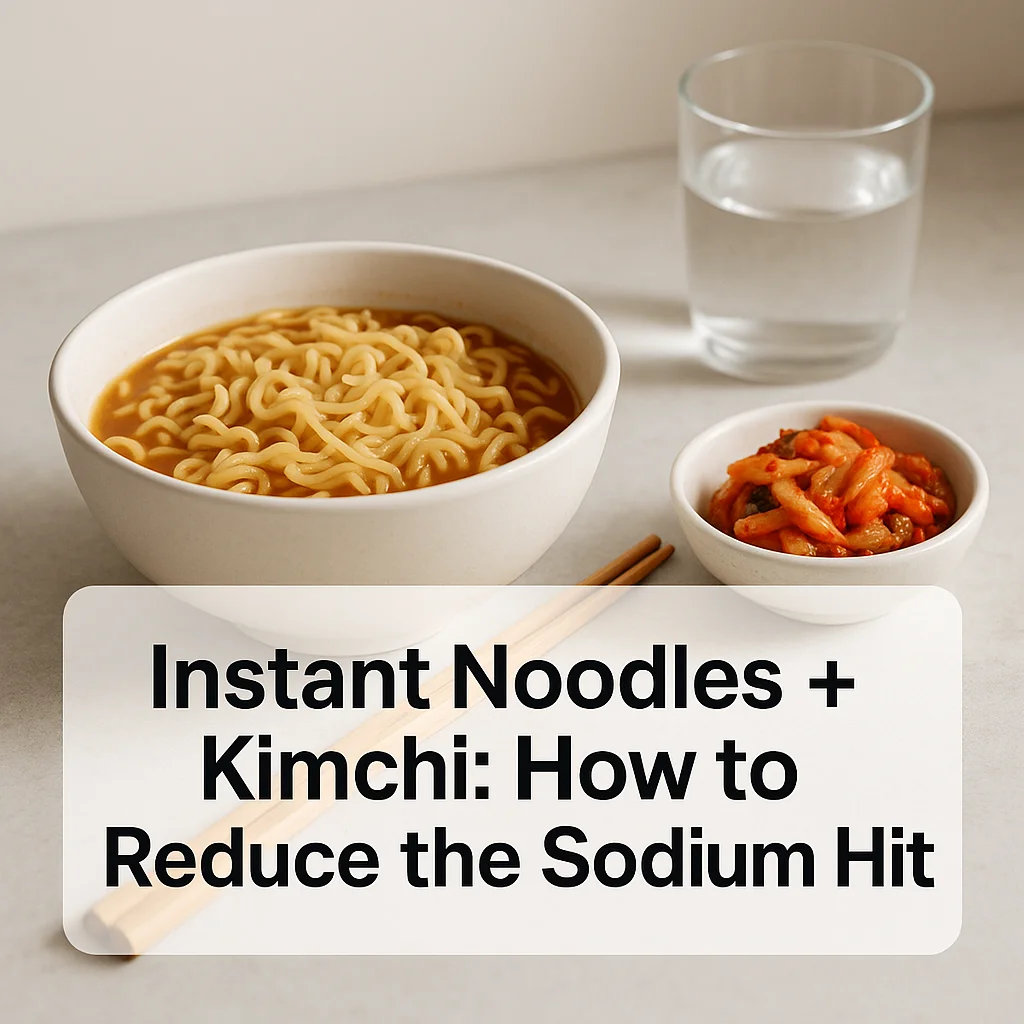
🥗 Instant Noodles + Kimchi: How to Reduce the Sodium Hit
✅ Key Takeaway
Instant noodles paired with kimchi can be a tasty, convenient meal, but the sodium content can be high. Reducing the sodium hit involves choosing low-sodium options, adding fresh ingredients, and portion control.
- 👍 Good For: Those seeking a quick and flavorful meal
- ⚠️ Be Cautious: Individuals with hypertension or sodium sensitivity
- 👨🍳 Best Simple Way: Use half the seasoning packet and add fresh veggies
- ❌ Biggest Mistake: Using all the seasoning powder without consideration
- ➡️ Next Step: Try swapping regular noodles for a low-sodium variant
🧠 Why This Matters
For many, instant noodles with kimchi offer a quick fix for hunger and a burst of flavor. However, the sodium content can contribute to excessive daily intake, which is associated with health concerns such as high blood pressure. Addressing this can enhance dietary balance without sacrificing convenience.
🔬 What the Science Says
Sodium is a necessary mineral in diets, crucial for nerve and muscle function. However, excessive sodium intake can lead to health risks, particularly affecting cardiovascular health. The body systems that regulate blood pressure can be challenged by too much sodium, and this is why moderating sodium intake is advisable. For the sodium-sensitive individuals, reducing sodium in meals like instant noodles can help maintain better overall health.
⚖️ Benefits vs Downsides
- 🥦 Benefit: Quick and easy to prepare
- 🍽️ Benefit: Versatile with various add-ins
- 👍 Benefit: Satisfies cravings for savory flavors
- 🍜 Benefit: Portable and shelf-stable for emergencies
- 😋 Benefit: Pairs well with nutrient-rich additions
- 🤔 Benefit: Can introduce variety into meals
- 🧂 Downside: High sodium content can impact health negatively
- 🍢 Downside: Often low in essential nutrients
- ⚠️ Downside: Can promote overconsumption of salt
- ⏳ Downside: May contribute to long-term health issues if consumed frequently
- 💧 Downside: Potentially dehydrating, requiring additional water intake
🎯 The Best Way to Apply This
- 1. Choose low-sodium instant noodle options available at many stores.
- 2. Use only part of the seasoning packet provided.
- 3. Add fresh or steamed vegetables to increase fiber and nutrients.
- 4. Balance the meal with protein sources like eggs or tofu.
- 5. Use kimchi sparingly or choose low-sodium varieties.
⏰ Timing, Portions, and Frequency
Enjoy instant noodles as an occasional quick meal rather than a daily staple. Consider consuming with meals to balance sodium with other food components. A serving size should be approximately one small bowl, and be attentive to hunger and fullness cues.
🤝 Best & Worst Pairings (Food Combos)
Pairs well with:
- 🥚 Eggs (boiled or poached)
- 🥬 Leafy greens like spinach or bok choy
- 🥑 Avocado for healthy fats
- 🍗 Grilled chicken or tofu for protein
Be careful combining with:
- 🍟 Processed snacks with added salt
- 🥓 Salty cured meats
- 🥤 Sugary drinks which can mask sodium intake
🚦Who Should Be Careful
- 💊 Those with hypertension or cardiovascular concerns
- 🚰 Individuals with sodium-sensitive conditions
- 👶 Young children needing lower sodium intake
- 📈 People monitoring their weight and water retention
- If unsure, ask a pharmacist/clinician.
🧩 Common Mistakes and Fixes
- Mistake: Using all the seasoning → Fix: Use half or find low-sodium options
- Mistake: Skipping added vegetables → Fix: Add fresh or frozen veggies
- Mistake: Ignoring portion sizes → Fix: Stick to one small bowl
- Mistake: Eating frequently → Fix: Treat as an occasional meal
- Mistake: Overlooking hydration → Fix: Drink water alongside the meal
- Mistake: Not balancing flavors → Fix: Use herbs or spices for flavor enhancement
- Mistake: Eating too quickly → Fix: Practice mindful eating
📋 Quick Checklist
- Check for low-sodium noodle options
- Use only part of the seasoning packet
- Add a variety of fresh vegetables
- Incorporate lean proteins like tofu or chicken
- Balance with hydration by drinking water
- Adjust serving sizes as necessary
- Monitor sodium intake from other food sources
- Try adding natural herbs for extra flavor
- Limit consumption to occasional meals
- Combine with low-sodium kimchi if possible
- Practice mindful eating to avoid overeating
📌 Summary
- Direct answer: Yes, you can reduce sodium by using less seasoning and adding fresh ingredients.
- Best method: Combine low-sodium noodles with vegetables and a portion-controlled packet of seasoning.
- Key cautions: Watch sodium intake if hypertensive.
- Easiest habit to start today: Use half the seasoning packet and add fresh vegetables.
- Aim for balance by including protein and monitoring portion sizes.
- Be mindful of overall daily sodium consumption.
- Explore natural ways to enhance flavor without added salt.
- Opt for occasional indulgence rather than a regular diet staple.