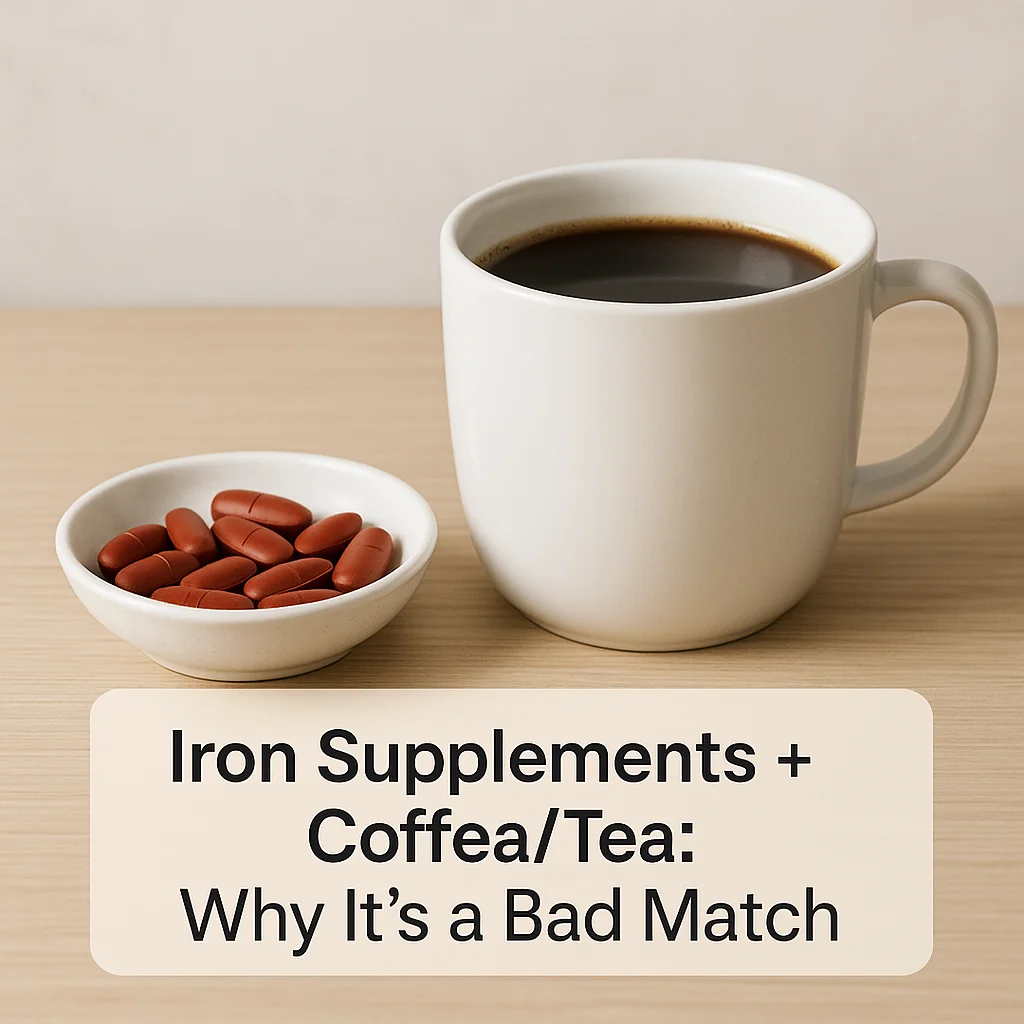
🥗 Iron Supplements + Coffee/Tea: Why It’s a Bad Match
✅ Key Takeaway
In most cases, combining iron supplements with coffee or tea is not recommended because these drinks can impair iron absorption. The caffeine and polyphenols present in coffee and tea bind iron, reducing how much your body can absorb.
- 💪 Good for: People needing iron supplementation but can time their consumption carefully.
- ⚠️ Be cautious if: You have iron deficiency or anemia, as absorption is crucial.
- 🍵 Best way: Drink coffee or tea either two hours before or after taking iron supplements.
- 🚫 Common mistake: Taking iron supplements with morning coffee or tea.
- 🗓 Next step: Plan supplement intake around meals and drinks strategically.
🧠 Why This Matters
Iron is a crucial nutrient that plays a key role in oxygen transport, energy production, and overall metabolism. Many people rely on coffee or tea for a caffeine boost to enhance daily energy and performance. However, if you're also taking iron supplements, how you time your coffee or tea consumption can significantly impact how effective those supplements are. This becomes especially important for individuals with iron deficiency anemia, where every bit of absorbed iron counts.
🔬 What the Science Says
Scientific evidence indicates that certain compounds in coffee and tea, especially tannins and caffeine, can hinder non-heme iron absorption. Non-heme iron, often found in plant-based foods and supplements, is less easily absorbed than heme iron from animal foods. When coffee or tea is consumed close to the time you take an iron supplement, these compounds can form insoluble complexes with iron, decreasing its bioavailability. While not everyone may be heavily impacted, those with iron deficiencies or specific dietary needs should pay attention to this interaction.
⚖️ Benefits vs Downsides
- ✅ Potential enhanced alertness and focus from caffeine.
- ✅ Cultural and social enjoyment of drinking coffee or tea.
- ✅ Antioxidants from coffee and tea may promote overall health.
- ✅ Iron supplements support necessary body functions when dietary intake is insufficient.
- ❌ Loss of iron absorption can exacerbate or fail to improve iron deficiency.
- ❌ Combining may lead to ineffective supplement use without improving energy levels.
- ❌ Risk of digestive distress if taken with coffee or tea.
- ❌ Over-reliance on timing without addressing dietary iron intake.
🎯 The Best Way to Apply This
- 1. Take iron supplements on an empty stomach for optimal absorption.
- 2. Wait at least two hours before or after drinking coffee or tea.
- 3. Pair supplements with sources of vitamin C to enhance absorption.
- 4. Set specific times for coffee/tea outside of supplement routines.
- 5. Monitor energy levels and consult healthcare providers for personalized advice.
⏰ Timing, Portions, and Frequency
The best timing for taking iron supplements is usually on an empty stomach to maximize absorption. Avoid coffee or tea around the time you take the supplement. Instead, space your coffee or tea consumption at least two hours before or after taking your iron supplement. This not only promotes better absorption of iron but also reduces potential digestive discomfort.
🤝 Best & Worst Pairings (Food Combos)
- Pairs well with: Citrus fruits, bell peppers, broccoli.
- Pairs well with: Iron-rich foods like spinach, legumes, and red meat (heme iron).
- Be careful combining with: Milk or calcium supplements, which can block iron.
- Be careful combining with: High-fiber foods immediately taken with iron, as fiber can bind iron.
- Be careful combining with: Coffee, tea, and certain herbs with tannins.
🚦Who Should Be Careful
- Individuals with diagnosed iron deficiency or anemia.
- Those who rely heavily on plant-based diets for iron intake.
- People who are caffeine-sensitive.
- Individuals on medications or supplements that may interact.
- If unsure, ask a pharmacist/clinician for personalized advice.
🧩 Common Mistakes and Fixes
- Mistake: Taking supplements with morning coffee. Fix: Take on an empty stomach and wait.
- Mistake: Rushing iron intake without planning. Fix: Set a routine that avoids conflicts.
- Mistake: Ignoring vitamin C benefits. Fix: Add a source of vitamin C when you take iron.
- Mistake: Taking with calcium-rich breakfast. Fix: Space out calcium and iron intake.
- Mistake: Assuming all iron is the same. Fix: Learn the difference between heme and non-heme iron.
- Mistake: Not considering overall diet. Fix: Ensure diverse sources of iron in your meal plan.
- Mistake: Using coffee or tea as water for pills. Fix: Use plain water or a vitamin C drink.
📋 Quick Checklist
- Plan your supplement schedule away from coffee/tea.
- Choose vitamin C-rich foods to enhance absorption.
- Avoid taking supplements with milk or calcium.
- Set reminders to manage timing effectively.
- Consider heme vs non-heme iron impact.
- Be mindful of total caffeine intake throughout the day.
- Monitor how your body feels after changing your routine.
- Customize the approach based on personal needs and dietary habits.
- Read labels and discuss with a healthcare provider for advice.
- Never assume more is better without professional guidance.
📌 Summary
- Avoid coffee/tea close to iron supplement intake for better absorption.
- Best method: Wait two hours between supplements and caffeine drinks.
- Caution: People with iron deficiencies should be particularly attentive.
- Simple start: Plan and space out your iron supplement routine effectively today.
- Enhance absorption by pairing with vitamin C-rich foods.
- Maintain an overall balanced and varied diet for iron sources.
- Avoid taking iron supplements alongside calcium-rich foods or drinks.
- Adjust your routine based on how your body responds and professional advice.
- Awareness of heme vs non-heme iron can aid in dietary planning.
- Digestible approach: Stay informed and mindful rather than overwhelmed.