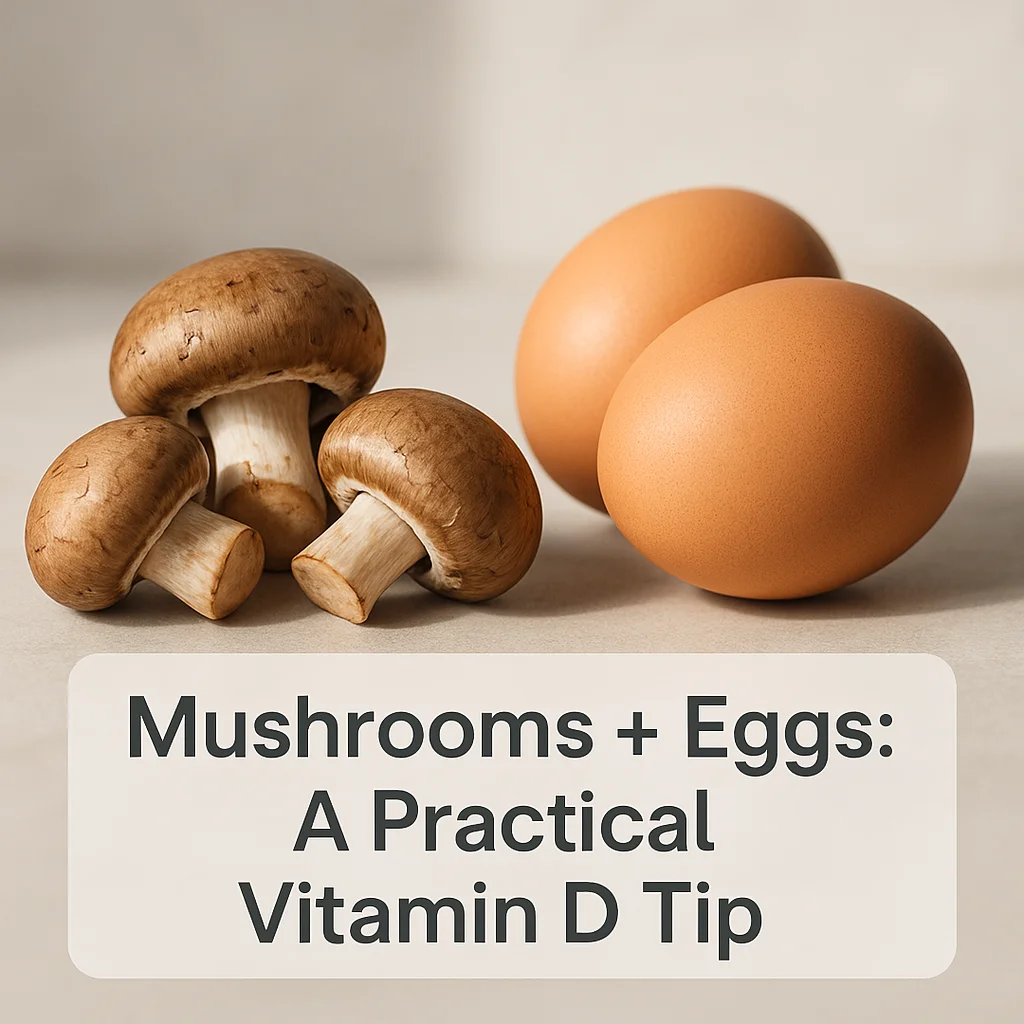
🥗 Mushrooms + Eggs: A Practical Vitamin D Tip
✅ Key Takeaway
In most cases, combining mushrooms and eggs can be a practical way to boost your Vitamin D intake. This combination is particularly useful for individuals who may not get sufficient sunlight exposure or have limited dietary sources of Vitamin D.
- Good for: Those with limited sun exposure or dietary Vitamin D
- Be cautious: Individuals with food allergies to eggs or mushrooms
- Best simple way: Cook mushrooms with eggs in a morning scramble
- Biggest mistake: Overcooking the mushrooms, which can degrade Vitamin D
- Next step: Try a mushroom and egg breakfast this week
🧠 Why This Matters
Many people worldwide face challenges in maintaining adequate Vitamin D levels, especially if they have low sun exposure or follow a diet lacking in Vitamin D-rich foods. This deficiency can influence various aspects of health, including bone strength and immune function. Finding food-based solutions can help bridge this nutritional gap efficiently and deliciously.
🔬 What the Science Says
Vitamin D is crucial for maintaining healthy bones and immune function. Mushrooms can naturally contain ergosterol, a precursor to Vitamin D2, which transforms into Vitamin D when exposed to sunlight or ultraviolet light. Eggs, particularly their yolks, also offer some Vitamin D. When combined, they form a nutritious duo that supports maintaining adequate Vitamin D levels, especially when obtained from mushrooms exposed to light.
⚖️ Benefits vs Downsides
- Benefits:
- Improved Vitamin D intake from a natural source
- Supports bone health
- Boosts immune system efficiency
- Provides a protein-rich meal
- Downsides:
- Potential allergies to eggs or mushrooms
- Overcooking can reduce nutrient content
- May not meet total daily Vitamin D needs alone
- Variability in Vitamin D content of mushrooms
🎯 The Best Way to Apply This
- Select fresh mushrooms, preferably those processed with UV light
- Wash and slice mushrooms before cooking
- Beat the eggs and set aside
- Sauté mushrooms in a light oil until just cooked
- Add eggs to the pan, cooking until desired firmness is attained
- Season with herbs and spices to taste
⏰ Timing, Portions, and Frequency
Enjoy mushrooms and eggs for breakfast or brunch for optimal nutrient absorption early in the day. Aim for a portion size that fits within your palm, ensuring a balance of nutrients without overconsumption. Frequent incorporation into meals can support steady Vitamin D levels, but they should be part of a varied diet.
🤝 Best & Worst Pairings (Food Combos)
- Pairs well with:
- Spinach for added iron and magnesium
- Whole grain toast for fiber and sustained energy
- Fresh fruit for vitamins and antioxidants
- Be careful combining with:
- High-fat meats that may overpower flavors
- Highly processed carbs, which may reduce nutritional benefit
- Salty foods that could increase sodium intake unduly
🚦Who Should Be Careful
- Individuals with egg or mushroom allergies
- Those with kidney problems due to potential phosphorous load
- People on specific medications that interact with Vitamin D
- If unsure, ask a pharmacist/clinician
🧩 Common Mistakes and Fixes
- Overcooking mushrooms → Cook lightly to preserve nutrients
- Ignoring seasoning → Add herbs for flavor enhancement
- Using old mushrooms → Choose fresh for best results
- Skipping yolks for lower cholesterol → Moderate yolk intake is beneficial
- Reusing cooking oil → Use fresh oil to maintain healthiness
- Pairing with sugary sides → Opt for nutrient-rich sides
- Sourcing non-UV mushrooms → Look for UV-processed varieties
- Skipping divers meals → Balance diet with various foods for full nutrition
📋 Quick Checklist
- Choose fresh, UV-processed mushrooms
- Store mushrooms in a cool, dry place
- Wash and slice mushrooms before cooking
- Pair with eggs for a Vitamin D boost
- Sauté mushrooms, avoid overcooking
- Add herbs and spices for taste
- Incorporate into breakfast for best results
- Ensure portion control with a palm-sized portion
- Avoid overly processed pairings
- Rotate with other Vitamin D-rich foods
- Stay aware of potential allergies
- Consult a clinician if on medication
- Monitor dietary balance
- Repeat regularly for ongoing benefits
📌 Summary
- Mushrooms and eggs can boost Vitamin D intake effectively
- Suitable for those with limited sun exposure
- Cook lightly to preserve nutrients
- Consult healthcare when using alongside medications
- Choose UV-exposed mushrooms
- Pair with nutrient-rich sides for a balanced meal
- Enjoy as a part of varied diet
- Fix common cooking mistakes for optimal results
- Aim for a breakfast incorporation
- Monitor portion sizes and flavorings
- Remain cautious of potential allergens
- Regular use can support nutritional needs