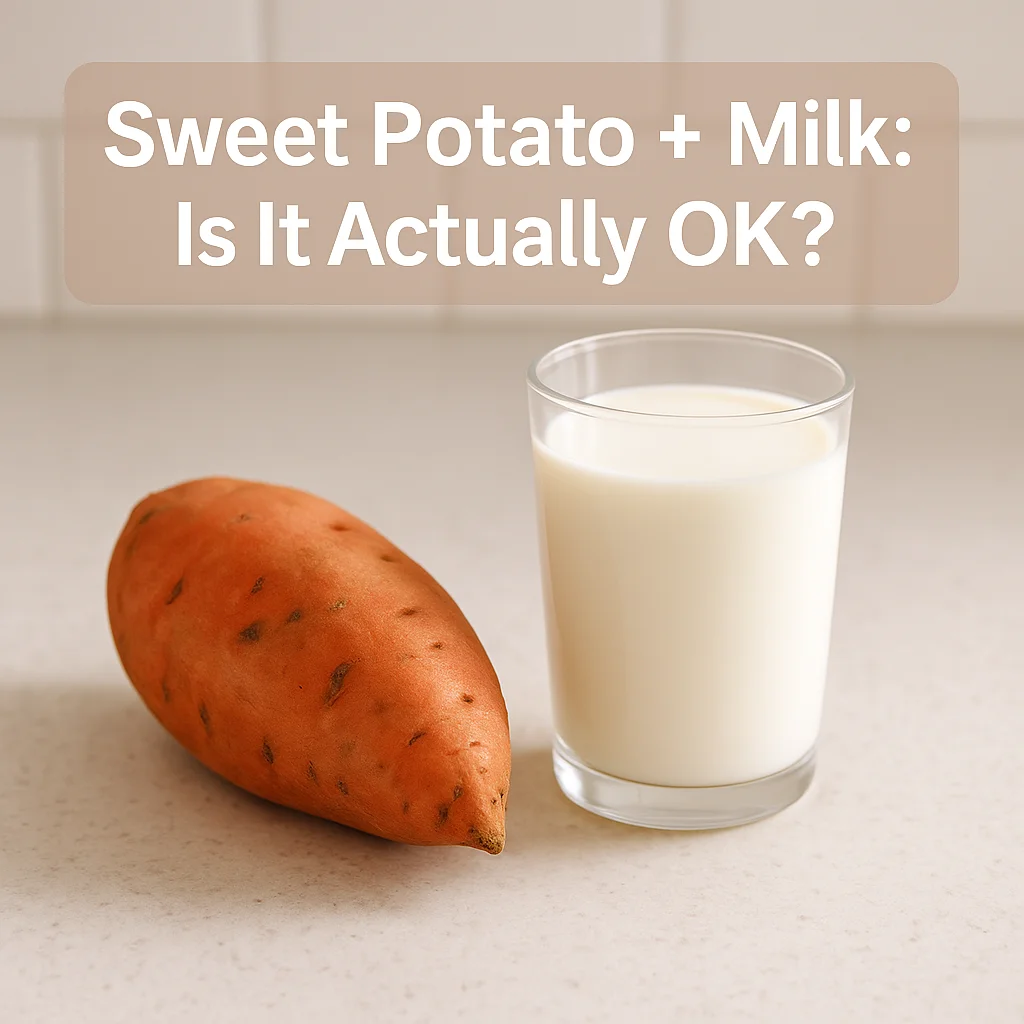
🥗 Sweet Potato + Milk: Is It Actually OK?
✅ Key Takeaway
In most cases, combining sweet potatoes and milk is perfectly fine and can be part of a healthy diet. This pairing provides a range of nutrients, and for many people, it can be a nourishing snack or meal addition. However, those with certain digestive sensitivities should proceed with some caution.
- Good for: Those needing an energy boost with a mix of carbohydrates and protein.
- Be cautious: If you have lactose intolerance or are on a low-FODMAP diet.
- Best way: Use them in a smoothie or as a side dish.
- Mistake to avoid: Over-relying on this combo for various nutrients; balance your diet with other foods.
- Next step: Try incorporating this combo in a balanced breakfast.
🧠 Why This Matters
Sweet potatoes and milk are common staples in many kitchens around the world. Both foods are known for their health benefits—sweet potatoes are rich in vitamin A and fiber, while milk provides calcium and protein. Combining these can provide a balanced nutrient intake, satiate hunger, and offer an easy way to enhance the nutritional value of meals. However, some people might experience digestive discomfort, making it essential to understand how they work together in the body.
🔬 What the Science Says
When consumed together, sweet potatoes and milk offer a mix of carbohydrates, fiber, protein, and essential vitamins such as vitamin A and calcium. Sweet potatoes have a low glycemic index, meaning they do not spike blood glucose levels sharply, making them a good carbohydrate choice. Pairing them with milk, which contains protein and fat, can aid in slowing digestion further to provide sustained energy. However, evidence on digestion suggests that some individuals with lactose intolerance or difficulty digesting complex carbohydrates may need to be cautious. The combination is generally considered nutritionally sound, but those with specific digestive issues should individualize their diet based on tolerance.
⚖️ Benefits vs Downsides
- Benefits:
- High in fiber, promoting digestive health.
- Rich in vitamins and minerals, supporting overall wellness.
- Provides a balanced macronutrient profile.
- Aids in sustained energy release.
- Easy to prepare and versatile in recipes.
- May enhance satiety, helping with weight management.
- Offers an antioxidant boost, supporting cellular health.
- Downsides/Cautions:
- May cause digestive discomfort in those with lactose intolerance.
- Potentially high in calories if consumed in large quantities.
- Sweet potatoes may not be suitable for low-FODMAP diets.
- Milk allergies can make this pairing unsuitable for some.
- Overconsuming may lead to nutrient imbalance if not part of a diverse diet.
- Inconvenient for those with known sensitivity to dairy.
🎯 The Best Way to Apply This
If you wish to add sweet potatoes and milk into your meal plan, here's how you can do so effectively:
- Start with a small portion to test your digestive tolerance.
- Bake or steam sweet potatoes for easier digestion.
- Add warm milk and blend to create a creamy soup.
- Mix sweet potato puree with milk for a nutrient-rich smoothie.
- Combine diced sweet potatoes with milk in a curry for added richness.
⏰ Timing, Portions, and Frequency
Ideally, you can enjoy sweet potatoes and milk in the morning for breakfast, providing steady energy throughout the day. Use about a palm-sized sweet potato and a small cup of milk to keep the portions under control. Incorporate this combination once or twice a week to enjoy its nutritional benefits while ensuring dietary variety.
🤝 Best & Worst Pairings (Food Combos)
- Pairs well with:
- Cinnamon and nutmeg for a flavor boost.
- Leafy greens to add fiber and nutrients.
- Nuts and seeds for added crunch and healthy fats.
- Berries to enhance antioxidant content.
- Be careful combining with:
- High sugar foods, which can spike blood sugar unnecessarily.
- Excessive fats, which may overwhelm digestion.
- Spicy foods that may cause stomach discomfort.
- Artificial sweeteners that might affect gut health in sensitive individuals.
🚦Who Should Be Careful
- Individuals with lactose intolerance should seek lactose-free milk options.
- Those on a low-FODMAP diet may need to limit sweet potato intake.
- People with dairy allergies should completely avoid milk.
- If you're on medication, confirm with a clinician that there's no interaction.
- If unsure, ask a pharmacist or clinician for personalized advice.
🧩 Common Mistakes and Fixes
- Eating large quantities → Control portion sizes to avoid excess calories.
- Ignoring lactose intolerance → Opt for lactose-free milk alternatives.
- Consuming with too much added sugar → Use natural sweeteners sparingly, if at all.
- Overcooking sweet potatoes → Cook until just tender to preserve nutrients.
- Combining with high fat foods → Pair with lean proteins or vegetables for balance.
- Skipping meal diversity → Include a variety of foods in your diet for complete nutrition.
📋 Quick Checklist
- Test your tolerance with small portions.
- Choose lactose-free options if needed.
- Balance with other nutrient-rich foods.
- Use natural spices for flavoring.
- Avoid pairing with high-sugar foods.
- Incorporate into meals a couple of times a week.
- Consider the timing of consumption in your daily routine.
- Experiment with recipes to find what works best for you.
- Be mindful of any post-consumption discomfort.
- Keep track of how this combo affects your energy levels.
- Consult a professional if needed, especially if on medications.
- Stay informed about your dietary needs and adjust accordingly.
📌 Summary
- Combining sweet potatoes and milk is generally okay and beneficial for most.
- Begin with small portions to assess compatibility with your digestive system.
- Opt for nutritious pairings like cinnamon or leafy greens.
- Be cautious if you are lactose intolerant or have specific dietary restrictions.
- The easiest way to start is by incorporating them into breakfast meals.
- Avoid overpowering flavors with added sugars or excessive spicy foods.
- Monitor your body's response and adjust intake as necessary.
- Diverse diet remains key; don't solely rely on this combination.
- Consider mornings for consumption due to their energy-sustaining properties.
- Check interactions with any existing health conditions or medication.