🥗 Tomato + Olive Oil: Why Absorption Improves
✅ Key Takeaway
In most cases, combining tomatoes with olive oil enhances nutrient absorption due to the beneficial interaction between the healthy fats in olive oil and the nutrients in tomatoes. This combination is particularly effective for boosting the absorption of fat-soluble vitamins and phytonutrients, such as lycopene and vitamin E.
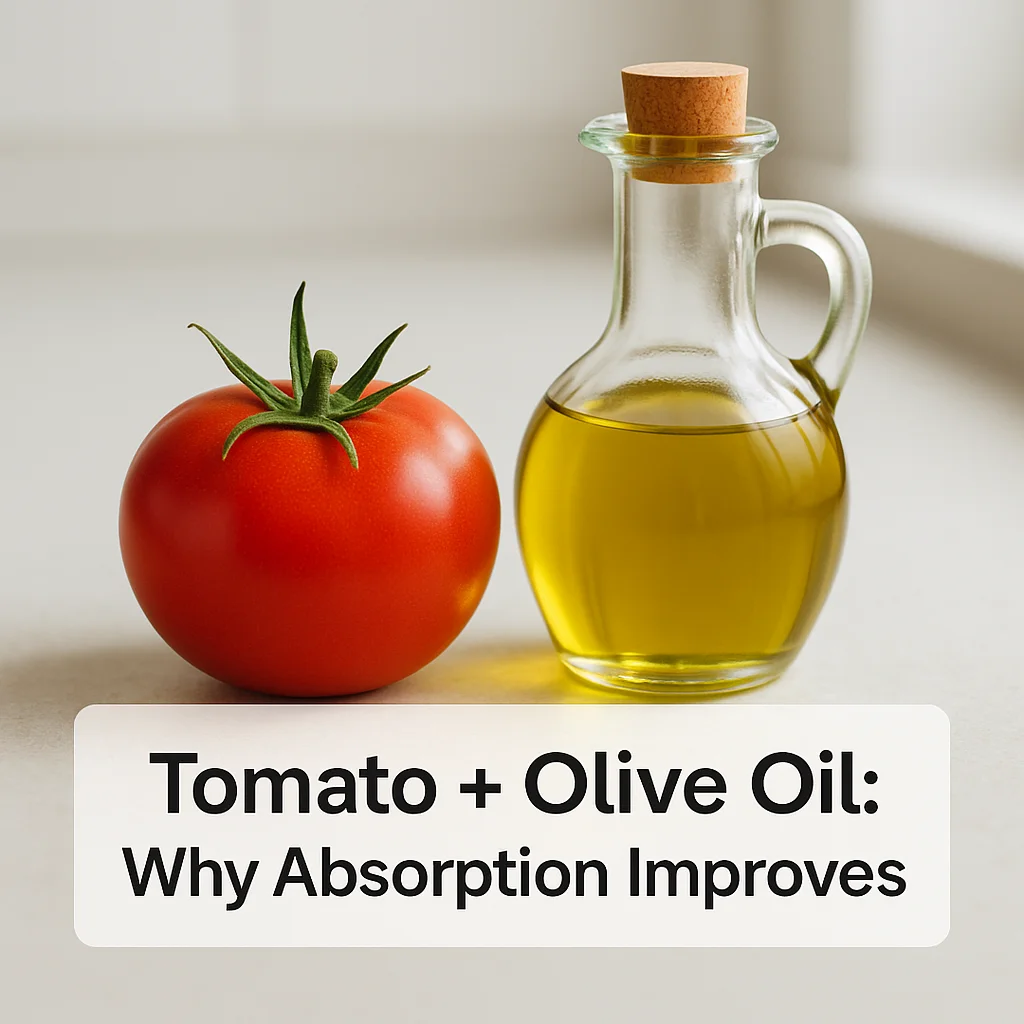
- Good for: People looking to maximize nutrient absorption from vegetables.
- Be cautious if: You need to limit fat intake for health reasons.
- Best way: Simply drizzle olive oil on fresh tomatoes or use in cooking.
- Common mistake: Using too much oil, which can add excessive calories.
- Next step: Try adding olive oil to your next tomato-based dish.
🧠 Why This Matters
Tomatoes are a popular ingredient worldwide, known for being rich in vitamins and antioxidants, which are beneficial for health. However, many nutrients in tomatoes are fat-soluble, meaning good fats like those in olive oil can help the body absorb these nutrients more effectively. This impacts how we gain nutrition from our meals, influencing energy levels, cell health, and overall well-being.
🔬 What the Science Says
The science behind combining tomatoes with olive oil is primarily about enhancing the bioavailability of fat-soluble nutrients. These include carotenoids like lycopene and vitamins A, D, E, and K. Lycopene, a powerful antioxidant in tomatoes, is better absorbed when consumed with fats. Olive oil, a healthy monounsaturated fat, helps facilitate this absorption, potentially enhancing the health benefits of both the oil and the tomatoes.
While some people might notice significant benefits, individual differences and dietary habits can influence results. Thus, while this combination is beneficial, it might not revolutionize everyone’s nutrient intake to the same degree.
⚖️ Benefits vs Downsides
- Benefits:
- Improved absorption of fat-soluble vitamins and antioxidants.
- Potential antioxidant boost from lycopene.
- Aids in heart health when olive oil is consumed appropriately.
- Enhances flavor, making vegetables more palatable.
- Downsides/Cautions:
- High caloric content if olive oil is used excessively.
- May not be suitable for low-fat diets.
- Potential for digestive discomfort in some individuals with fat intolerance.
- Overheating olive oil may degrade its healthy fats.
🎯 The Best Way to Apply This
- Start by selecting fresh, ripe tomatoes for best flavor and nutrients.
- Drizzle a moderate amount of high-quality olive oil over sliced or chopped tomatoes.
- Enhance flavors with herbs like basil or oregano for a simple salad.
- Incorporate this mixture into meals, such as tossing with pasta or using as a topping for grilled meats.
⏰ Timing, Portions, and Frequency
Generally, incorporating tomatoes with olive oil can be done at any meal. Morning, noon, or night, this pairing serves well. Portion control matters; consider a small handful of cherry tomatoes and a tablespoon of olive oil as a starting point. This combination can enhance a variety of dishes, from breakfast omelets to evening salads.
🤝 Best & Worst Pairings (Food Combos)
- Pairs well with:
- Whole grain bread for an energizing bruschetta.
- Leafy greens for increased nutrient density.
- Cheese, such as mozzarella, for complementary flavors.
- Be careful combining with:
- High-sodium foods, which may negate heart health benefits.
- Excessive animal fats that can overwhelm the dish's health benefits.
- Highly processed oils that may detract from nutritional quality.
🚦Who Should Be Careful
- Individuals on strict low-fat diets should limit olive oil use.
- Those with fat malabsorption issues may face digestive challenges.
- If taking medications that interact with dietary fats, consult a healthcare provider.
- If unsure, ask a pharmacist or clinician for personalized advice.
🧩 Common Mistakes and Fixes
- Mistake: Using low-quality oil → Fix: Choose extra virgin olive oil for best health benefits.
- Mistake: Using too much oil → Fix: Measure before adding; a small amount goes a long way.
- Mistake: Heating olive oil too much → Fix: Use it raw or cook on a gentle heat to preserve its benefits.
- Mistake: Ignoring portion sizes → Fix: Stick to a small serving to avoid extra calories and fat.
- Mistake: Assuming all tomatoes work the same → Fix: Pick fresh, ripe tomatoes to maximize nutrients.
- Mistake: Oiling ahead of time for later use → Fix: Oil just before serving to retain freshness and taste.
📋 Quick Checklist
- Select fresh tomatoes each time for best results.
- Use extra virgin olive oil for quality.
- Aim for moderation while drizzling oil.
- Enhance with herbs for flavor without extra calories.
- Pair with whole grains or cheeses for a complete meal.
- Be cautious of overheating olive oil.
- Store tomatoes and oil in cool, appropriate places for longevity.
- Keep serving sizes checked to avoid unnecessary calories.
- Consult a professional if dietary restrictions apply.
- Observe personal digestion responses when first trying this combo.
📌 Summary
- Direct answer: Tomatoes with olive oil improve nutrient absorption.
- Best method: Drizzle moderate olive oil over fresh tomatoes.
- Key cautions: Watch out for oil quantity and dietary restrictions.
- Easy habit: Add tomatoes and olive oil to salads or simple dishes today.
- Pair wisely with whole grains and cheese for balance.
- Avoid overheating olive oil to preserve its benefits.
- Choose ripe, quality tomatoes for the best taste and nutrition.
- Monitor personal digestive responses when trying this combo.
- Measuring oil before serving can prevent overuse.
- Keep the variety in pairings to prevent flavor fatigue.
- Use as a simple way to enhance any meal nutritionally.