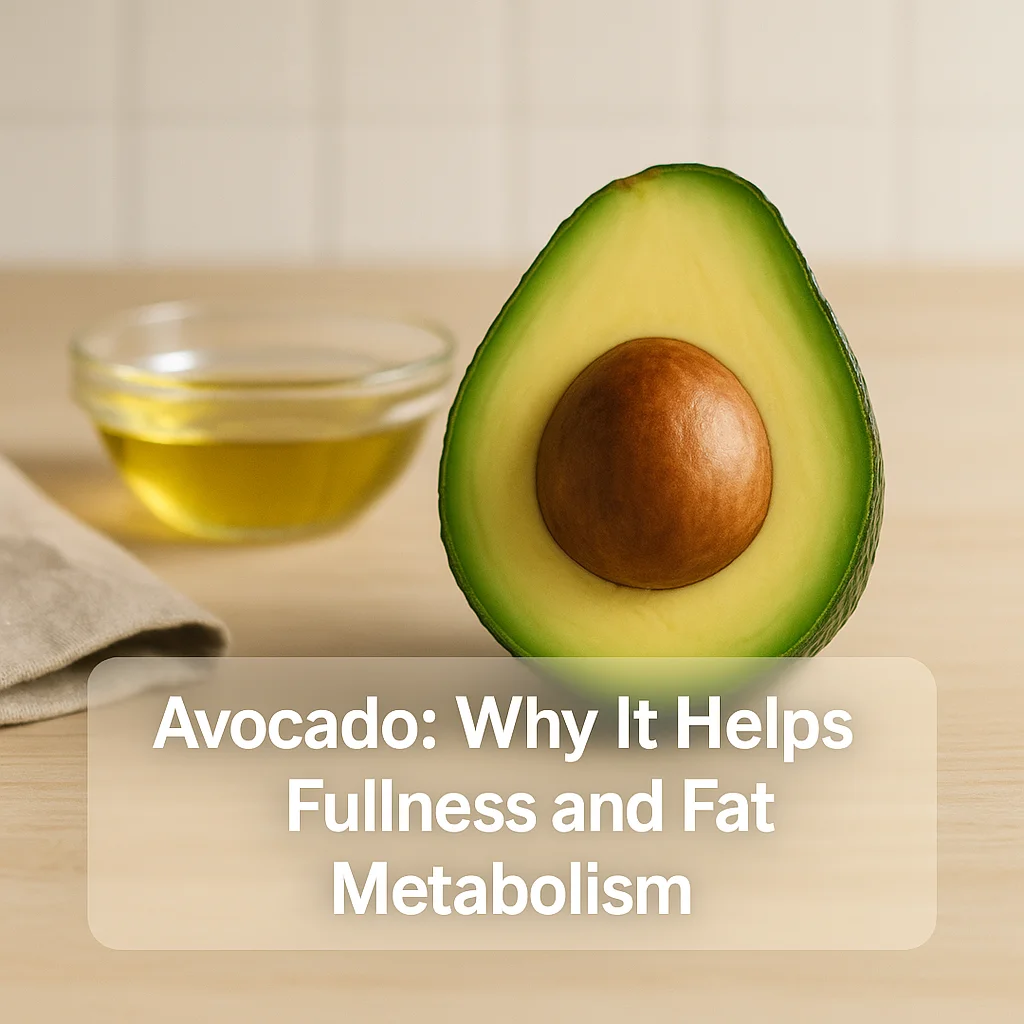
🥗 Avocado: Why It Helps Fullness and Fat Metabolism
✅ Key Takeaway
Avocado can be a beneficial food in supporting fullness and fat metabolism due to its nutrient-rich composition, fiber content, and healthy fats. In most cases, adding avocado to your diet may help you feel more satiated and support your body's ability to process fats efficiently.
- Good for: People looking to enhance satiety and support healthy eating habits
- Be cautious: Those with sensitivity to high-fat foods or on strict calorie-controlled diets
- Best simple way: Add avocado slices to your meals for a quick nutrient boost
- Biggest mistake: Overconsuming, thinking it has "negative calories"
- Next step: Start incorporating a quarter to half an avocado to a daily meal
🧠 Why This Matters
Feeling constantly hungry or unable to manage energy levels can be challenging and affect your daily life. Avocado’s ability to enhance satiety and optimize fat metabolism can make it easier to control cravings and maintain energy levels, supporting healthier long-term dietary habits globally.
🔬 What the Science Says
Avocado is rich in monounsaturated fats, particularly oleic acid, which is associated with improved satiety and may aid in fat metabolism. The fiber content of avocados can slow digestion, prolonging feelings of fullness. Additionally, some studies suggest that the nutrients in avocados may help the body use fat as a source of fuel more efficiently.
While evidence is promising, results can vary based on individual needs and dietary patterns. Therefore, it is recommended to integrate avocados into a balanced diet rather than seeing them as a standalone solution.
⚖️ Benefits vs Downsides
- Benefits:
- Rich in healthy fats that can support heart health
- Contains fiber which aids in digestion and satiety
- Versatile and can be added to a variety of dishes
- Provides essential nutrients like potassium and vitamins
- May help balance blood sugar levels when consumed with a balanced meal
- Downsides/Cautions:
- High in calories, which can be an issue if portion sizes are ignored
- May not be suitable for individuals on low-fat diets
- Some may experience digestive discomfort if consumed in large amounts
- Allergic reactions, although rare, can occur
- Individuals with latex allergies might be cross-sensitive to avocados
🎯 The Best Way to Apply This
- Start with adding a quarter to half an avocado on toast or in salads.
- Mix avocado in smoothies for a creamy texture and added nutrients.
- Use avocado as a topping on chili or soups for extra richness.
- Incorporate it into dips like guacamole for a healthy snack.
- Try using mashed avocado as a spread instead of butter or mayonnaise.
⏰ Timing, Portions, and Frequency
Consuming avocado in the morning can be beneficial for extending satiety through the day. It can complement meals effectively when paired with proteins and carbohydrates. Aim for portion sizes around a quarter to half an avocado, keeping your overall daily calorie intake in mind.
Eating avocado alone may not suffice for a balanced diet, so integrate it alongside diverse food sources.
🤝 Best & Worst Pairings (Food Combos)
- Pairs well with:
- Whole-grain bread for hearty toasts
- Leafy greens in salads for a nutritious boost
- Legumes and beans in bowls for added protein and fiber
- Eggs for a protein-rich breakfast
- Be careful combining with:
- High-fat meats if trying to reduce overall fat intake
- Butter or heavy creams, which can add excessive calories
- Foods high in processed sugar; aim for balanced meals
🚦Who Should Be Careful
- Individuals with calorie-restricted diets.
- Those who have digestive disorders might need to limit high-fat foods.
- People with latex allergy due to potential cross-reactivity.
- If you're on heart medications, consult with a healthcare provider.
- If unsure, ask a pharmacist or clinician.
🧩 Common Mistakes and Fixes
- Mistake: Eating too much avocado at once. → Fix: Stick to suggested servings (quarter to half an avocado).
- Mistake: Only eating avocado without balanced meals. → Fix: Pair with varied foods for complete nutrition.
- Mistake: Using avocado as the only fat source. → Fix: Include diversity with nuts, seeds, and olive oil.
- Mistake: Thinking of it as zero calories due to health halo. → Fix: Be mindful of its caloric density.
- Mistake: Discarding the seed improperly. → Fix: Carefully remove it to prevent injury.
- Mistake: Storing leftover avocado poorly. → Fix: Cover tightly with lemon juice to preserve freshness.
- Mistake: Ignoring potential allergies. → Fix: Watch for reactions if eating avocado for the first time.
- Mistake: Assuming it fits all diet plans. → Fix: Consult dietary needs with a clinician if unsure.
📋 Quick Checklist
- Incorporate avocado into at least one meal daily.
- Monitor portion sizes to avoid excess calorie intake.
- Balance avocado consumption with other fat sources.
- Watch for any allergic reactions when eating avocado initially.
- Try avocado in varied recipes for diversification.
- Store avocados properly to reduce spoilage.
- Be mindful of overall dietary fat when adding avocado.
- Combine avocado with fiber-rich foods for sustained fullness.
- Introduce avocado gradually into the diet if concerned about digestion.
- Observe how avocados affect energy levels and satiety.
- Know when to consult a health professional regarding avocado consumption.
📌 Summary
- Avocados can support fullness and aid fat metabolism when eaten wisely.
- Add avocado gradually into meals for best outcomes.
- Be cautious of caloric intake and potential allergies.
- Introduce avocado in balanced meals to increase dietary fiber.
- Observe personal responses to avocado and adjust as needed.
- Pair with whole grains, vegetables, and proteins for a holistic diet.
- Be aware of how much avocado you're eating relative to other fats.
- Test various avocado recipes to find what you enjoy most.
- Consult healthcare providers for personalized dietary advice as needed.