🥗 Cocoa (Cacao): How It Differs From Chocolate
✅ Key Takeaway
The main difference between cocoa (cacao) and chocolate is the degree of processing and added ingredients. Cocoa is derived from cacao beans, which when minimally processed offer nutritional benefits without added sugars and fats, unlike most commercial chocolates.
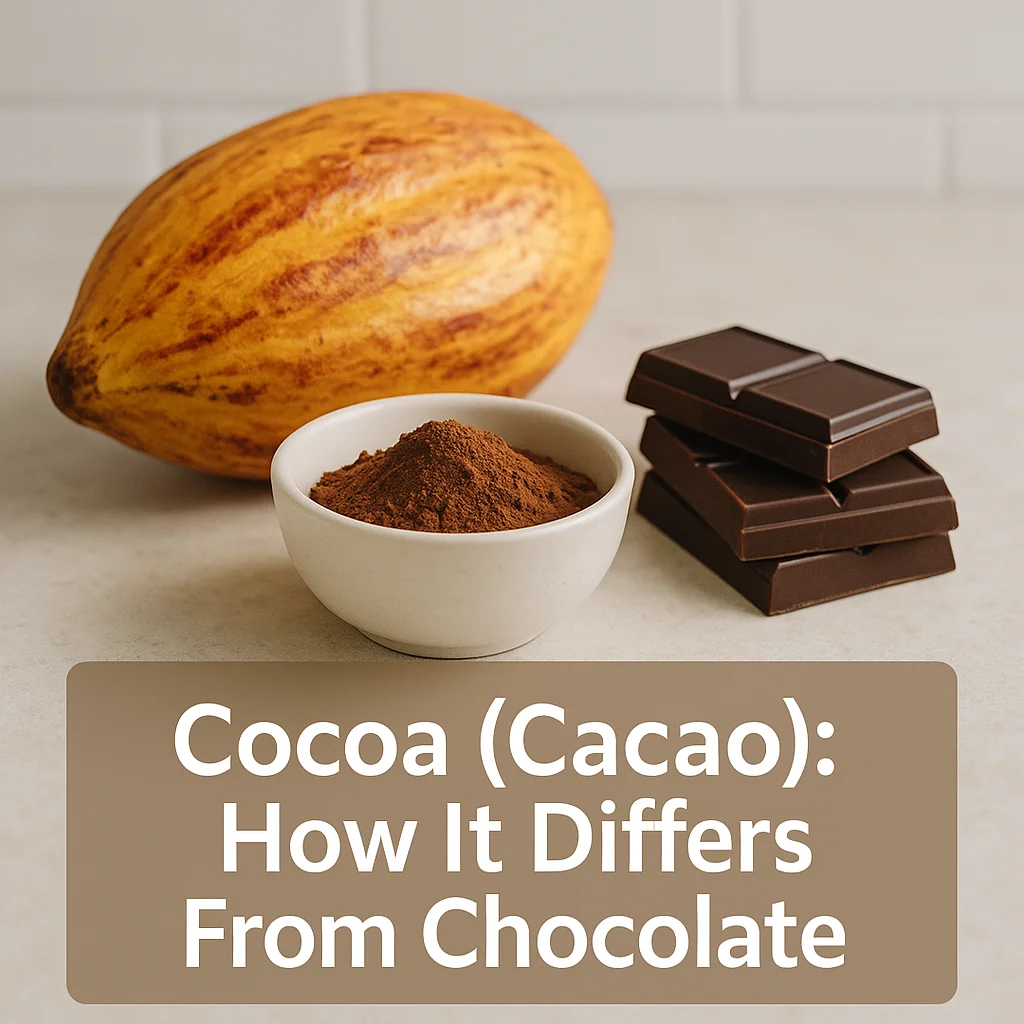
- Who it’s usually good for: Those seeking antioxidants and a more natural product.
- Who should be cautious: People sensitive to caffeine or on certain medications.
- Best simple way to do it: Use raw cacao powder in smoothies or as a baking ingredient.
- Biggest mistake people make: Assuming all chocolate products are similar to raw cocoa in health benefits.
- One practical “next step”: Substitute cocoa powder for chocolate in recipes to reduce sugar intake.
🧠 Why This Matters
Understanding the difference between cocoa and chocolate matters because it impacts dietary choices, particularly regarding sugar and fat intake. Many people turn to chocolate for its taste and purported health benefits, not realizing that highly processed chocolate often contains sugars and fats that can negate these benefits. A more informed choice leads to better management of energy levels, cravings, and overall health.
🔬 What the Science Says
Cocoa and its raw form, cacao, are known for their flavonoid content, which is associated with antioxidant effects. These compounds may support heart health by improving blood flow and lowering blood pressure. However, much commercial chocolate has reduced flavonoid content due to processing, and added sugars and fats compromise these potential benefits.
The evidence is mixed because health benefits can vary significantly depending on the type of cocoa product and how it's processed. Raw cacao typically retains more beneficial compounds compared to heavily processed chocolate.
⚖️ Benefits vs Downsides
- Benefit: Rich in flavonoids that may support cardiovascular health.
- Benefit: Can provide a natural source of magnesium and iron.
- Benefit: May help improve mood through endorphin release.
- Benefit: Contains antioxidants that combat free radicals.
- Downside: May cause allergic reactions in some individuals.
- Downside: Processed versions can be high in sugar and fats.
- Downside: Contains caffeine, which can affect sleep or anxiety levels.
- Downside: Overconsumption can lead to weight gain.
🎯 The Best Way to Apply This
- Step 1: Identify preferences for unsweetened cocoa or raw cacao in recipes.
- Step 2: Substitute chocolate products with unsweetened cocoa powder to reduce sugar intake.
- Step 3: Gradually incorporate raw cacao nibs into snacks and desserts for texture and nutrition.
- Step 4: Be mindful of portion sizes to avoid excess calorie intake.
⏰ Timing, Portions, and Frequency
Consider consuming cocoa products in the morning or early afternoon to avoid its caffeine potentially interfering with sleep. A portion should feel satisfying but not overly filling; think in terms of a small bowl or a sprinkle of cocoa powder on food rather than a large chocolate bar. Those sensitive to caffeine should consume cocoa earlier in the day.
🤝 Best & Worst Pairings (Food Combos)
- Pairs well with: Almond or oat milk for a creamy hot beverage.
- Pairs well with: Oatmeal or yogurt for added flavor and nutrients.
- Pairs well with: Nuts and dried fruit for an energy-packed snack.
- Be careful combining with: Sugary cereals, which can lead to an overload of simple carbs and sugars.
- Be careful combining with: High-fat toppings, which add excess calories and can lessen health benefits.
- Be careful combining with: Caffeinated beverages, as this can amplify caffeine effects.
🚦Who Should Be Careful
- Those sensitive to caffeine or with insomnia should moderate intake.
- Individuals with specific allergies to chocolate or cocoa should avoid these products.
- Anyone on medications that interact with caffeine should consult a healthcare professional.
- People with acid reflux as cocoa can exacerbate symptoms.
- If unsure, ask a pharmacist or clinician.
🧩 Common Mistakes and Fixes
- Mistake: Eating too much chocolate assuming it's all healthy.
Fix: Opt for raw cacao where possible. - Mistake: Ignoring added sugars in commercial chocolates.
Fix: Check labels for sugar content. - Mistake: Dismissing the caffeine content in cocoa.
Fix: Limit intake if sensitive to caffeine. - Mistake: Overlooking portion sizes.
Fix: Keep it to a satisfying but modest amount. - Mistake: Pairing with other high-calorie foods.
Fix: Balance with lower-calorie options like fruits. - Mistake: Skipping label reading on products labeled as “healthy chocolate”.
Fix: Always read the ingredients list.
📋 Quick Checklist
- Know the difference between raw cacao and processed chocolate.
- Look for unsweetened cocoa powder for baking.
- Substitute chocolate for cacao nibs in recipes.
- Check labels for added sugars and fats.
- Consume cocoa products earlier in the day if sensitive to caffeine.
- Monitor portion sizes and balance with your diet.
- Mix cocoa with fruits, nuts, or yogurt for a healthy snack.
- Avoid pairing with high-sugar foods or drinks.
- Consult professionals if you have dietary restrictions or health conditions.
📌 Summary
- Cocoa differs from chocolate in processing and sugar content.
- Raw cacao offers more antioxidants and fewer additives.
- Be mindful of caffeine content if sensitive.
- Best to consume in moderate portions and earlier in the day.
- Choose unsweetened versions to maximize benefits.
- Pair with wholesome foods like nuts and fruits.
- Read labels to identify hidden sugars in chocolate.
- If you're unsure about interactions, consult a health professional.