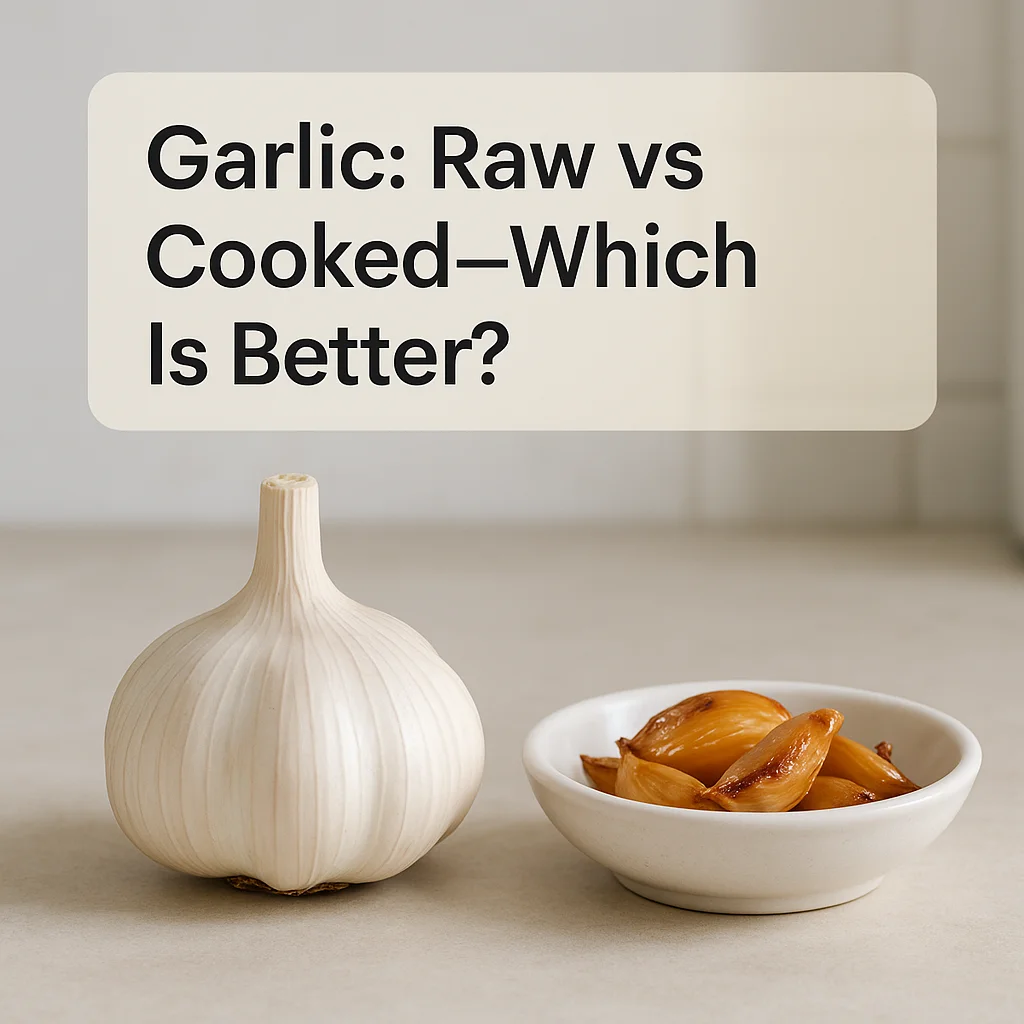
🥗 Garlic: Raw vs Cooked—Which Is Better?
✅ Key Takeaway
When it comes to garlic, the choice between raw and cooked depends on your goals. Raw garlic retains more allicin, a beneficial compound linked to several health effects, whereas cooked garlic offers a milder flavor and improved digestibility. Both forms have their place in a balanced diet.
- Usually good for: People looking for antioxidant and potential heart health benefits
- Be cautious if: You have a sensitive stomach or are on anticoagulant medication
- Best simple way to do it: Crush raw garlic and let it sit for 10 minutes before eating or add cooked garlic to your meals
- Biggest mistake people make: Not allowing crushed raw garlic to sit before consuming
- One practical “next step”: Try adding a clove of garlic to your next meal, either raw or cooked, depending on preference
🧠 Why This Matters
Garlic is a staple in many cuisines, celebrated for its potential health benefits and culinary versatility. However, whether to consume it raw or cooked can impact its benefits and how it fits into your lifestyle. Understanding these differences can help you use garlic more effectively to support your health goals.
🔬 What the Science Says
Garlic's main health-related compound is allicin, formed when garlic is crushed or chopped. Allicin is associated with antioxidant and potential cardiovascular benefits. Cooking garlic can reduce allicin content but may make garlic easier to digest for some. Research is mixed, but a balanced intake of both raw and cooked garlic seems beneficial.
⚖️ Benefits vs Downsides
- Benefits:
- Rich in antioxidants
- May support heart health
- Can enhance immune function
- Contains anti-inflammatory properties
- Versatile in cooking
- Downsides:
- Raw garlic is pungent and can cause bad breath
- May cause stomach upset or heartburn in some
- Interference with certain medications (consult a clinician)
- Cooking reduces allicin content
🎯 The Best Way to Apply This
- Incorporate both raw and cooked garlic into your meals
- For raw, crush and let sit for 10 minutes to maximize allicin
- Add cooked garlic to enhance flavors and aid digestion
- Experiment with different cuisines to include garlic
⏰ Timing, Portions, and Frequency
Garlic can be consumed at any meal. Start with a small amount, like one clove, to see how your body reacts. Pair raw garlic with other foods to minimize pungency, or savor cooked garlic in larger quantities. Avoid eating large amounts on an empty stomach if sensitive.
🤝 Best & Worst Pairings (Food Combos)
- Pairs well with:
- Olive oil and tomatoes for a Mediterranean touch
- Lemon and herbs in marinades
- Stir-fried with vegetables
- Be careful combining with:
- Spicy foods that may exacerbate stomach sensitivity
- Large amounts of garlic if prone to gastrointestinal issues
- Acidic foods if you have reflux symptoms
🚦Who Should Be Careful
- Individuals with sensitive stomachs
- People on anticoagulant medications
- Those with garlic allergies
- If unsure, ask a pharmacist or clinician
🧩 Common Mistakes and Fixes
- Eating too much raw garlic → Start with a small amount and pair with other foods
- Not letting garlic sit after crushing → Allow 10 minutes for maximum allicin
- Using garlic too close to medication schedules → Discuss with a clinician
- Ignoring stomach discomfort → Try cooked garlic if raw is troublesome
- Overcooking garlic → Add garlic towards the end of cooking to retain nutrients
📋 Quick Checklist
- Include garlic in your daily diet
- Crush raw garlic and wait 10 minutes before consuming
- Add cooked garlic to stir-fries and stews
- Pair with healthy fats like olive oil
- Monitor any stomach discomfort
- Consider both taste and digestibility
- Avoid excessive amounts if on medications
- Experiment with preparation methods
- Use moderation: One to two cloves can suffice
📌 Summary
- Raw garlic retains more allicin; cooking is easier on the stomach
- Crush garlic and let sit for best allicin levels
- Be cautious if prone to gastrointestinal issues or on certain meds
- Add to meals for flavor and potential health benefits
- Balancing raw and cooked garlic can optimize overall benefits
- Consult a clinician about medication interactions
- Start small to assess your body's response
- Choose cooking methods that preserve garlic’s benefits