🥗 Nuts: What’s a Good Daily Amount?
✅ Key Takeaway
In most cases, a small handful of nuts daily is a beneficial addition to your diet. This typically amounts to about 28 grams or one ounce, roughly equivalent to a small palmful. Consuming this amount can provide essential nutrients without excessive calorie intake. However, individuals with specific allergies or dietary restrictions should exercise caution.
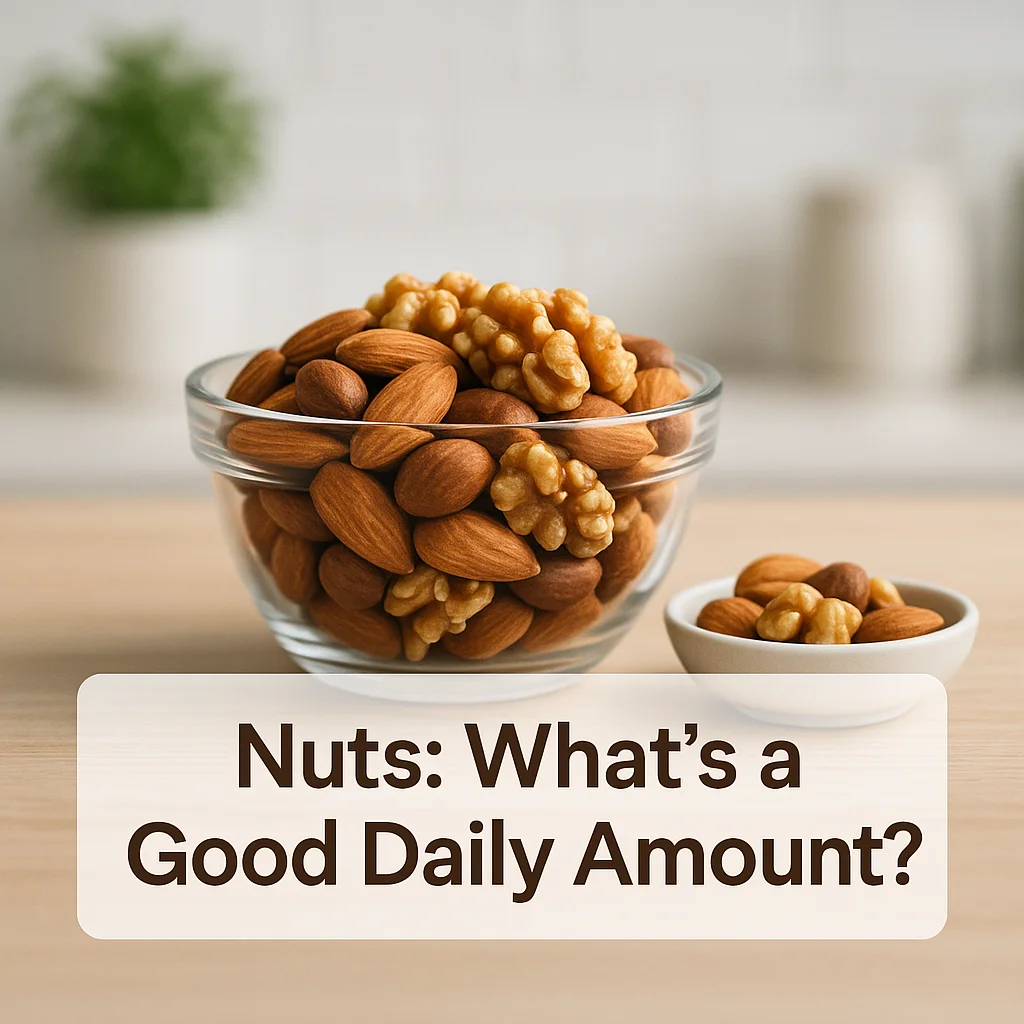
- Good for: Most adults seeking to enhance their diet with healthy fats and protein.
- Cautious for: Those with nut allergies or individuals on a calorie-restricted diet.
- Simplest way: Have a small handful as a snack or add to meals.
- Biggest mistake: Overeating due to nuts' calorie density.
- Next step: Assess your daily diet and introduce a small serving of nuts in a mindful way.
🧠 Why This Matters
Nuts are a rich source of healthy fats, protein, and other nutrients, yet they are also calorie-dense. With their health benefits, finding the right balance is key to enhancing your nutrition without unintended weight gain. Understanding the ideal portion size helps address energy management and dietary satisfaction, which are global concerns due to busy lifestyles and varying dietary habits.
🔬 What the Science Says
Nuts are often praised for their nutrient profile and are associated with improved heart health, thanks to their unsaturated fats and antioxidants. They can also aid in maintaining stable blood sugar levels and promoting satiety. The fiber content in nuts supports digestion, although individual responses may vary. Evidence suggests that nuts can be a healthy part of the diet when consumed in moderation.
⚖️ Benefits vs Downsides
- Benefits:
- Rich in heart-healthy fats.
- Good source of plant-based protein.
- High in fiber, aiding digestion.
- Contains antioxidants and vitamins.
- Downsides/Cautions:
- High-calorie content can lead to weight gain if overconsumed.
- Potential allergen for some individuals.
- May cause digestive issues if eaten in excess.
- Some types are high in sodium if salted.
🎯 The Best Way to Apply This
- Start by selecting raw or unsalted nuts to avoid extra sodium and additives.
- Measure out a small handful—about 28 grams—as your daily portion.
- Incorporate nuts into meals as a topping for salads or yogurt for variety.
- Consider them a convenient on-the-go snack when traveling or at work.
- Be mindful of overall nut intake if consuming other high-calorie foods.
⏰ Timing, Portions, and Frequency
Nuts can be consumed at any time of the day, making them a flexible dietary addition. A reasonable portion is a small handful, about a palm's worth. Be mindful when incorporating them into meals or consuming them as snacks to maintain balance in your diet.
🤝 Best & Worst Pairings (Food Combos)
- Pairs well with:
- Fruit for a balanced snack.
- Oatmeal for added texture and protein.
- Salads for an extra crunch and nutrition.
- Be careful combining with:
- Sugary treats which could overshadow the health benefits.
- Other high-fat foods which can increase calorie intake.
- Salty foods if the nuts are salted, to avoid excess sodium.
🚦Who Should Be Careful
Individuals with nut allergies or sensitivities should avoid consuming nuts. Those on calorie-restricted diets should carefully manage portions to avoid exceeding caloric needs. If you have concerns or experience adverse effects, consult with a pharmacist or healthcare provider.
🧩 Common Mistakes and Fixes
- Mistake: Eating directly from the bag → Fix: Pre-portion nuts into small containers.
- Mistake: Choosing heavily salted varieties → Fix: Opt for raw or lightly salted.
- Mistake: Overeating due to nutrition myths → Fix: Stick to a small handful daily.
- Mistake: Ignoring allergies → Fix: Consume seeds as an alternative if allergic.
- Mistake: Using nuts as the main protein source → Fix: Incorporate diverse protein sources.
- Mistake: Pairing with high-calorie foods → Fix: Balance with veggies or fruit.
📋 Quick Checklist
- Choose a variety of nuts for diverse nutrients.
- Pre-portion your servings to avoid excess.
- Opt for raw or lightly processed varieties.
- Be mindful of additional calorie intake.
- Include in salads, snacks, or breakfast foods.
- Monitor your body's response and adjust portions accordingly.
- Consider allergies and alternative options like seeds.
- Balance nut intake with other dietary fats.
- Discuss any dietary changes with a health professional if necessary.
- Enjoy nuts guilt-free when eaten in moderation.
📌 Summary
- A small handful of nuts daily is beneficial for most people.
- Raw or unsalted nuts provide the most health benefits.
- Monitor portion sizes to prevent excess calorie intake.
- Consider allergies and consult a health professional if needed.
- Nuts are a flexible snack, pairing well with fruits and salads.
- Avoid high-calorie pairings to keep benefits intact.
- Regularly assess your body's response to nut consumption.
- Incorporate nuts into your diet mindfully and enjoy the nutrients they offer.