🥗 Turmeric (Curcumin): Pairings That Improve Absorption
✅ Key Takeaway
Turmeric, a spice revered for its medicinal properties, contains curcumin, a compound with several health benefits. However, curcumin on its own has low bioavailability, which means the body has a hard time absorbing it. Certain pairings can enhance its absorption and therefore maximize its potential benefits.
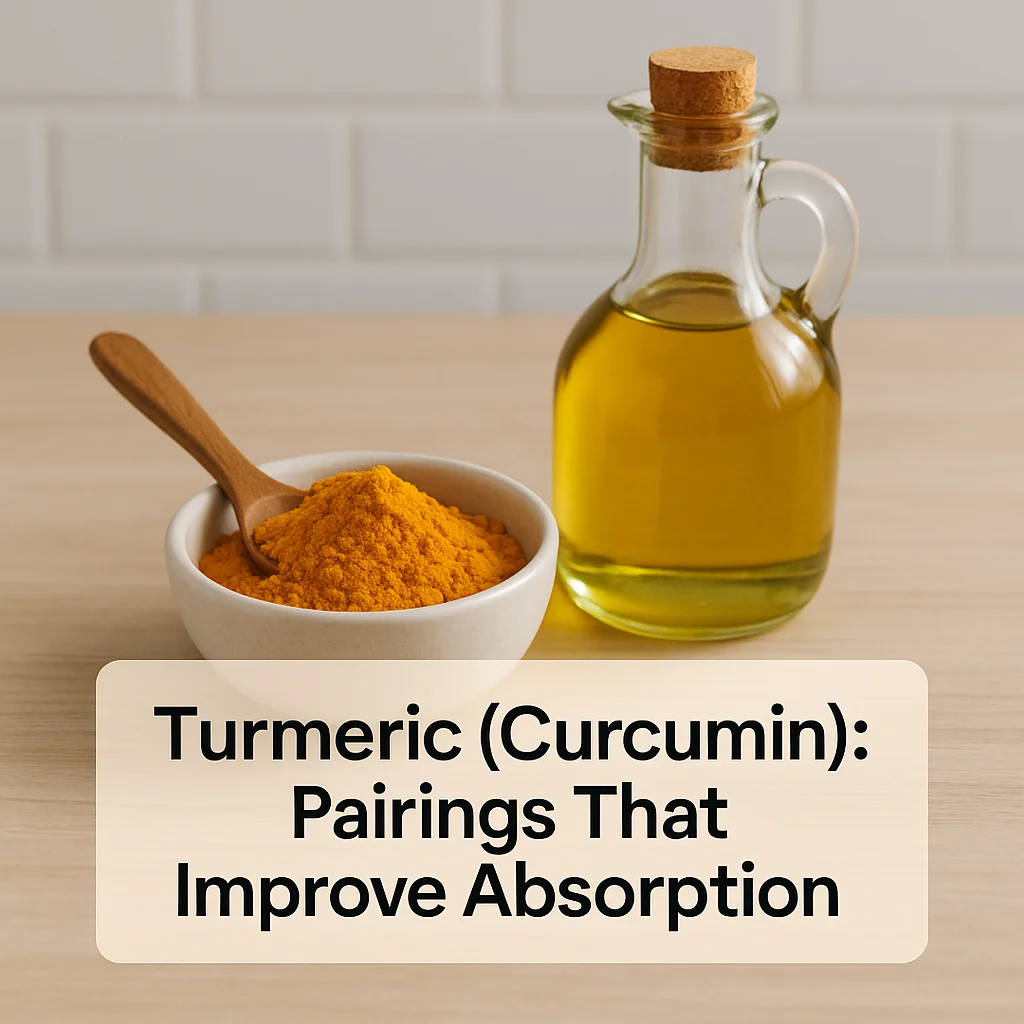
- Who it’s usually good for: Individuals seeking to enhance their diet with anti-inflammatory and antioxidant support.
- Who should be cautious: Those on blood-thinning medications or with specific gallbladder issues.
- Best simple way to do it: Pair turmeric with black pepper and a source of fat.
- Biggest mistake people make: Consuming turmeric without a pairing that enhances absorption.
- One practical “next step”: Start adding a dash of black pepper to dishes containing turmeric.
🧠 Why This Matters
Turmeric is celebrated globally for its potential health benefits, including reducing inflammation and providing antioxidant protection. However, curcumin, the key active compound in turmeric, is not easily absorbed by the body. By understanding which pairings improve its absorption, you can make the most of this nutrient powerhouse in your diet, supporting overall well-being.
🔬 What the Science Says
Curcumin's absorption in the body can be significantly enhanced through various means. The most noteworthy mechanism is its interaction with piperine, an active compound in black pepper, which inhibits certain digestive processes, allowing greater absorption of curcumin. Combining turmeric with fats like oils or avocados aids absorption as well, since curcumin is fat-soluble. It is important to note that while some studies support these findings, more research is needed to fully understand all influencing factors.
⚖️ Benefits vs Downsides
- Benefits:
- May reduce inflammation in the body.
- Provides antioxidant support.
- Potential to improve joint health.
- Supports digestive health.
- May enhance brain function in some cases.
- Downsides/Cautions:
- May cause digestive upset in some individuals.
- Potential interactions with medications, especially anticoagulants.
- Over-reliance on supplements without proper pairings can lessen benefits.
- Possible risk of exacerbating gallbladder issues.
🎯 The Best Way to Apply This
- Add turmeric to your diet by incorporating it into soups, stews, or curries.
- Always include a dash of black pepper when using turmeric to increase absorption.
- Pair with a source of healthy fat, like olive oil or coconut milk, for better solubility.
- Consider turmeric teas or golden milk, enriched with pepper and fats, as a calming beverage option.
- Opt for high-quality turmeric or curcumin supplements if dietary sources are inadequate, remembering to read labels for absorption aids.
⏰ Timing, Portions, and Frequency
Incorporate turmeric into meals rather than consuming it on an empty stomach to support digestion. Consistent usage, such as adding it to daily meals like breakfast smoothie bowls, or an evening cup of golden milk, can enhance cumulative benefits. Portions should remain small and manageable, akin to a teaspoon per day in meals or drinks for culinary use.
🤝 Best & Worst Pairings (Food Combos)
- Pairs well with:
- Black pepper: Increases absorption rates significantly.
- Coconut oil: Provides the necessary fats for solubility.
- Almond milk: A fatty liquid base for turmeric lattes.
- Ginger: Complements the flavors in teas and curries.
- Honey: Adds sweetness and facilitates consumption.
- Be careful combining with:
- Minimal or no fat meals: Reduces curcumin absorption potential.
- Pure water: Lacks the necessary fats for solubility.
- High amounts of sugar: Can detract from health benefits when over-consumed.
🚦Who Should Be Careful
- Individuals on blood-thinning medications due to potential interactions.
- Those with existing gallbladder problems or gallstones.
- People who experience digestive issues like acid reflux may be sensitive.
- If unsure, ask a pharmacist or clinician to gauge personal suitability.
🧩 Common Mistakes and Fixes
- Mistake: Consuming turmeric without black pepper.
Fix: Add a pinch of black pepper to dishes containing turmeric. - Mistake: Using turmeric supplements incorrectly.
Fix: Follow supplement guidelines and ensure they contain absorption aides. - Mistake: Ingesting turmeric in water alone.
Fix: Consume with a fatty liquid such as milk or in an oil-based dish. - Mistake: Too high an intake at once.
Fix: Spread turmeric intake throughout the day. - Mistake: Relying solely on supplements without dietary sources.
Fix: Integrate turmeric into meals as often as possible. - Mistake: Skipping label details on supplements.
Fix: Choose products with clearly mentioned black pepper or other enhancers.
📋 Quick Checklist
- Add black pepper when using turmeric.
- Pair with a healthy fat to enhance absorption.
- Incorporate turmeric in meals rather than taking it alone.
- Try turmeric in soups or curries for best flavor and absorption.
- Consider turmeric-based drinks like golden milk.
- Beware of possible interactions with medication.
- Consult with a health professional if unsure about its impact.
- Ensure supplement choices include absorption enhancers.
- Avoid high doses at one time; distribute intake.
- Reassess usage if experiencing digestive upsets.
- Utilize natural sources wherever feasible.
📌 Summary
- Pair turmeric with black pepper and healthy fats for better absorption.
- Incorporate turmeric into meals like curries to maximize benefits.
- Be cautious if using medication that may interact with turmeric.
- Add black pepper as a simple first step to improve turmeric absorption.
- Know that while benefits are promising, research is ongoing for full effects.
- Distribute turmeric intake across meals for gradual absorption.
- Consult healthcare providers regarding potential interactions.
- Remember the importance of fat-soluble pairings in optimizing effects.
- Start with small changes like golden milk or seasoned dishes.