🥗 Walnuts vs Almonds: Which Fits Your Goal Best?
✅ Key Takeaway
If you're deciding between walnuts and almonds, your choice depends on your goals. Walnuts offer more omega-3 fatty acids, which can support heart health, while almonds are higher in vitamin E and can aid skin health and antioxidant needs. For weight management, both are calorie-dense, so portion control is key.
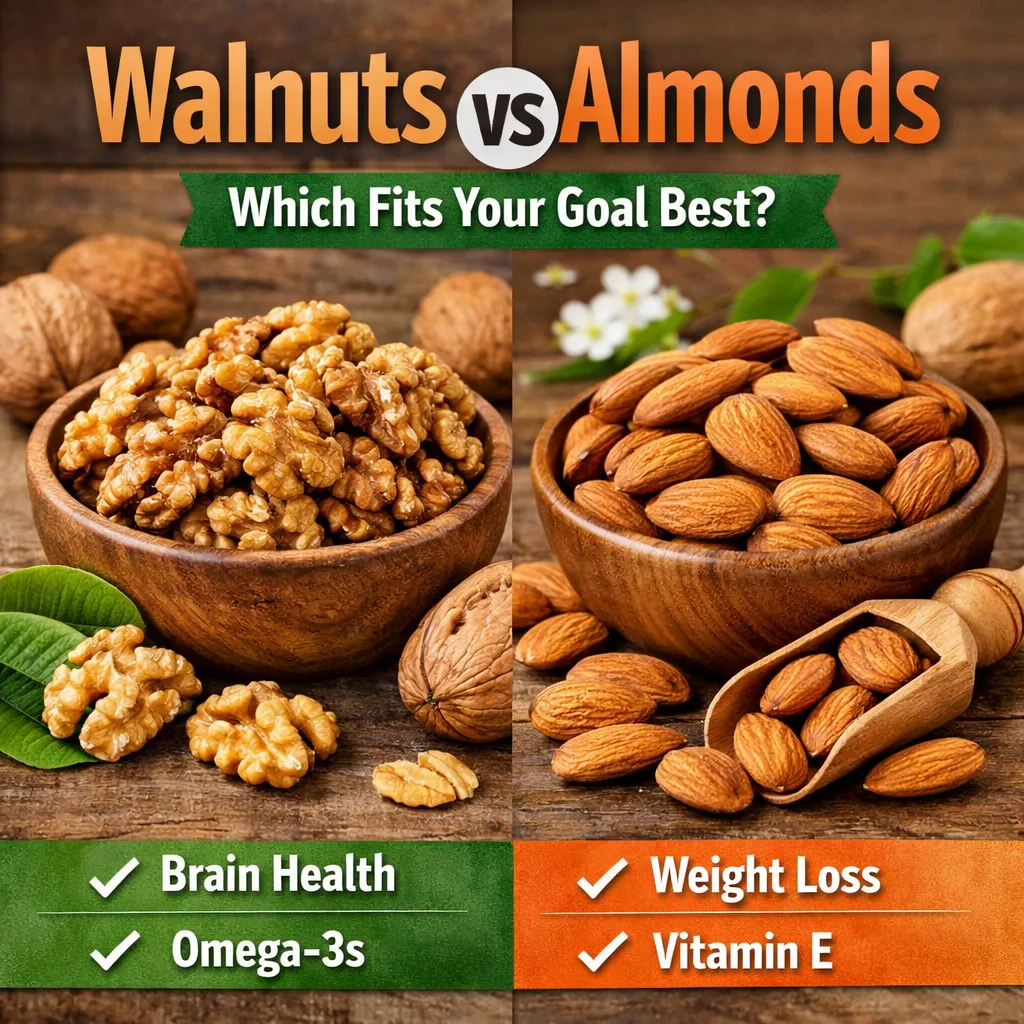
- Good for: Individuals seeking heart health benefits (walnuts) or improved skin health (almonds).
- Caution for: People with nut allergies or those needing to watch their calorie intake.
- Best simple way: Enjoy as a snack, sprinkled on salads, or in yogurts to enhance nutrients without overconsuming.
- Biggest mistake: Eating large quantities due to high-calorie content.
- Next step: Try a small handful of each to see which satisfies your specific health goals.
🧠 Why This Matters
Choosing between walnuts and almonds often comes down to personal health goals and dietary preferences. Understanding their nutrition profiles can help combat global health challenges like heart disease and skin aging. Both nuts offer nutrients that can boost energy, support cognitive function, and mitigate cravings, making them versatile additions to any diet.
🔬 What the Science Says
Walnuts are rich in alpha-linolenic acid (ALA), a type of omega-3 fatty acid, which may support cardiovascular health. Almonds offer higher amounts of vitamin E, a powerful antioxidant that can protect cells from oxidative stress. Both nuts provide a healthy mix of protein, fiber, and fats that can help maintain satiety and promote better digestion. While scientific evidence supports these benefits, responses can vary based on individual dietary needs and genetic factors.
⚖️ Benefits vs Downsides
- Benefit: Walnuts offer omega-3 fatty acids, supporting heart health.
- Benefit: Almonds are high in vitamin E, benefiting skin and antioxidant defenses.
- Benefit: Both nuts provide protein and fiber for satiety and digestion.
- Benefit: Nuts can be a convenient and portable snack option.
- Benefit: May aid in reducing cravings due to their satisfying nutrient profile.
- Downside: High in calories; overconsumption can lead to weight gain.
- Downside: May cause digestive issues in those with nut sensitivities.
- Downside: Walnuts and almonds can be expensive, making them less accessible for some.
- Downside: Not suitable for individuals with nut allergies.
🎯 The Best Way to Apply This
- Identify your primary health goal: heart health or skin health.
- Choose walnuts for omega-3 support or almonds for vitamin E.
- Incorporate a small handful (about 1 ounce) into your daily diet.
- Alternate between the two nuts for a balanced approach if both benefits are desired.
- Monitor your body's reaction and adjust portion sizes if needed.
⏰ Timing, Portions, and Frequency
Enjoy a small handful of nuts as a snack or add to meal times to enhance satiety. Eating nuts in the morning can provide sustained energy throughout the day. Aim for about a palm-sized portion to manage calorie intake. Be mindful of combining with meals to avoid overeating.
🤝 Best & Worst Pairings (Food Combos)
- Pairs well with: Fresh fruits, such as apples or berries, for a balanced snack.
- Pairs well with: Yogurt or oatmeal for added texture and nutrients.
- Pairs well with: Leafy greens and salads for a crunchy, nutritional boost.
- Be careful combining with: Sugary foods, which can negate health benefits.
- Be careful combining with: Other high-calorie snacks to prevent excess calories.
- Be careful combining with: Heavy meals, making digestion difficult.
🚦Who Should Be Careful
- Individuals with nut allergies or sensitivities.
- Those needing to monitor calorie intake for weight management.
- People experiencing digestive issues may need to moderate intake.
- If unsure, ask a pharmacist or clinician about including nuts in your diet.
🧩 Common Mistakes and Fixes
- Mistake: Eating nuts by the handfuls. Fix: Keep portion sizes measured.
- Mistake: Choosing roasted, salted nuts. Fix: Opt for raw or lightly toasted.
- Mistake: Ignoring calories. Fix: Track intake, especially in calorie-controlled diets.
- Mistake: Over-relying on nuts for nutrients. Fix: Ensure a varied diet.
- Mistake: Storing improperly, leading to spoilage. Fix: Keep in airtight containers.
- Mistake: Mixing with unhealthy snacks. Fix: Pair with healthy options.
- Mistake: Consuming nuts too quickly, leading to digestive distress. Fix: Chew slowly and thoroughly.
📋 Quick Checklist
- Decide on primary health goals.
- Include a palm-sized portion daily.
- Alternate between walnuts and almonds if needed.
- Choose raw or lightly toasted options.
- Pair with fruits or yogurt for balance.
- Avoid pairing with sugary or high-calorie foods.
- Store nuts in an airtight container.
- Chew nuts thoroughly.
- Monitor how your body feels after consumption.
- Adjust portions if weight changes occur.
- Consult with a professional for allergies or dietary concerns.
- Aim for a varied diet to complement nut intake.
📌 Summary
- Answer: Choose walnuts for heart health, almonds for skin health.
- Best method: Integrate a small handful into your daily routine.
- Key caution: High calorie content; monitor portion sizes.
- Easiest habit: Pair with healthy snacks like fruit for a balanced intake.
- Caution: Be aware of nut allergies and dietary sensitivities.
- Timing: Snacks or with meals, mindful of calorie totals.
- Next step: Test out a small portion of each nut type.
- Apply balance: Use both walnuts and almonds strategically based on needs.
- Nutrient balance: Ensure varied food intake for comprehensive nutrition.
- Storage: Protect freshness with proper storage methods.