🥗 Should Olive Oil Only Be Eaten Raw?
✅ Key Takeaway
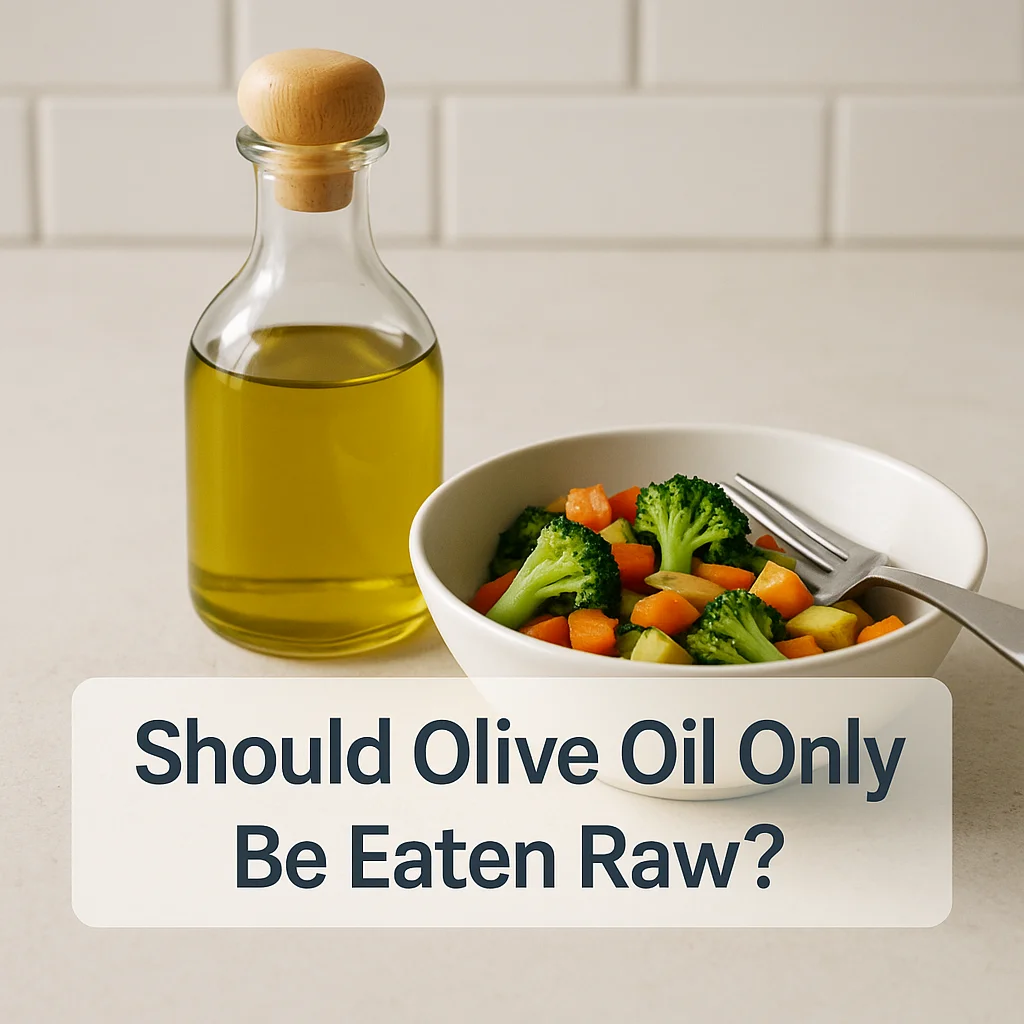
In most cases, olive oil does not need to be eaten only raw. While it is commonly used fresh for its flavor and nutritional benefits, it can also be safely used for cooking if handled properly. Whether used raw or cooked, quality and application matter.
- Good For: Those looking for a flavorful and heart-healthy oil.
- Cautious: Individuals sensitive to high-fat meals or on specific medications. Consult with a health professional.
- Best Simple Way: Use extra virgin olive oil for dressings and low-heat cooking.
- Biggest Mistake: Overheating the oil beyond its smoke point.
- Next Step: Experiment with using olive oil in both raw and light sauté recipes.
🧠 Why This Matters
Cooking oils can significantly impact nutrition and overall health. Olive oil is associated with numerous health benefits, including heart health and anti-inflammatory properties. Understanding how to use it best—raw or cooked—can enhance its benefits and enrich meals worldwide.
Olive oil is a cornerstone in many diets due to its rich flavor and health advantages. Many wonder if cooking it affects its beneficial properties or if it should only be consumed raw for optimal health.
🔬 What the Science Says
Olive oil, particularly extra virgin olive oil, is rich in monounsaturated fatty acids and polyphenols, which are associated with heart health and anti-inflammatory effects. Heating olive oil, particularly beyond its smoke point, can lead to nutrient degradation and the formation of undesirable compounds. However, when used in low to moderate heat, olive oil retains most of its nutrients.
Evidence suggests that while high temperatures can reduce certain compounds, the overall nutrient profile remains beneficial for moderate cooking. Opinions vary on the degree to which heating diminishes olive oil’s benefits, but it is widely accepted that low- to medium-heat cooking retains useful properties.
⚖️ Benefits vs Downsides
- Benefits:
- Rich in heart-healthy monounsaturated fats.
- Contains antioxidants that may reduce inflammation.
- Enhances flavor of dishes when used raw or cooked.
- A versatile option for both dressing and sautéing.
- Improves nutrient absorption of vegetables.
- Associated with a reduced risk of chronic diseases.
- Can contribute to a balanced Mediterranean diet.
- Downsides/Cautions:
- Can degrade if overheated, losing beneficial properties.
- Higher in calories, which may contribute to weight gain if overused.
- Quality can vary; not all olive oils are created equal.
- Might interact with medications due to its fat content.
- May not be suitable for high-temperature frying.
- Can go rancid if improperly stored.
- Potentially less budget-friendly compared to other cooking oils.
🎯 The Best Way to Apply This
- Choose high-quality extra virgin olive oil for maximum benefits.
- Use olive oil raw in salads or drizzled over dishes for flavor and health benefits.
- Cook with olive oil at low to medium heat to preserve nutrients.
- Store olive oil in a cool, dark place to maintain quality.
- Avoid using olive oil for deep frying to prevent degradation.
⏰ Timing, Portions, and Frequency
Use olive oil anytime throughout the day, whether as part of a meal or as a dressing. Consume it with meals to enhance nutrient absorption but be mindful of portion sizes—about a tablespoon is sufficient for most uses. Olive oil can be part of daily dietary routines; however, balance is essential to avoid excess calorie intake.
No need to consume it on an empty stomach, but pairing with meals is beneficial for nutrient synergy.
🤝 Best & Worst Pairings (Food Combos)
- Pairs well with:
- Leafy greens and salads for fresh, heart-healthy dishes.
- Vegetables, accentuating flavor and aiding in absorption.
- Whole grains like quinoa or brown rice, enhancing taste and nutrition.
- Legumes, adding richness and aiding digestion.
- Pasta dishes, offering a creamy texture without dairy.
- Be careful combining with:
- Rich, fatty dishes that could lead to excessive caloric intake.
- High-heat cooking that could degrade beneficial properties.
- Dishes with a high spice content that might require a stable cooking oil.
- Foods that have a high risk of oxidation, such as certain fish, at high heat.
🚦Who Should Be Careful
- Those on low-fat diets may need to moderate intake.
- Individuals with gallbladder issues should consult a clinician.
- If taking fat-sensitive medications, seek medical advice.
- Inquire with a pharmacist/clinician if there are concerns about interactions with current dietary plans.
🧩 Common Mistakes and Fixes
- Using low-quality olive oil → Opt for extra virgin for quality benefits.
- Overheating → Limit cooking to low to medium temperatures.
- Storing improperly → Store in a cool, dark place to maintain freshness.
- Using too much → Measure and use moderation to avoid excess calories.
- Neglecting taste → Use as a flavor enhancer, not only for health.
- Ignoring storage life → Check expiration dates for freshness.
- Confusing smoke point → Know the smoke point to avoid nutrient loss.
- Replacing completely → Include as a balanced part of a varied diet.
📋 Quick Checklist
- Choose extra virgin olive oil.
- Use for raw preparations and low-heat cooking.
- Store properly to maintain quality.
- Avoid overheating to preserve nutrients.
- Pair with vegetables for enhanced nutrient absorption.
- Monitor portion sizes for calorie control.
- Use sparingly for high-temperature cooking.
- Be mindful of potential medication interactions.
- Balance intake alongside diverse dietary fats.
- Verify oil freshness regularly.
- Introduce gradually into daily meal plans.
- Experiment with different dishes for taste diversity.
- Maintain awareness of personal health status and dietary needs.
📌 Summary
- Olive oil can be eaten both raw and cooked, usually low to medium heat is best.
- Extra virgin olive oil is preferred for health benefits.
- Quality and cooking temperature are crucial.
- Watch portion sizes to avoid excess calorie intake.
- Enhances flavor and nutrition when paired with vegetables.
- Be cautious with medications and certain health conditions; consult a professional.
- Store correctly to prevent rancidity and maintain flavor.
- Understand the difference in oil quality and usage for optimal benefits.
- Eating olive oil should complement a balanced diet.
- Experimenting with it can enhance culinary experiences and health.
- Be mindful of cooking methods to retain its natural benefits.
- Consider olive oil a versatile part of the diet, adjusting for personal health needs.