🥗 Blanching vs Stir-Frying: Which Preserves More Nutrients?
✅ Key Takeaway
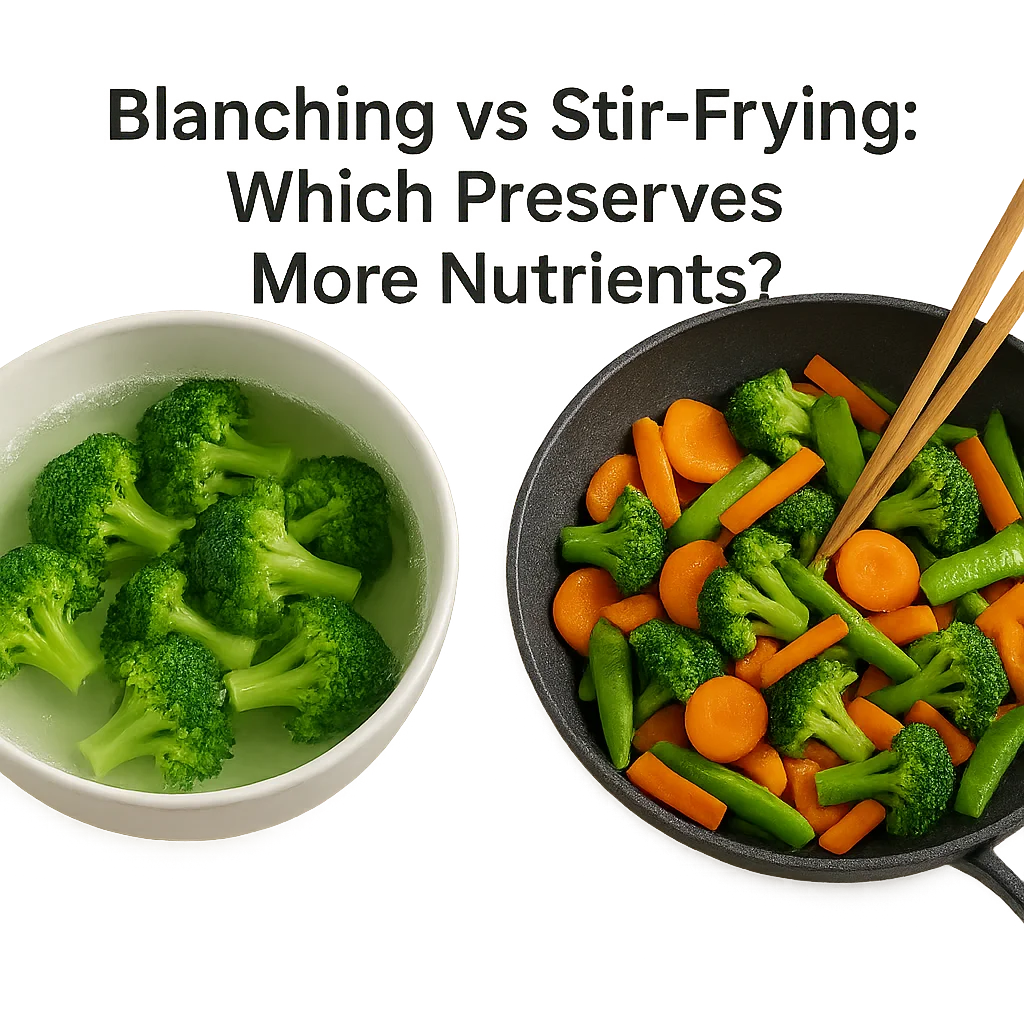
In most cases, the nutrient preservation of blanching vs stir-frying can vary depending largely on the type of vegetable and nutrient in question. Typically, blanching is better at preserving heat-sensitive vitamins, while stir-frying retains more fiber and minerals.
- 👨🍳 Good for those looking to preserve specific nutrients
- 🚫 Caution for those on high-sodium diets (stir-frying can add salt)
- 🍲 Best simple way: Precise timing and method matter
- ❗ Biggest mistake: Overcooking
- 🔍 Next step: Experiment with both methods
🧠 Why This Matters
Choosing the right cooking method impacts not only taste and texture but also the nutritional value of food. For those looking to optimize health through diet, understanding how cooking affects nutrient retention is crucial. This knowledge helps in making informed choices that support better digestion, energy levels, and overall wellness.
🔬 What the Science Says
Cooking affects the bioavailability of nutrients. Blanching, a quick boil followed by an ice bath, helps retain water-soluble vitamins like vitamin C. Stir-frying, done quickly over high heat, preserves more fiber and does not leach minerals into cooking water. However, evidence suggests that nutrient retention also depends on cooking time and temperature.
⚖️ Benefits vs Downsides
- Benefit: Retains vitamin C
- Benefit: Maintains vibrant color
- Benefit: Quick cooking method
- Benefit: Reduces risk of overcooking
- Downside: May lose some antioxidants
- Downside: Risk of nutrient leaching in water (blanching)
- Downside: Potential for excessive oil use (stir-frying)
- 🌱 Downside: Can result in nutrient leaching with excess submersion (blanching)
- 🔋 Downside: High heat can degrade sensitive nutrients (stir-frying)
🎯 The Best Way to Apply This
- 🥕 Choose vegetables that benefit most from each method.
- 🌡️ Control cooking time: Shorter is often better.
- 🥄 Measure spices and oils to avoid excess.
- 🍽️ Pair with balance: Include varied food groups.
- 📦 Store properly: Minimize nutrient loss through exposure.
⏰ Timing, Portions, and Frequency
Consider cooking vegetables shortly before meals to maintain their freshness and nutrient content. Aiming for a small bowl-sized portion per individual meal is generally advisable. In terms of timing, both methods are quick, making them suitable choices for any meal of the day.
🤝 Best & Worst Pairings (Food Combos)
- Pairs well with lean proteins like tofu or chicken
- Combines nicely with whole grains like brown rice or quinoa
- Consider adding spices for enhanced flavor
- Be careful combining with processed or high-sodium foods
- Avoid excessive cooking with fats
- Limit sugary sauces which may negate health benefits
🚦Who Should Be Careful
- Individuals on sodium-restricted diets should watch added salt in stir-frying.
- If sensitive to fried foods, consider alternative options.
- Those with digestive issues might find lightly cooked vegetables easier to digest.
- Allergic to specific oils? Choose alternatives carefully.
- If unsure, talk to a pharmacist/clinician.
🧩 Common Mistakes and Fixes
- ⏱️ Mistake: Overcooking → Fix: Monitor cooking time more closely.
- 🔥 Mistake: Burning ingredients → Fix: Stir-fry on medium heat.
- 🥣 Mistake: Not cooling properly (blanching) → Fix: Use ice bath effectively.
- 🧴 Mistake: Excessive oil in stir-frying → Fix: Measure oil beforehand.
- 🚫 Mistake: Ignoring sodium content (stir-frying) → Fix: Use low-sodium alternatives.
- 🥬 Mistake: Overcrowding pan → Fix: Cook in batches for even cooking.
- 🌡️ Mistake: Not drying vegetables before stir-frying → Fix: Pat them dry with a paper towel first.
- ❌ Mistake: Discarding heat-sensitive vitamins unintentionally (blanching) → Fix: Retain cooking water as stock for soups.
📋 Quick Checklist
- Decide on method based on vegetable type.
- Keep cooking time short for maximum nutrient retention.
- Measure oil and spices carefully.
- Include protein for balanced meals.
- Avoid excessive sodium/salt.
- Use high-quality equipment for consistent cooking.
- Consider pairing with grains or proteins.
- Watch for overheating or burning.
- Experiment with spices and herbs.
- Store properly to preserve nutrients.
- Monitor overall sodium intake.
- Ensure dishes remain within personal dietary constraints.
- If unsure, consult with a nutrition expert.
📌 Summary
- Blanching often preserves vitamins better; stir-frying keeps minerals and fiber.
- Quick cooking time is crucial for nutrient retention.
- Watch for oil and sodium in stir-frying.
- Try both methods to see what works best for you.
- Pair intelligently with proteins and whole grains.
- Best conducted in small, controlled portions.
- Keep methods simple and ingredients fresh.
- If dietary concerns exist, consult a professional.
- Make sure to dry ingredients before cooking.
- Use blanching water as nutritious broth.
- Invest in suitable cookware for quality results.
- Monitor nutrient needs and adjust cooking method accordingly.