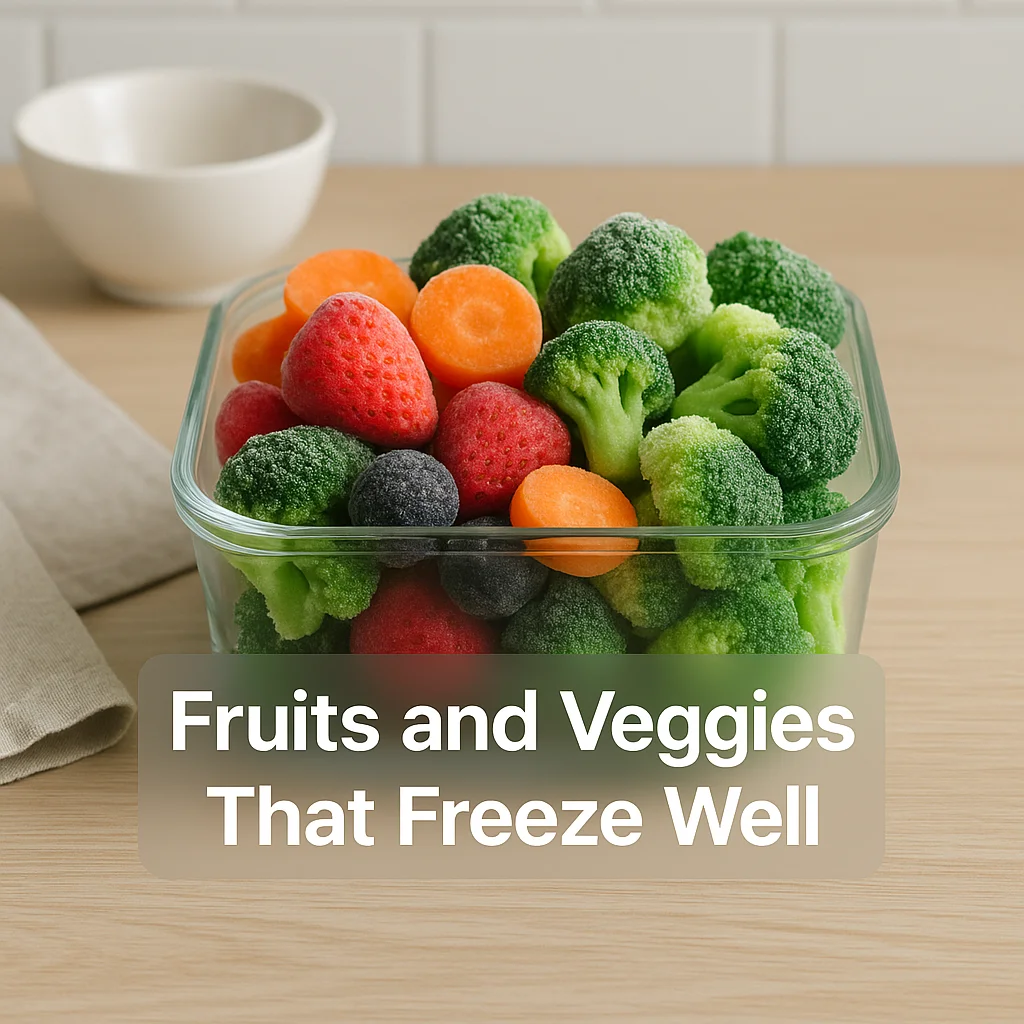
🥗 Fruits and Veggies That Freeze Well
✅ Key Takeaway
Many fruits and vegetables freeze well, preserving their nutrients and freshness for later use. Freezing can be a convenient way to minimize food waste and maintain a healthy diet.
- Who it’s usually good for: Busy individuals looking to preserve perishable foods.
- Who should be cautious: Those with a lack of freezer space.
- Best simple way to do it: Cut, blanch (for veggies), and store in airtight bags.
- Biggest mistake people make: Not blanching vegetables before freezing.
- One practical “next step”: Start by freezing easy items like berries or green beans.
🧠 Why This Matters
Freezing is a powerful tool in reducing food waste and extending the shelf life of fruits and vegetables. It's often challenging to consume fresh produce before it spoils, especially with busy lifestyles. Proper freezing methods can aid in maintaining balanced nutrition, ensuring access to healthy foods regardless of seasonal availability. It also helps reduce grocery trips, saving time and money.
🔬 What the Science Says
Freezing fruits and vegetables slows the enzymatic processes that lead to ripening and spoilage, effectively preserving nutrients. Some vegetables benefit from blanching before freezing, which helps to inactivate enzymes that can cause loss of flavor, color, and texture. While the processes are largely beneficial, some sensitive nutrients like vitamin C can decrease slightly during freezing and storage.
⚖️ Benefits vs Downsides
- Benefit: Extends the shelf life of seasonal produce.
- Benefit: Maintains nutritional content for most fruits and veggies.
- Benefit: Reduces food waste significantly.
- Benefit: Offers convenience for meal prep and cooking.
- Benefit: Allows for bulk purchases saving money.
- Benefit: Supports a balanced diet throughout the year.
- Benefit: Can prevent spoilage especially for those with unpredictable schedules.
- Downside: May result in texture changes for some items like tomatoes.
- Downside: Some nutrients like vitamin C may slightly degrade.
- Downside: Requires initial time investment for preparation and blanching.
- Downside: Limited freezer space can be a constraint.
- Downside: Incorrect storage can lead to freezer burn.
🎯 The Best Way to Apply This
- Choose fruits and vegetables that you frequently use and know you can freeze.
- Wash and thoroughly dry all produce before preparing for freezing.
- For vegetables, blanch them in boiling water for a few minutes before quick cooling.
- Cut fruits and vegetables into usable portions or sizes.
- Pack produce in airtight containers or freezer-safe bags, removing excess air.
- Label with the date of freezing and expected use-by date.
⏰ Timing, Portions, and Frequency
Fruits and vegetables can be frozen at any time, preferably at their peak ripeness for best quality. Portion sizes should be based on typical usage, such as enough for a single smoothie or meal portion. Using freezer bags laid flat can maximize space and make defrosting quicker. Regularly rotate frozen items to consume the oldest first, maintaining a cycle to prevent long-term storage issues.
🤝 Best & Worst Pairings (Food Combos)
- Pairs well with: Smoothies, soups, stews, and casseroles.
- Pairs well with: Yogurt for frozen fruits, or as a side for grilled meats.
- Pairs well with: Stir-fries, pasta dishes, and rice bowls.
- Be careful combining with: Fresh salads where texture is key.
- Be careful combining with: Foods that require more precise cooking times.
- Be careful combining with: Other thawed items that are sensitive to moisture change.
🚦Who Should Be Careful
- People with very limited freezer space should prioritize or limit what they freeze.
- Those sensitive to texture changes, as some produce becomes softer or waterier.
- Individuals on medication that requires fresh produce intake; consult if unsure.
- If unsure, ask a pharmacist/clinician, especially if on any medication or a specialized diet.
🧩 Common Mistakes and Fixes
- Skipping blanching → Always blanch vegetables before freezing.
- Leaving air in storage bags → Squeeze out as much air as possible.
- Using low-quality containers → Invest in quality freezer-safe bags or containers.
- Freezing overripe produce → Use only prime-condition fruits and veggies.
- Not labeling items → Always date and label freezer bags for reference.
- Overloading the freezer → Organize and avoid overpacking.
- Refreezing thawed produce → Only thaw as much as needed.
📋 Quick Checklist
- Ensure produce is at peak ripeness.
- Wash and dry fruits and vegetables thoroughly.
- Blanch applicable vegetables.
- Drain and cool quickly after blanching.
- Cut into feasible sizes before freezing.
- Use airtight freezer bags or containers.
- Remove as much air as possible from storage bags.
- Label each package with date and contents.
- Lay bags flat in the freezer to save space.
- Rotate stored foods regularly to maintain freshness.
- Check frequently for any signs of freezer burn.
- Avoid eating thawed items that have been refrozen.
- Utilize frozen items within a reasonable timeframe, preferably within months.
📌 Summary
- Freezing fruits and vegetables can extend shelf life and retain nutrients.
- The best method involves proper washing, blanching for veggies, and airtight storage.
- Be cautious of freezer space limitations and potential textural changes.
- A simple habit to start today: Freeze your own berries or green beans as a starting point.
- Always label with dates to ensure timely usage.
- Remove excess air to prevent freezer burn.
- Organize your freezer to maximize space and accessibility.
- Blanch vegetables properly to maintain their quality and flavor.
- Consider rotating foods in and out of the freezer for freshness.
- Be mindful of textural changes for certain produce like tomatoes.
- If uncertain about medication or diet compatibilities, consult with a healthcare provider.
- While freezing is beneficial, fresh produce also plays an important role in diet variety.