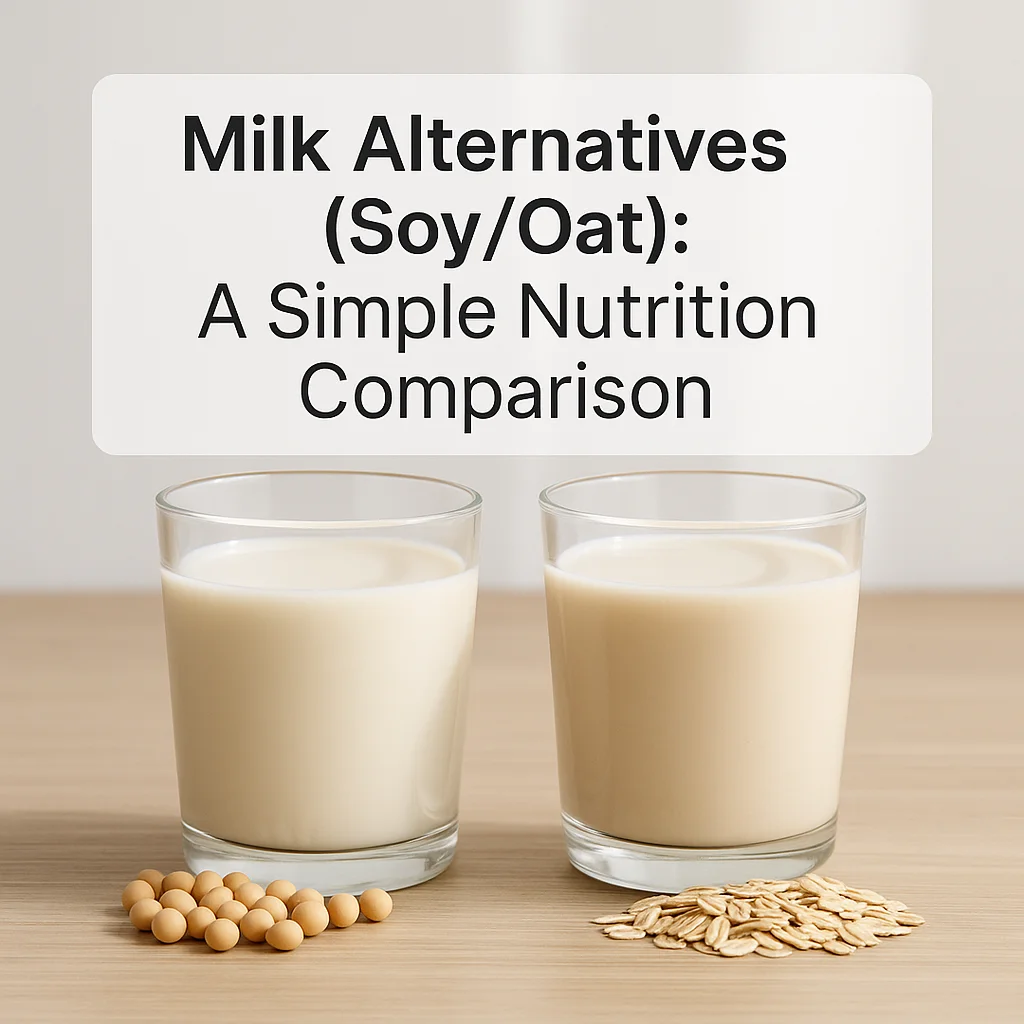
🥗 Milk Alternatives (Soy/Oat): A Simple Nutrition Comparison
✅ Key Takeaway
In most cases, soy and oat milk can both be excellent alternatives to dairy milk, each bringing its own unique benefits and downsides. Your choice between the two depends on your nutritional needs, preferences, and any dietary restrictions you might have.
- Good for: People with lactose intolerance, those following a vegan diet.
- Caution for: Individuals with soy allergies or sensitivity, those monitoring carb intake.
- Best way: Choose unsweetened varieties to minimize added sugars.
- Biggest mistake: Assuming all milk alternatives are nutritionally identical to dairy milk.
- Next step: Try both soy and oat milk to determine personal taste preference and digestive response.
🧠 Why This Matters
As plant-based diets continue to grow in popularity worldwide, the demand for dairy-free milk alternatives like soy and oat milk has risen. These options address common health and lifestyle needs—such as lactose intolerance and veganism—while contributing to environmental sustainability. Choosing the right milk alternative can influence daily nutrition, digestion, and personal health goals.
🔬 What the Science Says
Soy milk, made from soybeans, is known for its protein content, which is comparable to dairy milk, making it a good option for those looking to maintain or increase their protein intake. It contains essential amino acids and is often fortified with vitamins like B12 and D, as well as calcium.
Oat milk, derived from oats, is rich in beta-glucans, a type of soluble fiber that can aid in managing cholesterol levels. While it may not naturally contain as much protein as soy milk, it is frequently fortified with calcium and vitamins, making it a nutritious choice for different dietary needs.
The overall evidence suggests that both alternatives can be part of a healthy diet, but their nutritional profiles differ significantly. Consider your nutritional priorities when choosing between them.
⚖️ Benefits vs Downsides
- Benefits of Soy Milk:
- High in protein
- Contains essential amino acids
- Often fortified with B12, calcium, and vitamin D
- Low saturated fat
- May support heart health
- Benefits of Oat Milk:
- Contains beta-glucans for cholesterol management
- Usually fortified with calcium and vitamins
- Smooth, creamy texture
- Good source of dietary fiber
- Less likely to cause allergies
- Downsides of Soy Milk:
- Can be allergenic for some individuals
- May affect hormone levels in excessive amounts
- Potential for genetically modified ingredients
- Care needed if consumed with thyroid medication
- Downsides of Oat Milk:
- Lower protein content
- Higher in carbohydrates
- Oftentimes more expensive
- Check for added sugars in flavored versions
🎯 The Best Way to Apply This
- Consider dietary needs: protein needs, lactose intolerance, and carb management.
- Opt for unsweetened versions to minimize added sugars.
- Incorporate fortified options to boost vitamin and mineral intake.
- Monitor personal digestive response and adapt choices accordingly.
⏰ Timing, Portions, and Frequency
Soy and oat milk can be consumed at any time of the day, based on personal preference and dietary goals. They can complement breakfast cereals, be added to coffee or tea, used in cooking, or enjoyed as a standalone beverage. Start with a small glass to assess taste and personal tolerance before incorporating more regularly.
🤝 Best & Worst Pairings (Food Combos)
- Pairs well with:
- Coffee and tea
- Breakfast cereals and oatmeal
- Smoothies and shakes
- Baked goods as a dairy-free ingredient
- Be careful combining with:
- High-sodium processed foods (watch for nutrient balance)
- Large amounts of soy-based products if consuming soy milk
- Sweetened food, if using flavored or sweetened milk alternatives
🚦Who Should Be Careful
- People with soy allergies should avoid soy milk.
- Individuals managing carbohydrates might need to watch oat milk consumption.
- Those on certain medications should consider potential interactions and consult a clinician if unsure.
- Consistency seekers should choose products without added sugars to maintain stable blood sugars.
🧩 Common Mistakes and Fixes
- Confusing protein content → Check labels to compare protein levels, especially if high protein intake is needed.
- Overlooking added sugars → Always opt for unsweetened or minimally sweetened versions.
- Assuming similar nutritional value to dairy → Compare fortification levels especially for calcium and vitamins.
- Ignoring dietary preferences → Experiment with both soy and oat milk to match taste and digestive comfort.
- Relying only on taste tests → Use nutritional needs as a guide as well.
- Choosing based solely on calorie content → Remember to consider macronutrient and micronutrient needs.
📋 Quick Checklist
- Determine personal dietary preferences and requirements.
- Choose unsweetened to avoid added sugars.
- Compare protein content of soy milk if high protein is a priority.
- Check if oat milk is fortified with essential nutrients.
- Start with small quantities to assess taste and tolerance.
- Pair with foods like cereals and smoothies for additional nutrition.
- Consider allergen risks if sensitive to soy.
- Balance carb intake when consuming oat milk regularly.
- Use soy or oat milk in cooking as a versatile dairy alternative.
- Avoid flavored versions if monitoring sugar intake.
- Explore different brands and taste test for preferred choice.
- Regularly review diet for variety and nutritional adequacy.
📌 Summary
- Soy and oat milk can be healthy dairy alternatives, each with unique benefits and considerations.
- Best method: Opt for unsweetened and fortified versions for optimal nutrition.
- Watch for soy allergies and high carb intake with oat milk.
- Start today by taste-testing small quantities to determine preference.
- Both options generally pair well with cereals, coffee, and smoothies.
- Check labels for ingredient quality and fortification levels.
- Balance soy milk consumption if incorporating many soy products.
- Choose based on personal nutritional goals and taste preference.
- Use oat milk for its creamy texture and fiber benefits.
- Both contribute to a diverse dietary pattern when chosen wisely.