🥗 The Right Way to Store Onions and Garlic
✅ Key Takeaway
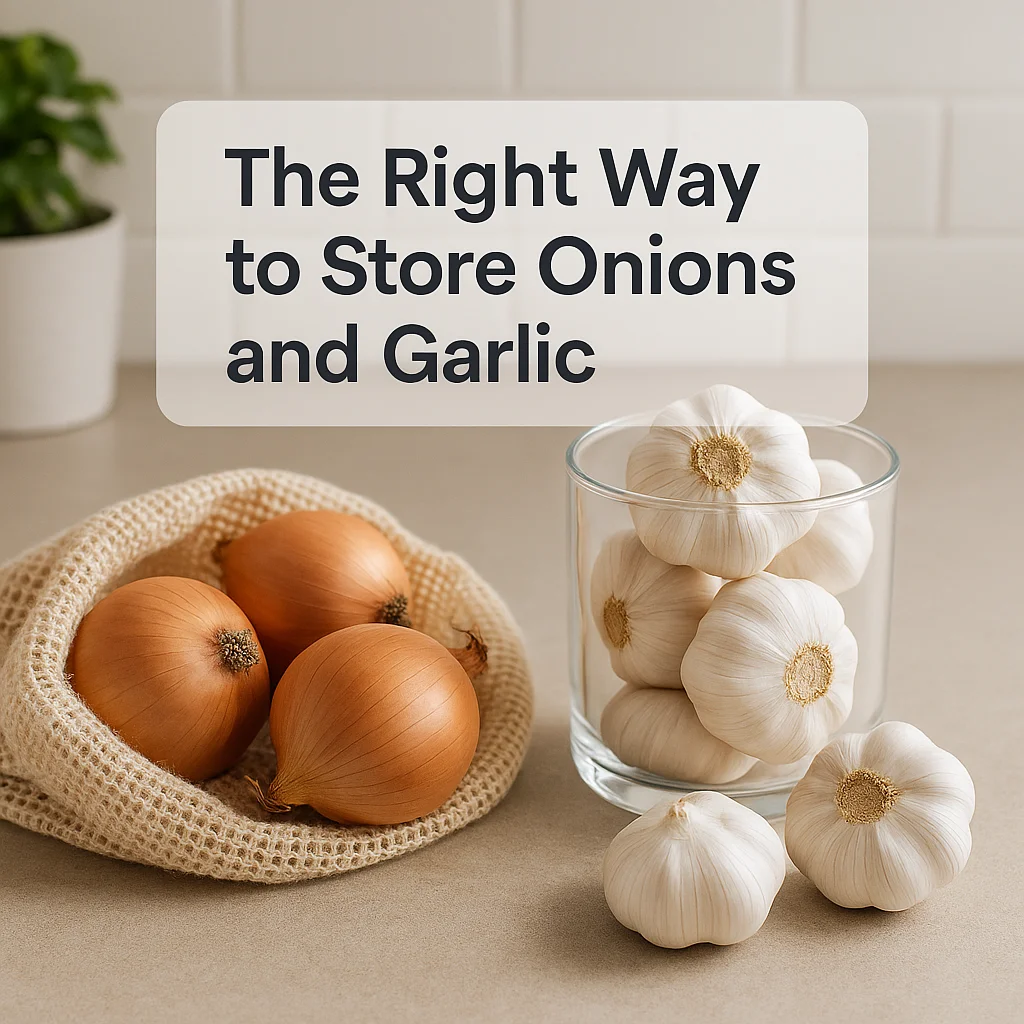
To store onions and garlic properly, keep them in a cool, dry, and well-ventilated space to maximize their longevity and flavor. Avoid refrigeration as it can cause spoilage due to moisture.
- Great for home cooks who use these ingredients frequently.
- Be cautious if you have kitchen pests; secure storage is key.
- Best simple way: a mesh bag or open basket in a pantry or cupboard.
- Biggest mistake: storing in plastic bags or sealed containers.
- Next step: reorganize your pantry for proper air circulation around these items.
🧠 Why This Matters
Properly storing onions and garlic not only preserves their freshness and flavor but also prevents waste. Inappropriate storage can lead to sprouting, mold, or spoilage, impacting both the taste of your dishes and your grocery budget.
Globally, onions and garlic are staple ingredients, present in countless culinary traditions. Ensuring they are in optimal condition can significantly impact cooking efficiency and satisfaction.
🔬 What the Science Says
Onions and garlic need a dry environment because moisture triggers sprouting and mold. Their flavors depend on compounds that are sensitive to light and heat; thus, they last longer in controlled conditions.
Placing them in the fridge exposes them to humidity, accelerating spoilage. Optimal storage conditions slow down the enzymatic reactions that lead to spoilage.
⚖️ Benefits vs Downsides
- Benefits:
- Prolongs shelf life.
- Maintains flavor integrity.
- Prevents sprouting and mold growth.
- Reduces waste and grocery costs.
- Contributes to healthier meal prep.
- Downsides/Cautions:
- Mishandled storage can attract pests.
- Moist environment can spoil these quickly.
- Bad odors if storage is inadequate.
- May require rearrangement of kitchen space.
🎯 The Best Way to Apply This
- Use a well-ventilated, dry area, like a pantry.
- Choose open mesh bags or baskets that allow air circulation.
- Keep away from direct sunlight and high humidity areas.
- Avoid storing onions and garlic together as they emit gases that may spoil each other.
- Check regularly for signs of spoilage.
⏰ Timing, Portions, and Frequency
You don't need to frequently monitor timing if stored properly but do ensure you rotate stock periodically, using older bulbs first. Avoid putting them into sealed bags after cutting; instead, use within a few days.
If you choose to refrigerate cut onions for short-term use, ensure they are wrapped well to prevent odor transfer.
🤝 Best & Worst Pairings (Food Combos)
While onions and garlic pair well together in many dishes, their storage should be separate. Mix them with other hardy vegetables like potatoes or keep them near other flavor-intensive herbs if dried correctly.
Be careful combining them with very moist produce as the moisture can lead to faster spoilage of both items.
🚦Who Should Be Careful
- People prone to food waste should ensure proper conditions.
- Those with pest issues need sealed containers or mesh bags.
- If you're unsure, always ask a kitchen expert for the best practices.
🧩 Common Mistakes and Fixes
- Storing in plastic bags → Use mesh bags for airflow.
- Refrigerating whole onions → Keep in a cool, dry place.
- Mixing garlic and onions → Store separately to avoid gas exchange.
- Exposing to sunlight → Keep them in dark places.
- Ignoring spoilage signs → Regularly check and rotate stock.
- Forgetting about humidity control → Avoid moist areas.
- Overloading storage spaces → Ensure good air circulation.
- Neglecting ventilation → Avoid sealing in tight containers.
- Omitting regular inspections → Set a schedule to check conditions.
- Ignoring seasonal changes → Adjust storage based on climate variability.
📋 Quick Checklist
- Store in a cool, dry, ventilated area.
- Use open baskets or mesh bags.
- Separate onions and garlic in storage.
- Rotate stock to use older items first.
- Check for spoilage regularly.
- Avoid mixing with very moist produce.
- Keep away from direct sunlight and heat sources.
- Do not refrigerate unless cut and in short term.
- Address any pest issues promptly.
- Ask a kitchen expert if unsure.
- Remember to inspect after major weather changes.
📌 Summary
- The best way to store onions and garlic is in a cool, dry, well-ventilated place.
- Avoid refrigeration and mixing them together.
- Check for spoilage regularly and use older stocks first.
- Arrange your pantry for airflow to prolong their shelf life.
- Ensure moisture control to prevent mold and sprouting.
- Separate them from very moist produce for best results.
- If you run into issues, consult a kitchen storage guide or expert.
- These tips can help prolong the life and quality of your onions and garlic.
- Easy habit: shift them from the fridge to a pantry today for improved storage.