🥗 Why Honey Crystallizes—and How to Fix It
✅ Key Takeaway
Honey crystallization is a natural process that occurs when glucose in the honey solidifies. It’s safe to eat and can be returned to a liquid state through gentle warming. The best way to fix crystallized honey is to place the jar in warm water.
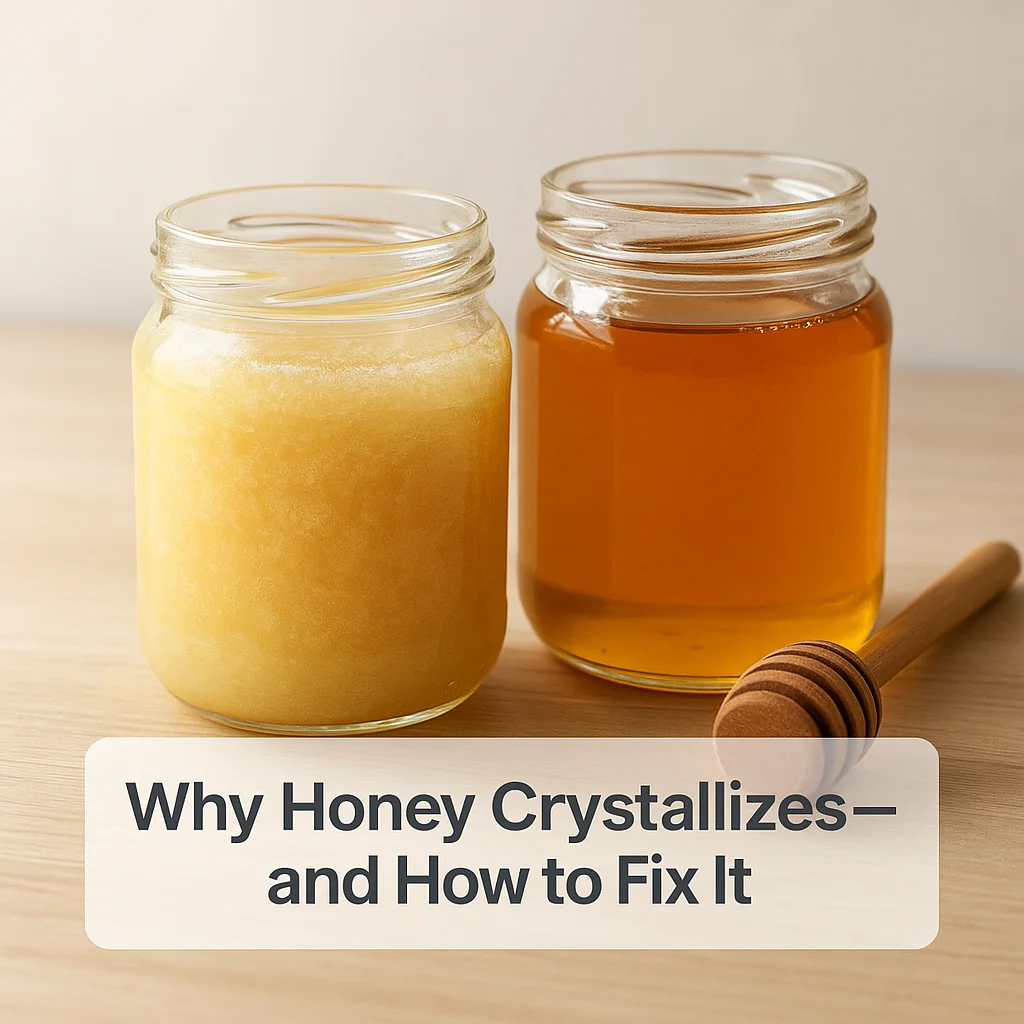
- Good for those who enjoy honey in its many textures.
- Be cautious if you prefer smooth honey for easy spreadability.
- Best simple way: Warm the jar of honey in a bowl of hot water.
- Biggest mistake: Overheating can degrade the honey's quality.
- Practical next step: Store honey in a warm place to delay crystallization.
🧠 Why This Matters
Crystallized honey can be frustrating when you're expecting a smooth consistency for spreading on toast or adding to drinks. Understanding why crystallization happens and how to resolve it easily can help you maintain honey's versatility in your kitchen.
Knowing how to properly store and reconstitute honey ensures you can fully enjoy its rich flavor and benefits without unnecessary waste.
🔬 What the Science Says
Honey crystallization primarily occurs due to its natural sugar composition. Honey contains two main types of sugar: fructose and glucose. Glucose tends to crystallize quicker than fructose, and when it does, it forms the solid pieces visible in crystallized honey.
Various factors like honey's flower source, storage temperature, and moisture content influence the rate of crystallization. While some evidence suggests honey from flowers with higher glucose content crystallizes quicker, other variables play a significant role.
⚖️ Benefits vs Downsides
- Benefits:
- Crystallization is a sign of pure honey without additives.
- Honey retains its nutritional benefits even when crystallized.
- Gentle heating easily restores its liquid form.
- Crystallized honey can be spread like a paste.
- Downsides/Cautions:
- Crystallized honey can be inconvenient for liquid use.
- Incorrect heating may degrade the honey's properties.
- May appear visually unappealing.
- Storage temperature influences the speed of crystallization.
🎯 The Best Way to Apply This
- Warm the jar of honey in hot (not boiling) water and stir gently.
- Avoid microwave heating to prevent overheating.
- Store honey in a consistently warm place to delay crystallization. A kitchen cupboard away from light works well.
- If only a portion is needed, scoop some out and heat separately.
- Use clean utensils to prevent contamination.
⏰ Timing, Portions, and Frequency
You can use honey any time of the day based on your preference. For morning energy boosts, adding a spoonful to tea or drizzling over breakfast is ideal. Use a small spoonful as a guide for portions.
Remember, honey is calorically dense, and a little goes a long way. Always read labels if opting for different types of honey.
🤝 Best & Worst Pairings (Food Combos)
- Pairs well with:
- Warm tea or coffee drinks.
- Oatmeal or yogurt toppings.
- Baking for added moisture.
- Cheeses for a sweet-savory contrast.
- Be careful combining with:
- Very cold drinks which can crystallize honey quickly.
- High-acid foods that can change honey’s texture.
- Meals requiring very smooth consistencies like marinades.
🚦Who Should Be Careful
- Those with known allergies to bee products.
- Individuals managing blood sugar levels.
- Children under one year old should not consume honey.
- If unsure, talk to a pharmacist or clinician.
🧩 Common Mistakes and Fixes
- Mistake: Overheating honey, reducing its quality
- Fix: Use warm, not boiling, water to gently liquefy
- Mistake: Storing honey in the refrigerator
- Fix: Keep honey at room temperature to slow crystallization
- Mistake: Using wet utensils to scoop honey
- Fix: Use dry spoons to prevent moisture-induced crystallization
- Mistake: Discarding crystallized honey
- Fix: Gently warm and stir to restore
- Mistake: Keeping honey in direct sunlight, which affects texture
- Fix: Store in a cool, dark cupboard
📋 Quick Checklist
- Don’t worry if honey crystallizes—it’s natural!
- Warm honey in a bowl of hot water to dissolve crystals.
- Avoid using the microwave to warm honey.
- Store in a dark, room-temperature place.
- Keep honey containers tightly sealed.
- Use clean, dry utensils to keep honey fresh.
- Experiment with crystallized honey as a spread.
- Take note of the flower source for future preference.
- Check for labels to understand sugar compositions.
- If unsure about health considerations, consult a professional.
📌 Summary
- The answer: Honey crystallization is natural and fixable.
- Best method: Warm honey gently in hot water.
- Key cautions: Avoid overheating and moisture contamination.
- Keep honey in a warm, shaded spot to deter crystals.
- If unsure, consult with a health professional.
- Honey pairs well with warm drinks and tangy flavors.
- Be mindful of allergies and caloric intake.
- Use labeled jars to understand honey composition.
- Crystallized honey offers a unique, spreadable texture.
- Start today by checking your honey storage conditions.
- Consider the flower source for your honey preferences.
- Remember, honey is a natural, versatile sweetener.