🥗 10 Snack Swaps to Reduce Late-Night Eating
✅ Key Takeaway
Reducing late-night eating can improve both sleep quality and overall health. Making simple snack swaps is an effective way to manage late-night cravings while still satisfying hunger.
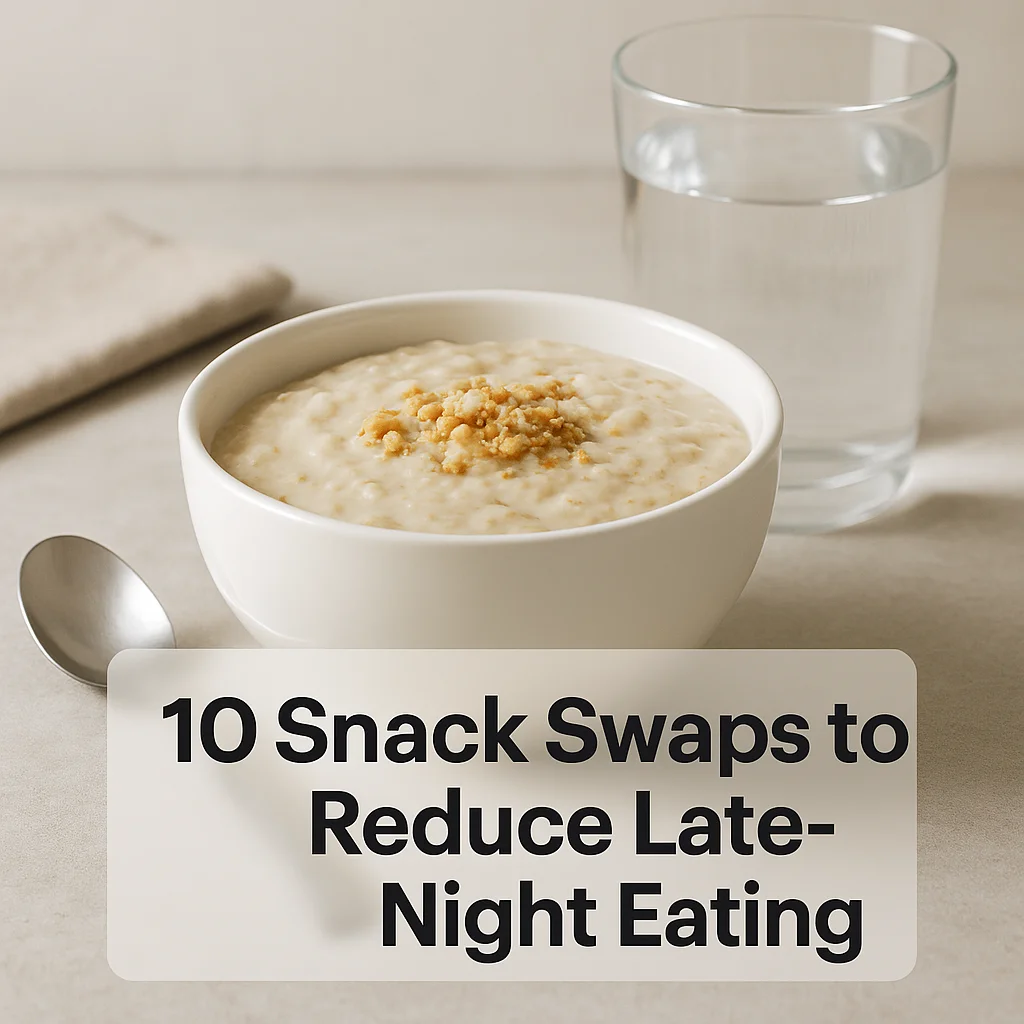
- Good for those who struggle with late-night cravings.
- Those prone to digestive issues at night should be cautious.
- Best way to start: prepare snack alternatives in advance.
- Common mistake: replacing snacks with similar high-calorie options.
- Next step: Identify your usual late-night snack and find a healthier alternative.
🧠 Why This Matters
Late-night eating can disrupt sleep, lead to unwanted weight gain, and increase the risk of metabolic issues. For individuals with busy days, evening meals often become larger than planned, or late-night snacking becomes habitual due to missed meals earlier in the day.
By swapping out high-calorie, low-nutrient snacks with healthier options, you can minimize unnecessary calorie intake and improve your sleep patterns.
🔬 What the Science Says
Late-night eating can negatively impact the body's natural circadian rhythms, which affect sleep and metabolic processes. Consuming high-calorie foods late at night often leads to poorer nutrient absorption and spikes in blood sugar levels. This can contribute to weight gain and disrupted sleep.
While some evidence is mixed, studies generally support the idea that reducing late-night caloric intake can improve sleep quality and reduce the potential for weight gain.
⚖️ Benefits vs Downsides
- Benefits:
- Improved sleep quality
- Better weight management
- Reduced risk of metabolic syndrome
- Enhanced daytime energy levels
- Improved digestion
- Longer-term health benefits associated with improved nutrient timing
- Downsides/Cautions:
- Possible initial increase in hunger
- Adjustment period needed for new habits
- Potential inconvenience in preparation
- May require increased planning
- Varied individual responses to dietary changes
- Possibly overcompensating with other snacks
🎯 The Best Way to Apply This
To effectively apply snack swaps, consider these options:
- Swap potato chips for air-popped popcorn with nutritional yeast.
- Try Greek yogurt with berries instead of ice cream.
- Replace cookies with apple slices and almond butter.
- Choose whole-grain crackers with hummus over cheese crackers.
- Opt for a banana with a small handful of nuts instead of candy.
- Switch chocolate bars for dark chocolate (70%+ cocoa).
- Select oatmeal cookies instead of packaged sugary cookies.
- Enjoy vegetable sticks with guacamole rather than nachos.
- Eat a small bowl of cottage cheese with pineapple instead of pudding.
- Munch on rice cakes with avocado instead of buttery popcorn.
⏰ Timing, Portions, and Frequency
Moderation and timing are crucial. Aim to have your last snack an hour before going to bed to prevent digestion from interfering with sleep. Keep portion sizes small—a handful of nuts, a small bowl of yogurt, or a few rice cakes are generally sufficient.
🤝 Best & Worst Pairings (Food Combos)
- Pairs well with:
- Whole grains with protein (e.g., whole-grain crackers and cheese)
- Fruits with nuts (e.g., apple slices with almonds)
- Vegetables with healthy dips (e.g., carrot sticks with hummus)
- Dairy with fruit (e.g., Greek yogurt and berries)
- Dark chocolate with fresh fruit (e.g., banana and dark chocolate)
- Be careful combining with:
- High sugar drinks (e.g., soda with any snack)
- Fried foods (e.g., chips with dips)
- Processed meats (e.g., cured meats with cheese crackers)
- High-sodium snacks (e.g., pretzels with cheese)
- Mixed alcoholic beverages
🚦Who Should Be Careful
- Individuals with reflux or digestive issues may need to be cautious.
- Those sensitive to caffeine, especially in chocolate, should moderate intake.
- Individuals on specific medications should check food interactions.
- Anyone with specific dietary restrictions (e.g., food allergies, diabetes) should consult a professional.
- If unsure, ask a pharmacist/clinician.
🧩 Common Mistakes and Fixes
- Choosing calorific “healthy” snacks → Opt for truly nutrient-dense alternatives.
- Overeating healthy snacks → Keep portions controlled, even for healthy items.
- Skipping meals during the day → Ensure you have balanced meals earlier to reduce night cravings.
- Not preparing in advance → Stay stocked with healthy options to resist impulse snacking.
- Easily bored by healthy snacks → Rotate options to keep things interesting.
- Eating out of habit, not hunger → Assess true hunger before reaching for a snack.
- Not considering beverage content → Choose water or herbal tea over sugary drinks at night.
- Ignoring potential intolerances → Note that some snacks could still cause digestive discomfort.
- Not reading labels → Check ingredients and nutritional information carefully.
📋 Quick Checklist
- Identify and replace high-calorie snacks.
- Choose snacks containing protein and fiber.
- Prepare snacks ahead of time.
- Use small bowls or plates for better portion control.
- Time snacks to better match your sleep schedule.
- Stay hydrated with water instead of sugary drinks.
- Keep a varied selection of healthy snacks on hand.
- Assess actual hunger before snacking.
- Discover your personal best snack swaps.
- Mix and match snacks for variety.
- Avoid eating directly from a large bag or container.
- Record what you eat at night to identify patterns.
📌 Summary
- Snack swaps can reduce late-night eating, improving sleep and health.
- Always choose whole, nutrient-dense foods over processed snacks.
- Be mindful of individual dietary needs and consult professionals if unsure.
- Prepare and plan snacks in advance to curb impulse eating.
- Timing is key; avoid heavy snacks close to bedtime.
- Consider your personal health needs and preferences when selecting snacks.
- Monitor portion sizes and read labels carefully.
- Avoid combining snacks with high-sugar or fried foods.
- For best results, match snacks with whole grains or proteins.
- Keep track of snacks to see what works best for you.
- Minimize mistakes by being prepared and staying informed.