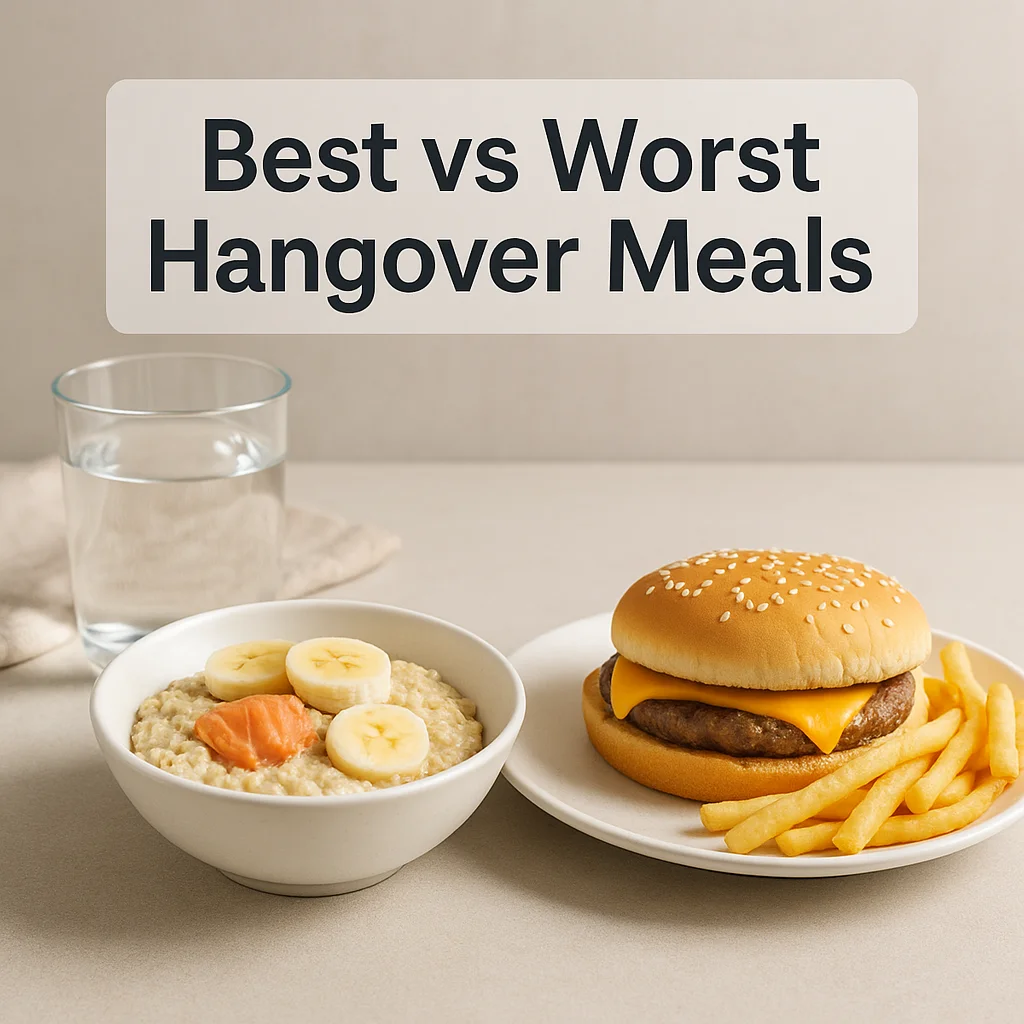
🥗 Best vs Worst Hangover Meals
✅ Key Takeaway
When it comes to hangover meals, the best foods can help manage symptoms by focusing on hydration, providing necessary nutrients, and stabilizing blood sugar levels. In contrast, the worst choices might worsen dehydration and irritate your stomach.
- Usually good for those seeking relief from common hangover symptoms like headache and fatigue
- Those with sensitive stomachs or specific dietary restrictions should be cautious
- Simplest way to improve recovery: combine hydration with nutrient-rich foods
- Biggest mistake: opting for greasy, heavy meals
- Next step: start your morning with a glass of water and a balanced breakfast
🧠 Why This Matters
Hangovers can make your day difficult by affecting your energy, mood, and overall performance. Choosing the right meal can alleviate some symptoms and help you feel better faster, whereas the wrong meal might prolong or exacerbate the discomfort.
🔬 What the Science Says
Hangovers are often a result of dehydration, an upset stomach, and depleted nutrients from drinking alcohol. Science suggests that rehydrating, restoring electrolytes, and consuming easy-to-digest foods could help manage symptoms. Although some traditional hangover foods might be tasty, they often lack essential nutrients and can irritate your system further.
⚖️ Benefits vs Downsides
- Electrolyte-rich foods rehydrate the body
- Easy-to-digest foods reduce stomach irritation
- Balanced meals stabilize blood sugar
- Nutrient-dense choices replenish vitamins and minerals
- Complex carbs provide steady energy release
- Some foods support liver function
- Greasy foods might worsen nausea
- Excessive caffeine can increase dehydration
- High sugar intake can cause blood sugar spikes
- Large meals can strain the digestive system
- Highly processed foods may lack essential nutrients
- Some may interact poorly with hangover medications
🎯 The Best Way to Apply This
- Stay hydrated: start with a large glass of water upon waking up
- Eat a light breakfast: try toast with honey or a banana
- Opt for nutrient-rich foods: incorporate fruits and vegetables
- Snack wisely: choose nuts or yogurt for energy and protein
- Avoid irritants: steer clear of overly greasy or sugary foods
- Listen to your body: eat small portions and see how you feel
⏰ Timing, Portions, and Frequency
Begin with hydration in the morning as soon as you wake up. Eat smaller meals throughout the day to avoid overwhelming your digestive system. Good portion cues include a small bowl of soup, a handful of nuts, or a palm-sized piece of lean protein.
🤝 Best & Worst Pairings (Food Combos)
Choosing your foods wisely can make a significant difference:
- Pairs well with:
- Eggs and whole-grain toast
- Banana and yogurt
- Oatmeal with berries
- Be careful combining with:
- Greasy fast foods
- Caffeinated beverages
- Fizzy sodas
🚦Who Should Be Careful
Individuals with dietary restrictions, sensitive stomachs, or certain health conditions should be cautious with food choices. If unsure, consult a pharmacist or clinician, especially if you're on medication.
🧩 Common Mistakes and Fixes
- Eating too quickly → Slow down and chew thoroughly
- Skipping hydration → Carry a water bottle
- Using caffeine as a crutch → Limit intake to one cup if needed
- Over-relying on sugar → Balance with protein and fiber
- Ignoring nutrient-rich options → Incorporate fruits and veggies
- Eating large, heavy meals → Opt for smaller, frequent snacks
- Forgetting electrolytes → Include items like coconut water
- Indulging in highly processed foods → Choose whole foods where possible
- Underestimating hydration needs → Drink regularly throughout the day
📋 Quick Checklist
- Begin your day with a glass of water
- Choose small, balanced meals
- Include complex carbohydrates for energy
- Opt for easy-to-digest foods
- Avoid greasy and sugary foods
- Incorporate fresh fruits and vegetables
- Snack on nuts or yogurt
- Limit caffeine and alcohol
- Consider foods with electrolytes
- Monitor portion sizes
- Stay hydrated throughout the day
- Listen to your body's cues
📌 Summary
- The best hangover meals aid in hydration and provide nutrients
- Focus on light, balanced meals
- Limit fatty and sugary foods
- Pay attention to your body's needs
- The biggest mistake is indulging in heavy, greasy foods
- Stay hydrated and snack wisely
- Use electrolytes for rehydration
- If unsure about a food, seek advice from healthcare professionals
- Start simple and adjust as needed
- Your first step: hydrate and eat a nutrient-rich breakfast