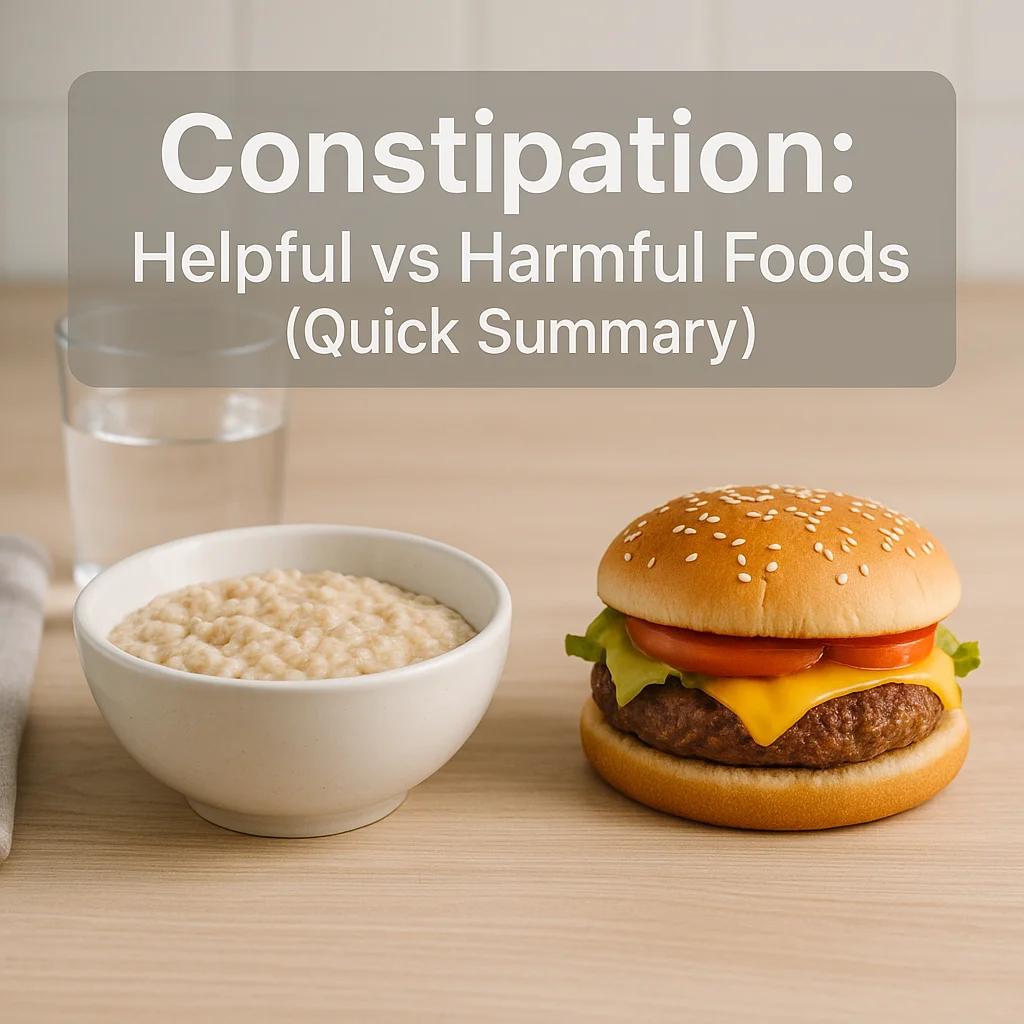
🥗 Constipation: Helpful vs Harmful Foods (Quick Summary)
✅ Key Takeaway
When managing constipation, certain foods can be significantly beneficial, while others may exacerbate the issue. Integrating high-fiber foods and staying hydrated are key steps toward relief, whereas processed foods and excessive dairy might make constipation worse.
- Who it’s usually good for: Individuals experiencing occasional constipation or looking to improve digestion.
- Who should be cautious: Those with IBS, specific digestive disorders, or on special diets.
- Best simple way to do it: Increase fiber intake gradually and drink plenty of water.
- Biggest mistake people make: Adding too much fiber too quickly without enough water.
- One practical “next step”: Start adding more fruits and vegetables to your meals daily.
🧠 Why This Matters
Constipation is a common digestive issue that affects people globally. It can lead to discomfort, bloating, and decreased quality of life. Managing diet effectively can make a significant difference in digestive health and overall well-being. Eating the right balance of foods helps maintain regular bowel movements and supports digestive efficiency.
🔬 What the Science Says
The primary mechanism at work with constipation is the movement of fiber and water through the digestive tract. Dietary fiber adds bulk to stool and absorbs water, making the stool softer and easier to pass. Insoluble fibers, found in whole grains and vegetables, are particularly effective in promoting gut motility. Conversely, foods low in fiber or high in fat, such as processed snacks, can slow digestion and lead to constipation.
⚖️ Benefits vs Downsides
- Benefits:
- Fiber-rich foods like fruits, vegetables, and whole grains may improve bowel regularity.
- Increased fiber intake is associated with reduced digestive discomfort.
- Hydrating foods such as watermelon or cucumber can contribute to fluid intake.
- Whole foods often come with important vitamins and minerals.
- Downsides/Cautions:
- Adding too much fiber too quickly can cause gas and bloating.
- Dairy products may worsen constipation in sensitive individuals.
- High-fat and processed foods may exacerbate constipation issues.
- Fiber supplements can interact with certain medications; consult a professional.
🎯 The Best Way to Apply This
- Start by incorporating more fruits and vegetables into every meal.
- Choose whole grains over refined products (e.g., whole-grain bread instead of white bread).
- Introduce legumes like beans and lentils as staple foods.
- Drink plenty of water throughout the day to aid fiber function.
- Gradually introduce any dietary changes to minimize discomfort.
- Consider a food diary to track what works best for your body.
⏰ Timing, Portions, and Frequency
To manage constipation effectively, consistency matters. Eat fiber-rich foods at every meal: morning whole-grain cereals, lunchtime salads, and vegetable-rich dinners. Drink water throughout the day, aiming for a glass before and after meals. Aiming for a serving size that fits in your palm can be a useful visual cue without needing precise measurements.
🤝 Best & Worst Pairings (Food Combos)
- Pairs well with:
- Whole grains paired with leafy greens.
- Fruits like berries mixed with yogurt.
- Legume-based dishes with a variety of colorful vegetables.
- Be careful combining with:
- Cheese-heavy meals lacking in vegetables.
- High-fat, low-fiber snacks in place of balanced options.
- Caffeine immediately after fatty meals which might slow digestion.
🚦Who Should Be Careful
- Individuals with IBS, who may need to monitor fiber intake.
- Those on medication that impacts digestive motility.
- People experiencing specific food allergies or intolerances.
- Anyone with severe or chronic digestive issues should consult a healthcare provider.
- If unsure, ask a pharmacist/clinician.
🧩 Common Mistakes and Fixes
- Adding large amounts of fiber overnight → Introduce fiber gradually.
- Ignoring water intake → Pair fiber increase with regular hydration.
- Choosing processed snacks → Opt for whole food alternatives.
- Eating too quickly → Chew thoroughly and savor meals.
- Skipping fruits and vegetables → Incorporate these into every meal.
- Over-relying on dairy → Limit or replace with plant-based sources if needed.
- Assuming fiber supplements replace whole foods → Combine both for best results.
- Neglecting physical activity → Include daily exercise to aid digestion.
- Disregarding portion size → Balance plates with portion control cues.
- Not varying your fiber sources → Include a range of fiber-rich foods.
📋 Quick Checklist
- Start the day with a fiber-rich whole grain breakfast.
- Add at least one fruit or vegetable to every meal.
- Choose water-rich foods to help with hydration.
- Limit dairy if it's known to cause you issues.
- Be mindful of portion sizes.
- Increase fiber intake progressively.
- Stay hydrated—aim for several glasses of water per day.
- Incorporate legumes into your meals regularly.
- Exercise regularly to support digestion.
- Seek variety in the fiber sources you consume.
- Prepare meals that combine fiber with healthy fats.
- Monitor body response to new dietary changes.
- Consult with healthcare professionals if you experience significant digestive issues.
📌 Summary
- Eating high-fiber foods often helps relieve constipation.
- Introduce fiber gradually and focus on hydration for the best results.
- Be cautious of dairy and processed, high-fat foods as they can exacerbate issues.
- Start incorporating more fruits and vegetables today.
- Keep an eye on how your body responds to dietary changes.
- Maintain a balance of diverse fiber sources in your diet.
- Involve physical activity to aid digestion.
- If persistent issues occur, a healthcare consultation is advisable.