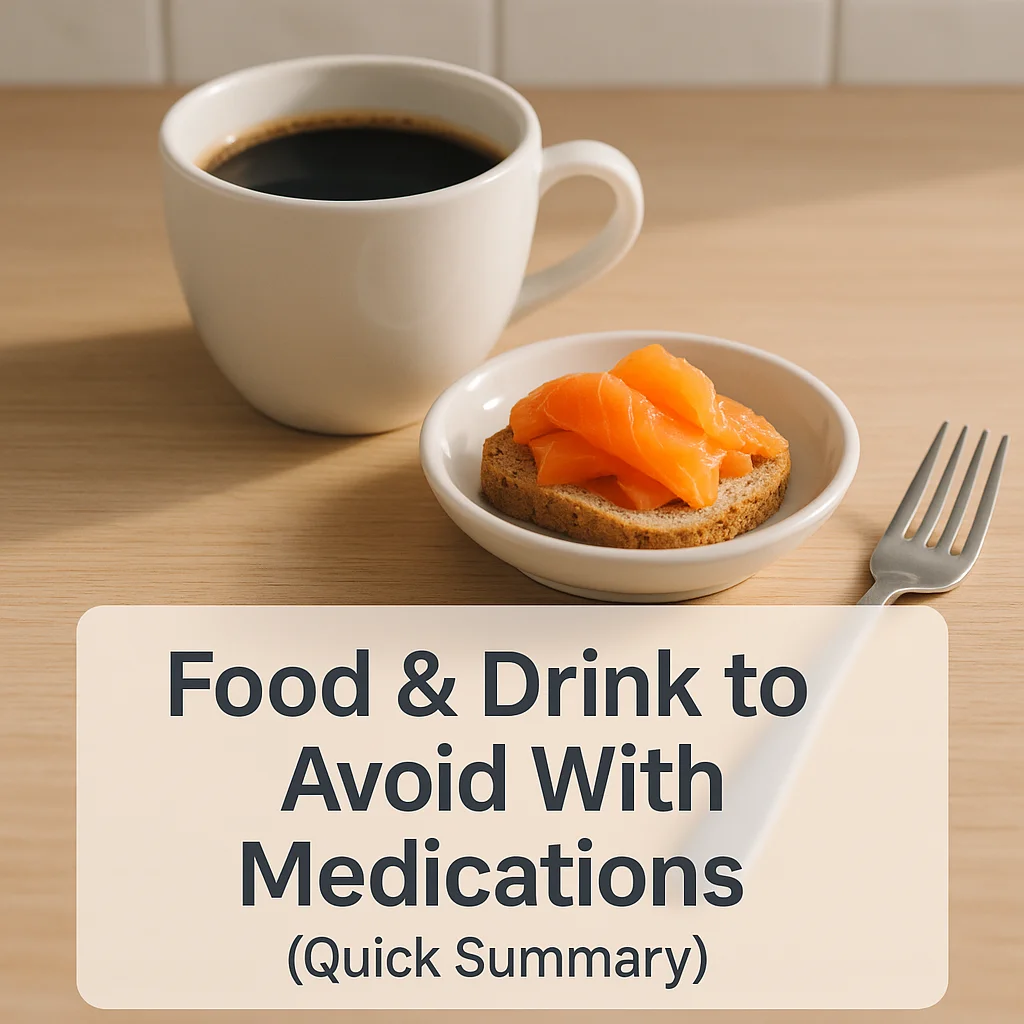
🥗 Food & Drink to Avoid With Medications (Quick Summary)
✅ Key Takeaway
While medications are crucial for health management, interactions with certain foods and drinks can affect their efficacy. To ensure safety and effectiveness, it’s key to be aware of these interactions and make informed choices about diet during medication use.
- Usually important for those on multiple medications
- Caution is needed for those with chronic conditions
- Best approach: consult with a clinician or pharmacist
- Common mistake: ignoring food labels
- Next step: Create a safe food and drink list for your medications
🧠 Why This Matters
The interactions between food, drink, and medications can alter how drugs are absorbed or metabolized, potentially reducing their effectiveness or increasing side effects. For example, grapefruit juice can interfere with the enzymes that process certain medications, while foods high in vitamin K can affect blood-thinning medications. Being mindful of these interactions can improve energy levels, optimize treatment outcomes, and reduce adverse effects.
🔬 What the Science Says
Understanding food-medication interactions revolves around how substances are absorbed, distributed, metabolized, and excreted in the body. For example, the acidity of citrus fruits like grapefruit may interfere with the enzyme CYPA34, affecting drug metabolism. Dairy products may hinder the absorption of tetracyclines, a class of antibiotics. Evidence suggests these interactions depend on many variables, including the specific drug, dose, form, and individual metabolic differences.
⚖️ Benefits vs Downsides
- Improved medication efficacy when avoiding specific foods
- Reduced side effects from medications
- Enhanced overall health and well-being
- Prevention of adverse interactions
- Potential for limited food variety
- May require dietary adjustments
- Complexity in managing diet and medication together
- Possible inconvenience with meal planning
🎯 The Best Way to Apply This
- Create a medication-food interaction checklist with your pharmacist or clinician.
- Monitor your body’s reaction to your current diet while on medication.
- Gradually adjust your meal plans to reduce risky interactions.
- Keep a daily log of foods consumed and symptoms experienced.
⏰ Timing, Portions, and Frequency
The timing of food intake can affect medication absorption. For instance, take some medications on an empty stomach to avoid interference, whereas others may require food to reduce gastrointestinal discomfort. Pay attention to portion sizes and choose moderate amounts of potentially interacting foods to prevent adverse effects. Be mindful of timing around caffeine and alcohol, as these can interact with several medications.
🤝 Best & Worst Pairings (Food Combos)
- Pairs well with:
- Medications with a small piece of fruit
- Non-dairy milk with medications that may react with calcium
- Water for better absorption
- Be careful combining with:
- Alcohol with sedative medications
- Grapefruit juice with cardiovascular drugs
- High vitamin K foods with blood thinners like warfarin
🚦Who Should Be Careful
- Individuals with chronic conditions requiring multiple medications
- Those taking anticoagulants (blood thinners)
- People on cholesterol-lowering drugs
- Children and older adults
- If unsure, consult with a pharmacist or clinician
🧩 Common Mistakes and Fixes
- Skipping medication label reading → Always read and understand drug leaflets.
- Mixing alcohol with medication → Avoid alcohol while on medications unless cleared by a doctor.
- Not considering vitamin/mineral content in foods → Be aware of how vitamins may affect your medication.
- Ignoring pharmacist advice → Always discuss your full diet with health professionals.
- Grapefruit juice with medications → Switch to another fruit juice if possible.
- Relying solely on food adjustments without clinical advice → Check all dietary changes with a healthcare provider.
📋 Quick Checklist
- Avoid mixing alcohol with medications.
- Limit grapefruit products with certain medications.
- Consult with a clinician or pharmacist about any new supplements.
- Take note of foods that alter medication effectiveness.
- Consider timing meals around medication intake as advised.
- Read all medication leaflets for specific food interactions.
- Keep a food and medication diary.
- Stay hydrated; water often helps with medication intake.
- Be aware of side effects when mixing stimulants like caffeine.
- Know your medications thoroughly, including dietary interactions.
📌 Summary
- Food and drink can affect medication efficacy and safety.
- Consult with healthcare professionals for tailored advice.
- Be cautious of alcohol and grapefruit juice.
- Monitor and adjust diet based on medication requirements.
- Timing is crucial for maximizing absorption and minimizing side effects.
- Avoid dairy with antibiotics like tetracyclines.
- Create a checklist for foods to avoid with your medications.
- Always stay informed about your current medications.