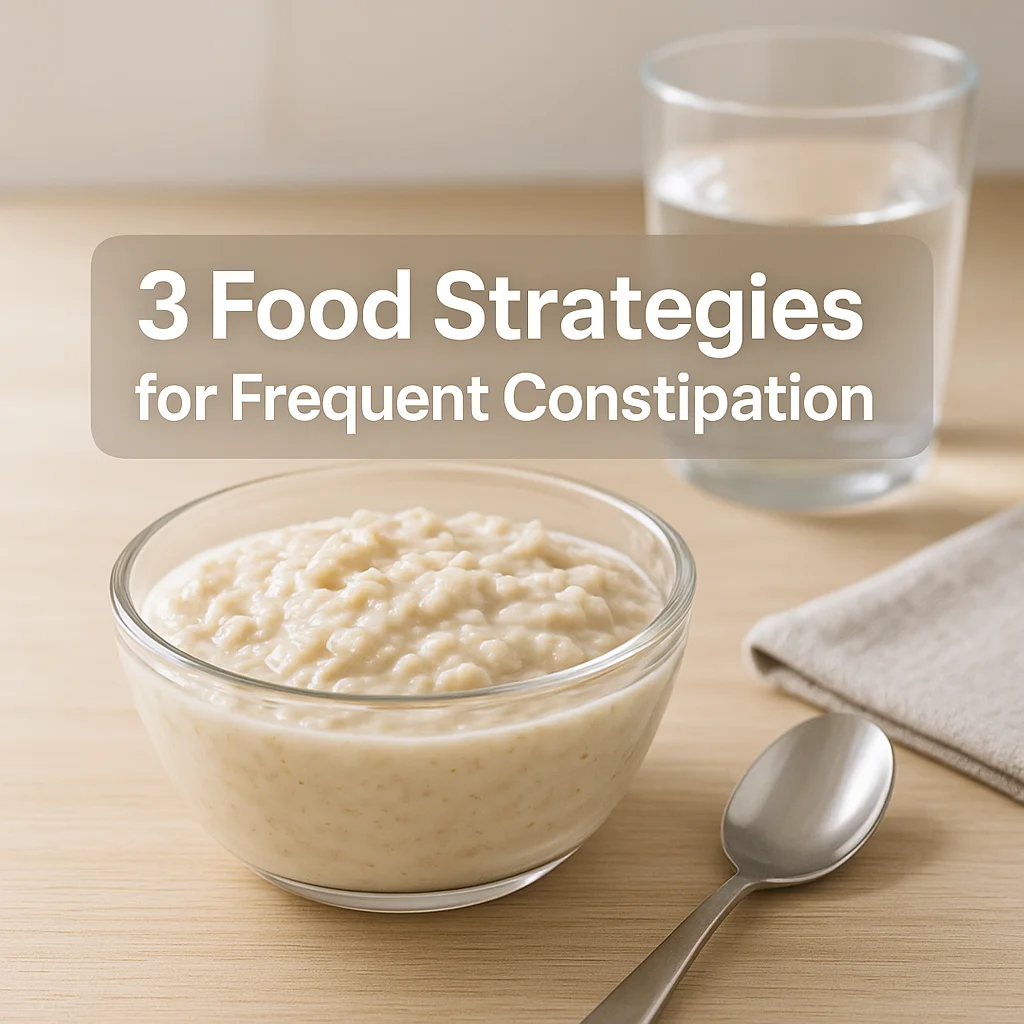
🥗 3 Food Strategies for Frequent Constipation
✅ Key Takeaway
Frequent constipation can often be alleviated by making intelligent food choices. Focus on increasing fiber intake, staying hydrated, and incorporating healthy fats into your diet. These strategies can help promote regular bowel movements. While effective for many, it's essential to tailor these strategies to individual needs and consult a healthcare provider if serious issues persist.
- Good for: People with occasional constipation, those interested in dietary changes.
- Be cautious if: You have gastrointestinal issues or are sensitive to high fiber.
- Simple way to do it: Gradually increase fiber while drinking more water.
- Biggest mistake: Making sudden, large dietary changes.
- Next step: Introduce a daily fiber-rich meal.
🧠 Why This Matters
Constipation can cause discomfort, bloating, and a general feeling of malaise. It affects daily life, leading to distractions at work or school, and can negatively impact energy levels. By understanding how dietary choices influence digestion, you can enhance your well-being and increase overall quality of life.
🔬 What the Science Says
Fiber is crucial because it adds bulk to stool and aids its movement through the digestive system. There are two types: soluble and insoluble fiber. Soluble fiber helps by absorbing water and forming a gel-like substance, whereas insoluble fiber helps food pass more quickly through the stomach and intestines. Hydration complements fiber by softening stool, making it easier to pass. Healthy fats, meanwhile, help in stimulating bowel movement through lubrication.
⚖️ Benefits vs Downsides
- Benefits of increasing fiber: Promotes bowel regularity, helps control blood sugar levels, supports weight management, lowers cholesterol levels.
- Hydration benefits: Improves stool consistency, enhances digestive health, promotes nutrient absorption, boosts energy levels.
- Healthy fats benefits: Aid in digestive lubrication, support nutrient absorption, provide satiety, help maintain balance in the diet.
- Downsides of too much fiber: May cause gas, bloating, and cramping if increased too quickly.
- Downsides of improper hydration: Could lead to dehydration symptoms, kidney strain.
- Consuming excessive fats: Can lead to unwanted weight gain, cardiovascular issues if unhealthy types are chosen.
🎯 The Best Way to Apply This
- Gradually add whole grains, fruits, and vegetables into meals to increase fiber.
- Aim for consistent water intake throughout the day.
- Incorporate nuts, seeds, and oils like olive oil to include healthy fats.
⏰ Timing, Portions, and Frequency
For optimal digestion, consume fiber-rich foods in small, regular portions rather than all at once. Drinking a glass of water with meals or snacks can aid in digestion. Healthy fats are best consumed as part of balanced meals rather than independently. Moderation is key to avoid overwhelming the digestive system.
🤝 Best & Worst Pairings (Food Combos)
- Pairs well with: Oatmeal and berries, salads with olive oil dressing, whole grain bread with avocado.
- Be careful combining with: Large quantities of processed foods, high-fat fast foods, excessive dairy if lactose intolerant.
🚦Who Should Be Careful
- Individuals with existing gastrointestinal disorders.
- Those sensitive to fiber or certain fats.
- People on medications that affect digestion.
- If unsure, ask a pharmacist/clinician.
🧩 Common Mistakes and Fixes
- Increasing fiber too quickly → Introduce it gradually.
- Ignoring hydration → Drink water consistently throughout the day.
- Relying on processed foods for fiber → Eat more whole, natural foods.
- Inconsistent eating habits → Establish regular meal times.
- Skipping fats entirely → Incorporate healthy fats moderately.
- Overeating fiber in one meal → Distribute intake evenly across meals.
- Narrow food variety → Diversify your fiber sources.
- Focusing only on diet without exercise → Combine with physical activity.
📋 Quick Checklist
- Introduce a serving of whole grains daily.
- Drink a glass of water with each meal.
- Add a portion of fruits or vegetables to every meal.
- Include a source of healthy fat like avocados or nuts daily.
- Avoid high intake of processed foods.
- Monitor body responses to dietary changes.
- Adjust portions for comfort and effect.
- Consider combining dietary changes with exercise.
- Balance fiber intake between soluble and insoluble types.
- Be cautious with any new dietary changes and seek professional advice if needed.
📌 Summary
- Increasing fiber, hydration, and healthy fats can improve constipation.
- Gradually integrate these changes into your diet.
- Be cautious of sudden diet changes to avoid digestive discomfort.
- Start by adding a fiber-rich food daily and maintain water intake.
- Monitor your body's response and adjust as needed.
- Be mindful of combining with unhealthy foods or overconsumption.
- Seek professional advice if symptoms persist.
- Focus on whole, natural food sources over processed options.