🥗 Eating Strategy for Exam/Focus Days
✅ Key Takeaway
For most people, the right eating strategy can enhance concentration and steady energy levels during exam or focus days. The key is to balance your meals with nutrients that support brain function and maintain optimal energy without causing spikes and crashes.
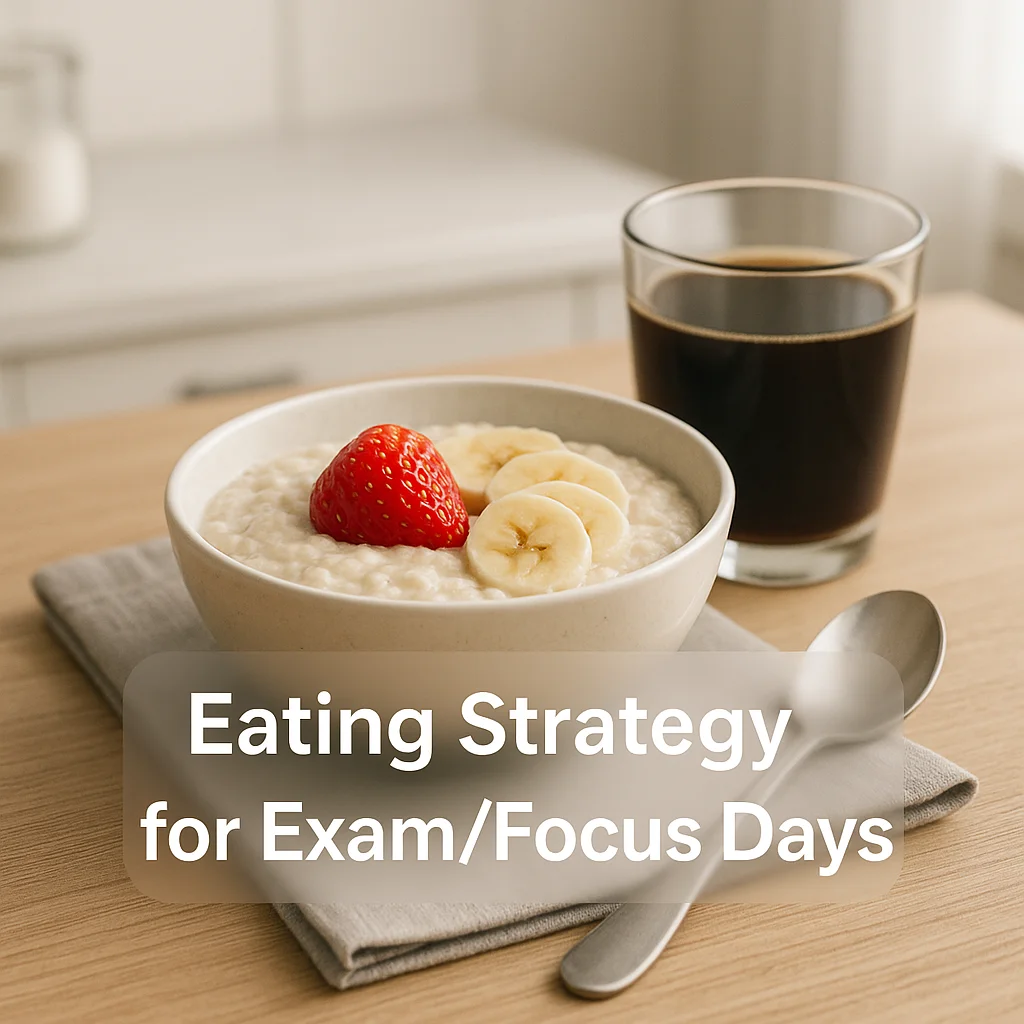
- Usually good for: Students, professionals, anyone needing sustained focus.
- Who should be cautious: Those with food allergies or digestive conditions.
- Best simple way to do it: Opt for balanced meals with protein, healthy fats, and complex carbs.
- Biggest mistake people make: Consuming too much caffeine or sugar.
- One practical “next step”: Plan your meals the day before to avoid rushed, poor choices.
🧠 Why This Matters
Preparing for an exam or a day requiring intense focus can be mentally taxing. Many experience energy slumps, cravings, or digestive issues, all of which can impede performance. A strategic approach to eating can help stabilize energy levels, improve mood, and enhance mental clarity, making those crucial days more manageable.
🔬 What the Science Says
Eating the right mix of foods can play a significant role in how we focus and maintain energy. Foods rich in complex carbohydrates provide a slow, sustained release of energy. Proteins and healthy fats support brain function and satiety. Hydration and appropriate caffeine use can also play pivotal roles. However, the evidence about caffeine is mixed; while it can enhance alertness, too much may lead to anxiety or jitters.
⚖️ Benefits vs Downsides
- Benefits:
- Steady energy levels
- Improved concentration
- Better mood
- Enhanced mental acuity
- Reduction in cravings
- Downsides/Cautions:
- Potential for digestive discomfort if not balanced
- Risk of overstimulation from caffeine
- Possible sugar crashes with high sugar intake
- May take time to adjust to new habits
🎯 The Best Way to Apply This
- Start your day with a balanced breakfast that includes protein, whole grains, and healthy fats.
- Avoid high-sugar snacks and aim for nuts or yogurt when you need a boost.
- Stay hydrated with water throughout the day.
- Time your caffeine intake to prevent sleep disruptions; avoid it in the afternoon if you're sensitive.
- Plan your meals and snacks in advance to avoid unhealthy choices under stress.
⏰ Timing, Portions, and Frequency
Eating regular, balanced meals is key to maintaining energy. Aim for three main meals with one or two snacks. Consistency in meal timing can prevent dips in blood sugar levels that affect concentration. A palm-sized portion of protein, a small bowl of whole grains, and a thumb-sized portion of healthy fats are simple visual cues to ensure a balanced diet.
🤝 Best & Worst Pairings (Food Combos)
- Pairs well with:
- Oatmeal with nuts and berries
- Whole grain bread with avocado and eggs
- Salads with lean protein and olive oil
- Be careful combining with:
- High-sugar cereals and pastries
- Processed snacks with empty calories
- Overly caffeinated drinks with added sugars
🚦Who Should Be Careful
- Individuals with food allergies should ensure they avoid triggers.
- People with digestive issues might need to tailor their food choices.
- Anyone sensitive to caffeine should manage consumption carefully.
- If you're on medications, certain foods might interact; always check with a pharmacist/clinician if unsure.
🧩 Common Mistakes and Fixes
- Mistake: Skipping breakfast. Fix: Start with a quick smoothie or whole-grain toast.
- Mistake: Over-relying on caffeine. Fix: Limit to one or two cups and taper in the afternoon.
- Mistake: Skimpy meals. Fix: Include a balanced amount of protein, carbs, and fat.
- Mistake: Eating large portions at once. Fix: Smaller, balanced portions regularly.
- Mistake: Hydrating with sugary drinks. Fix: Choose water or herbal teas.
- Mistake: Relying on processed snacks. Fix: Keep nuts, fruit, and yogurt handy.
- Mistake: Forgetting to plan meals. Fix: Prep meals the night before to stay on track.
📋 Quick Checklist
- Start with a nutritious breakfast.
- Balance meals with protein, carbs, and fats.
- Avoid high-sugar snacks and drinks.
- Stay hydrated with water.
- Plan meals in advance.
- Include whole grains in your diet.
- Opt for natural snacks like fruits and nuts.
- Monitor caffeine intake, avoid afternoon consumption if needed.
- Be portion conscious – small, balanced meals.
- Avoid processed foods where possible.
📌 Summary
- A strategic eating plan can help maintain focus and energy.
- Balance your meals with carbohydrates, proteins, and fats for best results.
- Hydrate well and be cautious with caffeine and sugar intake.
- Small, frequent meals can prevent energy dips.
- Plan meals ahead to avoid poor food choices under stress.
- Opt for whole foods and natural snacks.
- Be cautious of food triggers if you have allergies.
- Watch for possible medication interactions; when in doubt, consult a professional.
- Avoid large meals that lead to sluggishness.
- Implement changes gradually for best adaptation.