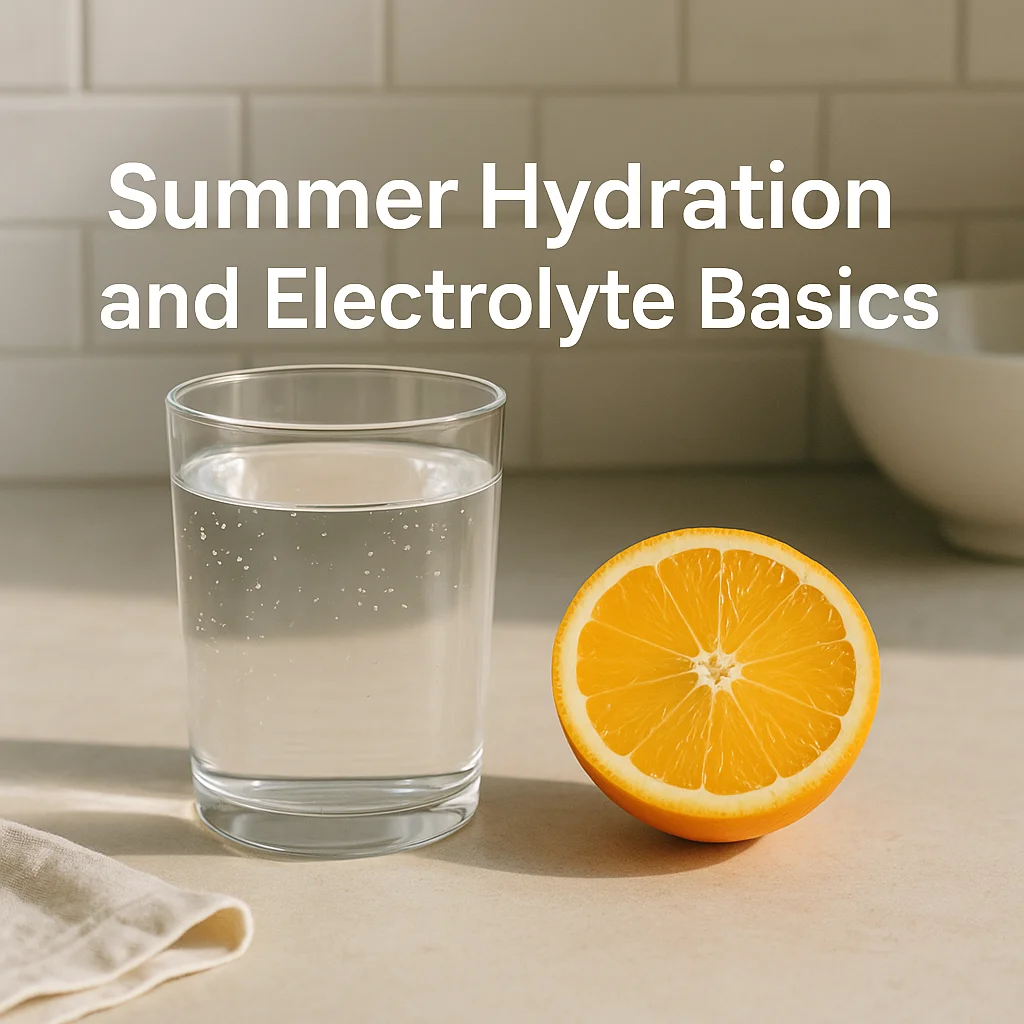
🥗 Summer Hydration and Electrolyte Basics
✅ Key Takeaway
Staying hydrated in the summer is essential for maintaining your energy and health. Electrolytes play a critical role in this process. In most cases, staying hydrated with water and a balanced intake of electrolytes is beneficial. However, it's important to recognize your personal needs and limitations.
- Usually good for: active individuals, those exposed to high heat
- Should be cautious: those with kidney issues, specific health conditions
- Best simple way: drink water regularly; eat electrolyte-rich foods
- Biggest mistake: over-relying on sugary sports drinks
- Practical next step: monitor urine color for hydration checks
🧠 Why This Matters
Hydration is key in summer due to increased temperatures and physical activities, both of which can lead to fluid loss through sweating. Maintaining proper hydration helps with energy, cognitive function, and overall physical performance. When you sweat, you also lose electrolytes, which can disrupt muscle and nerve function if not replenished.
For many, inadequate summer hydration leads to symptoms like fatigue, dizziness, and muscle cramps. Globally, heat-related complications alert people to the importance of hydration.
🔬 What the Science Says
Hydration is more than just drinking water; it involves maintaining a balance of body fluids and electrolytes. Electrolytes like sodium, potassium, and magnesium help manage fluid balance, nerve signaling, and muscle contractions. They can be replenished through both foods and beverages. Scientific consensus supports the combined intake of fluids and electrolytes for peak performance and health.
However, evidence suggests that overconsumption of electrolytes from certain drinks can strain the kidneys and elevate blood pressure in predisposed individuals.
⚖️ Benefits vs Downsides
- Benefits:
- Improves energy and alertness
- Enhances physical performance and endurance
- Prevents dehydration-related complications
- Supports cardiovascular and kidney health
- Regulates body temperature
- Downsides/Caution:
- Overhydration can dilute body electrolytes
- Excessive sports drinks may lead to high sugar intake
- People with certain conditions should monitor electrolyte intake
- Sodium-heavy diets can increase blood pressure
🎯 The Best Way to Apply This
- Start by drinking water regularly throughout the day.
- Incorporate electrolyte-rich snacks like bananas and nuts.
- Consider unsweetened coconut water for hydration.
- Avoid over-reliance on flavored drinks with high sugar.
- If engaged in prolonged activities, consume diluted electrolyte solutions.
⏰ Timing, Portions, and Frequency
Opt for regular sips of water throughout the day, especially before, during, and after physical activity. Incorporate small amounts of electrolyte-rich foods with meals or snacks. For most, aiming for pale yellow urine can serve as a hydration indicator. If using supplements, always follow label instructions and consult a professional if unsure.
🤝 Best & Worst Pairings (Food Combos)
- Pairs well with:
- Water with fresh lemon slices
- Bananas with a handful of almonds
- Yogurt paired with a sprinkle of pumpkin seeds
- Be cautious combining with:
- Sugary sodas or drinks
- Highly caffeinated beverages
- Salty snacks combined with energy drinks
🚦Who Should Be Careful
- Individuals with kidney issues or heart conditions
- People on medications affecting fluid balance
- Those with hypertension sensitive to sodium intake
- If unsure, ask a pharmacist or clinician for guidance.
🧩 Common Mistakes and Fixes
- Drinking only when thirsty → sip regularly throughout the day
- Choosing sugary drinks → opt for water or low-sugar alternatives
- Neglecting solid foods for electrolytes → eat balanced meals
- Ignoring symptoms of dehydration → monitor physical cues like urine color
- Over-supplementing electrolytes → stick to natural sources from diet
- Relying on heat sensation alone → plan hydration regardless of temperature
📋 Quick Checklist
- Drink water at regular intervals daily
- Choose natural electrolyte sources like fruits
- Avoid excessive sugary drinks
- Incorporate hydrating foods, such as cucumbers
- Check urine color for hydration status
- Monitor physical activity levels and adjust fluid intake
- Be cautious with processed salty snacks
- Consult experts if health issues arise
- Engage in consistent hydration habits, regardless of thirst
- Mix water with a splash of natural juice for variety
📌 Summary
- Hydration and balanced electrolytes benefit summer health.
- Regular water and electrolyte-rich foods are key.
- Be cautious with high-sugar and sodium drinks.
- Monitor cues from your body to adjust intake.
- Avoid dependence on flavored or sugary sports drinks.
- Monitor hydration using urine color as a guide.
- Engage in regular hydration habits throughout the day.
- If uncertain about personal needs, consult a healthcare professional.