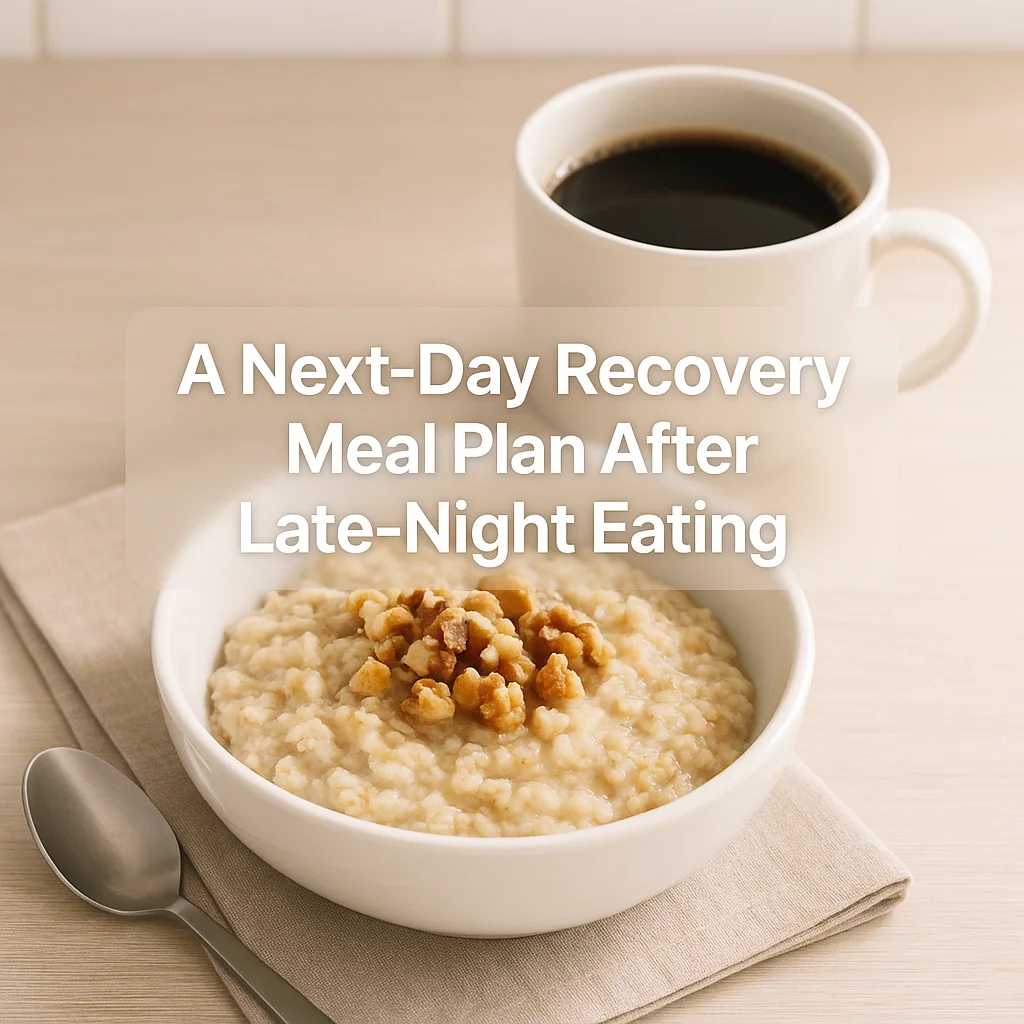
🥗 A Next-Day Recovery Meal Plan After Late-Night Eating
✅ Key Takeaway
Trying to recover after a late-night meal? A thoughtful next-day meal plan can help you rebalance your energy and digestion. The key is selecting foods that support nutrient absorption and stabilize blood sugar levels while keeping hydration in check.
- Beneficial for those who frequently overeat or eat heavy meals at night.
- Cautious approach for individuals with digestive issues.
- Focus on high-fiber, balanced-breakfast options and hydrating meals.
- Avoid skipping meals the next day as a compensatory method.
- Next step: Plan a balanced breakfast rich in protein and fiber.
🧠 Why This Matters
Late-night eating can often lead to discomfort, indigestion, or feeling sluggish the next day. This can affect your energy levels, productivity, and mood. Globally, many people struggle with managing hunger cues and meal timing, making a recovery plan crucial for maintaining overall health and well-being.
🔬 What the Science Says
Late-night eating can impair digestion and disrupt sleep patterns due to increased blood sugar levels and hormone imbalances. Choosing foods the next day that promote satiety and balanced blood glucose can enhance recovery. Science supports the idea that fiber-rich foods, lean proteins, and adequate hydration help regulate these bodily systems effectively.
⚖️ Benefits vs Downsides
- Benefits may include improved digestion and energy levels.
- Can help balance blood sugar after a heavy meal.
- Supports hydration and nutrient replenishment.
- May aid in better overall meal planning habits.
- Can help stabilize mood and productivity.
- Might protect against the habit of frequent late-night meals.
- Individual reactions may vary, and some may not notice improvement.
- Those with specific dietary needs should be cautious.
- Can be challenging to maintain discipline initially.
- Potential for digestive discomfort if changes are extreme.
- Mindful eating can require more effort and planning.
🎯 The Best Way to Apply This
- Start with a protein-rich breakfast like eggs and whole grains.
- Opt for a lunch with plenty of vegetables and lean meats.
- Stay hydrated throughout the day with water or herbal teas.
- Snack smartly with nuts and seeds for energy boosts.
- For dinner, go for a light, easily digestible meal.
⏰ Timing, Portions, and Frequency
Start your day with breakfast to avoid skipping meals, aiming for a meal the size of a small plate. Lunch should follow in mid-sized proportions, emphasizing veggies and whole foods. Maintain frequent hydration rather than large intakes at once. For snacks, keep portions to a small handful.
🤝 Best & Worst Pairings (Food Combos)
Pairs well with:
- Whole grains and lean proteins for breakfast.
- Fruits with a handful of nuts.
- Greens combined with protein-rich options like beans.
Be careful combining with:
- High-fat and high-sugar foods together.
- Fried foods alongside high-carbohydrate meals.
- Stimulants like caffeine during heavy meals.
🚦Who Should Be Careful
- Individuals with digestive disorders should consult a professional before significant dietary changes.
- People with dietary restrictions need personalized adjustments.
- Those on medication should check potential food interactions with a clinician.
- If unsure of your dietary needs, ask a pharmacist or clinician.
🧩 Common Mistakes and Fixes
- Skip meals → Plan every meal to prevent overeating later.
- Rely on caffeine → Choose water or herbal teas to stay hydrated without over-stimulation.
- Eat for taste only → Balance flavors with healthful ingredients too.
- Large portions → Use smaller plates to guide your portions.
- Sugar-rich breakfasts → Opt for savory meals with protein and fiber.
- No planning → Take time to prepare meals ahead.
- Processed snacks → Choose whole food alternatives.
- Ignoring protein → Ensure each meal contains a protein source.
- Stress-focused eating → Practice mindful eating practices.
- Impulsive snacking → Have a set plan for healthy snacks.
📋 Quick Checklist
- Start with a balanced breakfast.
- Include a source of protein in each meal.
- Choose whole grains over refined ones.
- Incorporate a variety of vegetables.
- Hydrate frequently throughout the day.
- Snack on nuts or seeds for energy bursts.
- Plan meals ahead to reduce impulse eating.
- Consider portion sizes using smaller plates.
- Limit caffeine intake post-meal.
- Avoid high-fat, high-sugar combinations.
- Focus on mindful eating practices.
- Keep your kitchen stocked with healthy options.
- Stay flexible and adapt the plan to suit your needs.
- Consult experts when unsure about dietary decisions.
📌 Summary
- A next-day meal plan can help recover from late-night eating.
- Focus on high-fiber, protein-rich meals and hydration.
- Be cautious if digestive issues are present.
- The best practice is to start with a balanced breakfast.
- Avoid compensatory meal-skipping habits.
- Find whole food alternatives for snacks.
- Plan meals to prevent impulsive decisions.
- Mindful eating can improve digestion and energy levels.
- Match meals with healthy sides and avoid heavy combos.
- Adjust the plan as needed with professional guidance.
- This routine supports stable energy and satiety.
- Today's task: Plan your next-day breakfast in advance.