🥗 Nuts: Daily Amount and Signs You’re Overdoing It
✅ Key Takeaway
The right amount of nuts can be a nutritious addition to your daily diet, offering plenty of health benefits. However, overconsumption may lead to unwanted side effects. Moderation is key to enjoying nuts as part of a balanced diet.
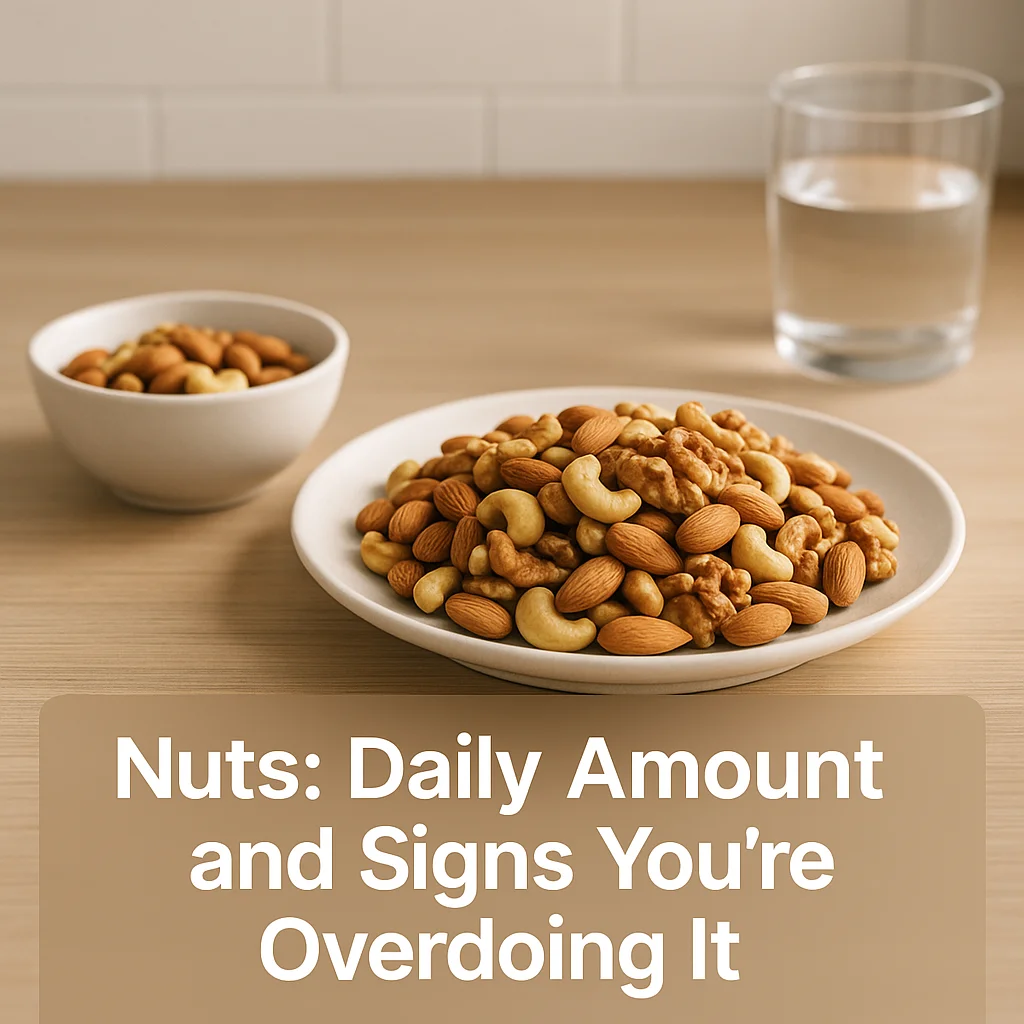
- Good for: Those seeking a nutritious snack full of healthy fats.
- Cautious: Individuals with nut allergies or dietary restrictions.
- Best way: Enjoy a small handful (about 1/4 cup) daily as a snack or meal addition.
- Biggest mistake: Consuming large quantities, leading to excess calorie intake.
- Next step: Start by incorporating a small amount of mixed nuts into your meals.
🧠 Why This Matters
Nuts are a popular snack worldwide, known for their nutritious profile, offering healthy fats, fiber, and protein. Yet, it's easy to overconsume due to their small size and appealing taste, potentially leading to excessive calorie intake and weight gain. Understanding the balance can help optimize their benefits without any downsides.
🔬 What the Science Says
Nuts provide a dense source of energy and nutrients. Their high content of healthy unsaturated fats is associated with lower cholesterol levels and reduced heart disease risk. They also contribute to satiety, helping to manage appetite throughout the day. However, they are calorie-dense, meaning it’s important to consume them in moderation to avoid excessive calorie intake.
⚖️ Benefits vs Downsides
- Benefits:
- Rich in healthy fats and proteins, promoting heart health.
- Provides essential vitamins and minerals.
- Helps in weight management by promoting satiety.
- Offers antioxidants that may protect cells from damage.
- May improve blood sugar control.
- Downsides/Cautions:
- High in calories, leading to weight gain if overconsumed.
- May exacerbate nut allergies in susceptible individuals.
- Can cause gastrointestinal issues if consumed in large amounts.
- Risk of selenium toxicity if too many Brazil nuts are consumed.
- May interact with specific medications; consult with a professional.
🎯 The Best Way to Apply This
To make the most of nuts’ benefits while minimizing downsides, consider the following approach:
- Enjoy nuts in moderation by having a small handful (around 1/4 cup) daily.
- Combine nuts with different foods, such as salads or yogurt, to enhance your meal's nutritive value.
- Opt for unsalted and unroasted varieties to limit added salt and unhealthy fats.
- Store nuts properly to maintain freshness and prevent spoilage.
- Pay attention to your body’s response to nut consumption, adjusting intake as needed.
⏰ Timing, Portions, and Frequency
For most people, consuming a small handful of nuts daily is a beneficial practice. They can be consumed at any time — as a morning or afternoon snack, or added to meals. Pay attention to portion sizes; for instance, a portion could be a palmful of mixed nuts or a small bowl of almonds. Store nuts in air-tight containers to maintain their freshness and nutrient content.
🤝 Best & Worst Pairings (Food Combos)
- Pairs Well With:
- Fruits like apples or berries.
- Yogurt or oatmeal for a balanced breakfast.
- Dark chocolate for a healthy dessert option.
- Salads to add crunch and healthy fats.
- Be Careful Combining With:
- High-sodium snacks, as nuts may add to excessive salt intake.
- Sugary foods that can diminish nuts’ health benefits.
- Other calorie-dense foods that may contribute to excess calorie intake.
🚦Who Should Be Careful
- Individuals with nut allergies: Consult a healthcare provider.
- Those on calorie-restricted diets: Monitor portion sizes.
- People with gastrointestinal sensitivities: Introduce gradually.
- If taking medications, especially for blood pressure: Speak to a pharmacist/clinician.
- Pregnant or breastfeeding women should seek personalized advice if unsure.
🧩 Common Mistakes and Fixes
- Overeating → Measure out a single portion size to prevent mindless snacking.
- Choosing salted nuts → Opt for unsalted varieties to reduce sodium intake.
- Ignoring freshness → Store nuts in an airtight container to maintain quality.
- Assuming all nuts are the same → Mix varieties for a broader nutrient profile.
- Not considering allergies → Check labels if cross-contamination is a concern.
- Adding to all meals without counting → Balance with other foods to manage calorie intake.
- Eating them plain → Add to meals or snacks to enhance nutrient absorption.
📋 Quick Checklist
- Choose a variety of nuts for a balanced nutrient intake.
- Stick to a portion size around 1/4 cup daily.
- Look for unsalted, raw options where possible.
- Combine with fruits or salads for a balanced snack.
- Avoid excess consumption to prevent weight gain.
- Check for any potential allergies.
- Store nuts in a cool, dry place.
- Consult a healthcare provider if you have dietary restrictions.
- Keep an eye on freshness to avoid spoilage.
- Consider nuts as part of a diverse diet, not the main focus.
📌 Summary
- The right amount of nuts can be beneficial, but excessive intake may lead to issues.
- Consume a small handful daily for optimal health benefits.
- Watch portion sizes to avoid calorie overconsumption.
- Mix nuts with other foods to diversify your diet.
- Store nuts properly to maintain freshness and nutrient content.
- Be cautious if you have nut allergies or dietary restrictions.
- Monitor your body’s reaction to nut intake, adjusting as necessary.
- Integrate nuts into meals rather than snacking excessively on them.