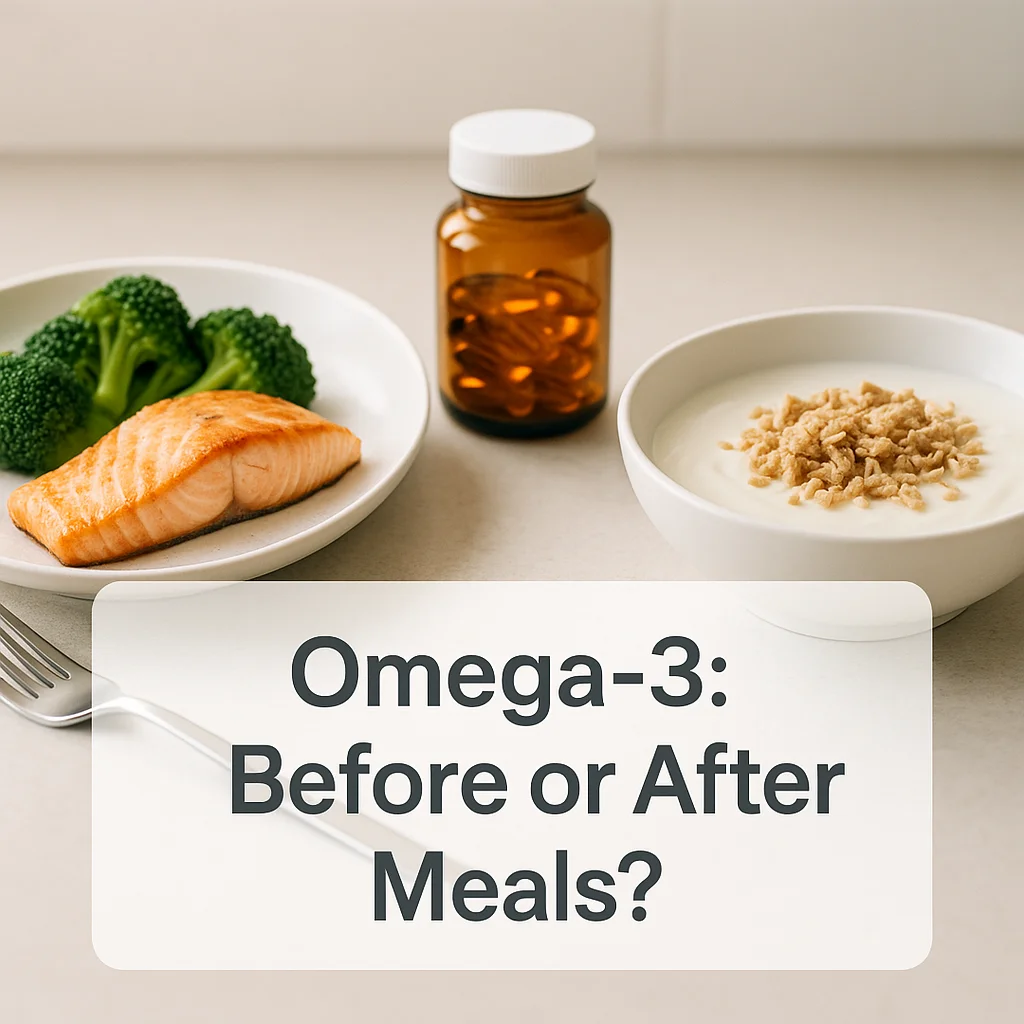
🥗 Omega-3: Before or After Meals?
✅ Key Takeaway
In most cases, it is beneficial to take omega-3 supplements with meals. It helps improve absorption and reduces the risk of digestive issues.
- Good for: Those looking to enhance nutrient absorption and reduce gastrointestinal discomfort.
- Caution: Individuals with specific dietary restrictions or digestive issues.
- Simple action: Take with a main meal containing some fat.
- Common mistake: Taking omega-3 on an empty stomach.
- Next step: Consider adding omega-3-rich foods to your meals for optimal benefit.
🧠 Why This Matters
Many people globally are interested in omega-3 supplements for their potential benefits related to heart health, brain function, and inflammation reduction. However, the timing of intake can impact effectiveness, making it a practical concern for achieving desired health outcomes.
🔬 What the Science Says
Omega-3 fatty acids are better absorbed when consumed with meals that contain fat. This is because fats stimulate the production of bile acids in the digestive system, which assists in breaking down and absorbing fats, including omega-3s. Evidence suggests that taking omega-3 with food enhances bioavailability. However, the evidence is mixed, as some studies show little difference in absorption related to meal timing depending on individual metabolic rates.
⚖️ Benefits vs Downsides
- Benefits:
- Improved absorption with meals.
- Potential enhancement of heart health.
- May support brain function.
- Associated with reduced inflammation.
- Downsides/Cautions:
- Potential for digestive discomfort on an empty stomach.
- Could lead to fishy aftertaste if taken without food.
- Individual variation in absorption rates.
- Possible interactions with medications (consult with a professional).
🎯 The Best Way to Apply This
- Choose meals with some fat content to pair with your omega-3 intake.
- Monitor your body's response and adjust the timing as needed.
- Experiment with taking omega-3 during different meals to see what works best for you.
- Add fatty fish, nuts, or seeds to your diet to naturally boost omega-3 levels.
- Review your current medications with healthcare providers to avoid negative interactions.
⏰ Timing, Portions, and Frequency
While specific dosing should be discussed with a health professional, omega-3 is generally most effective when taken with meals. Morning or evening meals with some fat content offer an excellent opportunity for optimal absorption. Use a "small handful" or "palm-sized" serving as a portion guide for omega-3-rich foods rather than strict grams for meal planning.
🤝 Best & Worst Pairings (Food Combos)
- Pairs well with:
- Fatty fish like salmon or mackerel.
- Avocado in salads.
- Nuts and seeds sprinkled over dishes.
- Be careful combining with:
- Excessively sugary foods.
- Foods high in saturated fats.
- High-caffeine beverages which may mask absorption.
🚦Who Should Be Careful
- People with digestive disorders.
- Individuals on blood-thinning medications.
- Pregnant or breastfeeding women (consult a clinician).
- If unsure, always ask a pharmacist or clinician.
🧩 Common Mistakes and Fixes
- Mistake: Taking omega-3 supplements on an empty stomach. Fix: Consume with meals containing fats.
- Mistake: Ignoring medication interactions. Fix: Consult a healthcare provider.
- Mistake: Consuming excessive omega-3s. Fix: Balance with other nutrients in your diet.
- Mistake: Only relying on supplements. Fix: Include omega-3 rich foods in meals.
- Mistake: Taking it sporadically. Fix: Create a regular routine with meals.
- Mistake: Overlooking allergic reactions. Fix: Monitor your body's response and seek advice if unsure.
📋 Quick Checklist
- Choose meals with fat to improve absorption.
- Avoid taking omega-3 on an empty stomach.
- Incorporate omega-3-rich foods into your diet.
- Consult with healthcare providers regarding medication interactions.
- Pay attention to your body’s response to supplements.
- Use a "small handful" as a portion guide for quantity.
- Pair omega-3 intake with fatty fish or nuts.
- Experiment with different meal timings.
- Avoid pairing with sugary or high caffeine foods.
- If symptoms or side effects occur, consult a clinician.
📌 Summary
- The best timing for omega-3s is during meals, especially with fats.
- Taking omega-3 supplements with a meal enhances absorption.
- Be cautious about medication interactions—consult a professional.
- Avoid taking omega-3 on an empty stomach to reduce discomfort.
- For optimal health, incorporate omega-3-rich foods into your diet.
- Those with specific health conditions should consult a healthcare professional.
- Monitor your body's response to omega-3 intake for best results.
- Start by pairing omega-3s with fatty foods for effective absorption.
- Simple changes can maximize health benefits.