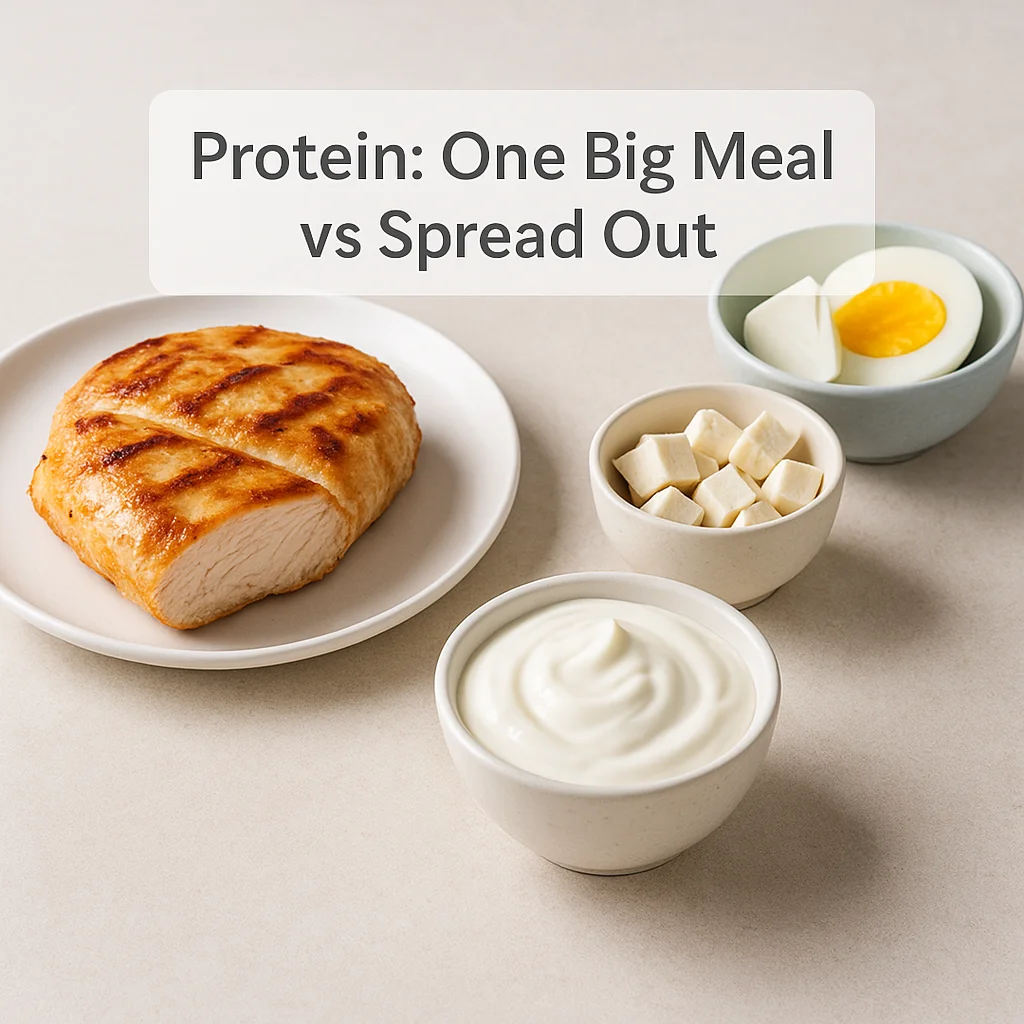
🥗 Protein: One Big Meal vs Spread Out
✅ Key Takeaway
In most cases, spreading out protein intake throughout the day is beneficial for muscle synthesis and satiety. However, having protein in one big meal can be suitable for certain dietary patterns. It depends on your individual goals and lifestyle.
- Usually good for: Active individuals needing sustained energy
- Who should be cautious: Those with digestive issues
- Best simple way: Include a protein source with each meal
- Biggest mistake: Consuming too much protein at once
- One practical next step: Plan meals to include balanced protein portions
🧠 Why This Matters
Protein plays a crucial role in muscle repair, immune function, and satiety. Balancing intake can help maintain energy levels, reduce cravings, and support healthy bodily functions. This is important as poor protein timing can lead to energy slumps or overconsumption of other macros, like carbohydrates or fats, to compensate.
🔬 What the Science Says
Spreading protein intake helps maintain amino acid levels in the bloodstream, which promotes muscle protein synthesis. Research suggests that optimal protein distribution aids in muscle building and repair. For those engaged in regular physical activity, this timing strategy can enhance performance and recovery. While evidence supports spread-out intake for most, individual differences mean that some might thrive on less frequent, larger protein meals. Digestive capacity and lifestyle should guide choices.
⚖️ Benefits vs Downsides
- Benefits of spreading protein intake:
- Supports muscle growth and recovery
- Helps control hunger and reduce overeating
- Stabilizes blood sugar levels
- May improve workout performance
- Cautions and downsides:
- Digestive discomfort from too much protein at once
- Possible nutrient imbalance if focusing only on protein
- Overemphasis on protein could neglect other macros
- May be challenging for those with busy schedules
🎯 The Best Way to Apply This
- Assess your daily protein needs based on activity level
- Aim to include a source of protein in each meal
- Choose high-quality protein sources like lean meats, legumes, and dairy
- Monitor your body's response and adjust if necessary
- Consult a nutrition professional if unsure of requirements
⏰ Timing, Portions, and Frequency
For most people, consuming protein at each meal – be it breakfast, lunch, or dinner – is effective. A portion could easily be visualized as the size of a palm, adjusting based on individual hunger and energy needs. This approach helps with stable energy levels and satiety.
🤝 Best & Worst Pairings (Food Combos)
- Pairs well with:
- Whole grains like quinoa and brown rice
- Leafy greens and salads
- Healthy fats like avocados and nuts
- Be careful combining with:
- Excessive saturated fats
- Too much added sugar
- Heavy, creamy sauces
🚦Who Should Be Careful
- Individuals with kidney issues, due to increased protein strain
- Those with digestive challenges, who may find large protein meals hard to digest
- People on protein-restrictive diets should consult a clinician
- If unsure, ask a pharmacist/clinician.
🧩 Common Mistakes and Fixes
- Skipping protein at breakfast → add eggs or yogurt
- Relying solely on animal proteins → include plant proteins
- Overeating protein in one meal → spread intake across meals
- Ignoring hydration → drink enough water with meals
- Not adapting intake post-exercise → include protein snacks
- Being inflexible with timing → adjust based on hunger cues
- Ignoring other macros → balance meals with carbs and fats
- Not tracking progress → use a food journal to monitor effects
📋 Quick Checklist
- Include protein at every meal
- Choose a variety of protein sources
- Pay attention to portion size
- Listen to your body's hunger and fullness cues
- Balance protein with carbs and fats
- Stay hydrated
- Adjust based on physical activity
- Avoid over-relying on protein supplements
- Monitor digestive comfort
- Consult a health professional if unsure
📌 Summary
- Answer: Spread out protein intake for most benefits
- Best method: Protein with each meal
- Key caution: Watch portions to avoid digestive issues
- Easiest habit to start today: Plan balanced meals ahead
- Consider digestibility and personal lifestyle in protein timing
- Balance is crucial; don't focus solely on protein
- Stay mindful of portion size and quality protein sources
- Aim for variety to meet overall nutritional needs
- Adjust based on individual activity levels
- Consistent protein intake can enhance overall wellness