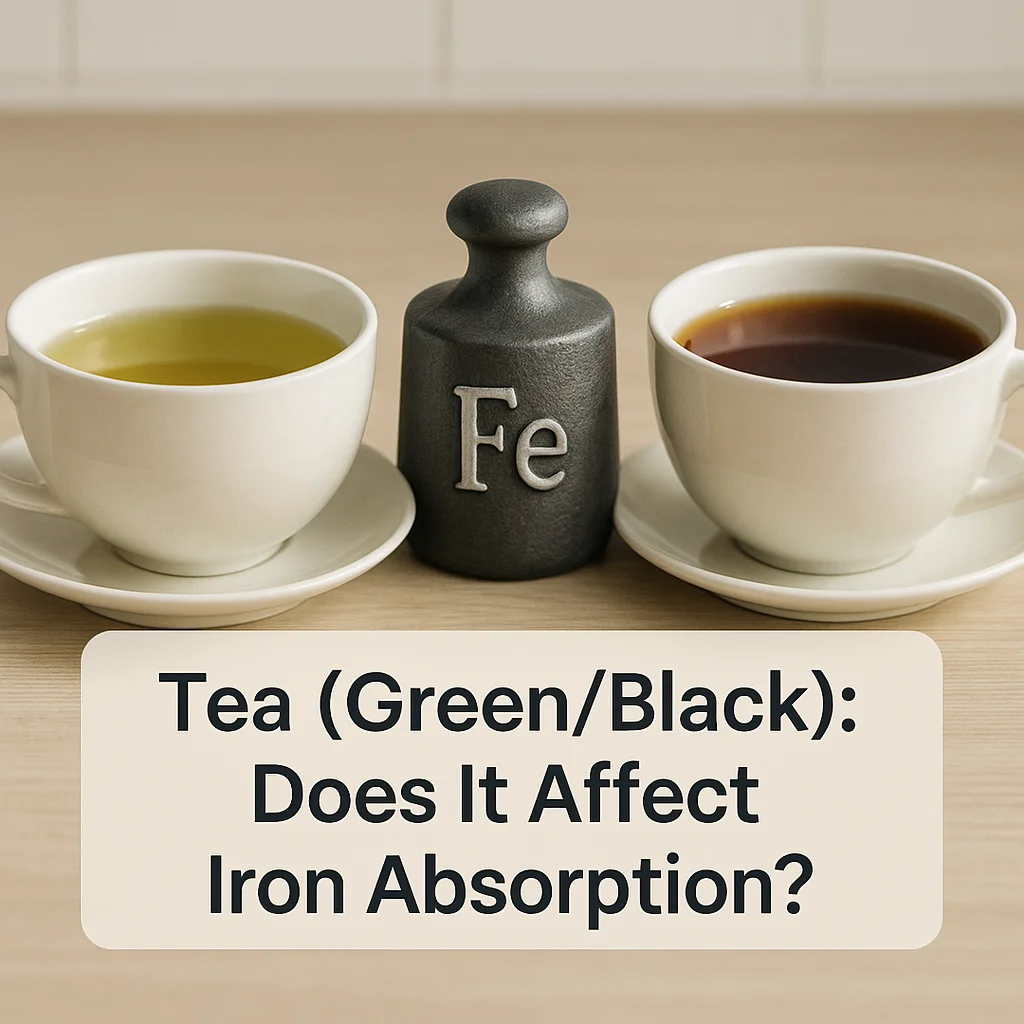
🥗 Tea (Green/Black): Does It Affect Iron Absorption?
✅ Key Takeaway
Green and black tea can affect iron absorption due to compounds known as tannins that bind with iron, reducing its bioavailability. This effect is more pronounced with non-heme iron found in plant-based foods. However, teas offer numerous health benefits when consumed appropriately.
- Generally beneficial for those seeking antioxidant support.
- People with iron deficiency or low iron intake should be cautious.
- Best consumed between meals to minimize iron absorption interference.
- A common mistake is drinking tea with iron-rich meals.
- Next step: Enjoy tea between meals if iron absorption is a concern.
🧠 Why This Matters
Iron plays a crucial role in transporting oxygen in the blood. Low iron levels can lead to fatigue and reduced cognitive performance. Since tea is a globally popular beverage, understanding its impact on iron absorption is essential for those at risk of deficiency, especially vegetarians and vegans who rely on non-heme iron sources.
🔬 What the Science Says
Tea contains tannins which can bind to iron and inhibit its absorption in the digestive tract. This primarily affects non-heme iron. While studies confirm this interaction, the degree of inhibition depends on several factors including tea strength, type, and timing relative to meals. Evidence is mixed, but the consensus suggests spacing out tea consumption from iron-rich meals can help manage this effect.
⚖️ Benefits vs Downsides
-
Benefits:
- Rich source of antioxidants.
- May enhance mental alertness due to caffeine content.
- Potentially supports heart health.
- Associated with improved metabolism.
-
Downsides/Cautions:
- Inhibition of non-heme iron absorption.
- Excessive consumption may lead to caffeine-related issues such as jitteriness.
- Can cause digestive discomfort in sensitive individuals.
- Possible interactions with medications—consult a pharmacist or clinician if concerned.
🎯 The Best Way to Apply This
- Consume tea between meals to mitigate its iron absorption inhibiting effect.
- Limit strong brews if concerned about tannins affecting iron uptake.
- Mix tea consumption with a diverse diet to balance potential downsides.
- Managed portions will help avoid excess caffeine intake.
⏰ Timing, Portions, and Frequency
For those concerned about iron absorption, enjoy tea in the morning or mid-afternoon or at least an hour before or after meals containing iron. Consider a cup-sized portion that feels comfortable, and enjoy moderation to avoid overstimulation from caffeine.
🤝 Best & Worst Pairings (Food Combos)
-
Pairs well with:
- Fruits like berries (rich in vitamin C that enhances iron absorption).
- Whole grains like oats, separate from iron supplements or meals.
- Nuts, as part of a snack rather than with main meals.
-
Be careful combining with:
- Iron supplements or iron-rich foods, especially plant-based sources.
- Vitamin C supplements directly to counteract tannin effects.
- Other caffeine sources to avoid jitteriness.
🚦Who Should Be Careful
- Individuals with diagnosed iron deficiency.
- Vegetarians and vegans relying primarily on non-heme iron.
- Those sensitive to caffeine or with digestive issues.
- If unsure, ask a pharmacist/clinician for personalized advice.
🧩 Common Mistakes and Fixes
- Drinking tea during meals → Switch to post-meal sipping.
- Consuming very strong tea → Opt for lighter brews.
- Pairing tea with iron supplements → Separate them by at least an hour.
- Using tea for hydration alone → Include water and other non-caffeinated beverages.
- Ignoring caffeine sensitivity → Try decaffeinated versions if needed.
- Relying solely on tea for health benefits → Adopt a balanced diet and lifestyle.
📋 Quick Checklist
- Enjoy tea between meals to lessen iron absorption impact.
- Aim for moderate tea strength to decrease tannin intake.
- Pair with vitamin C foods to aid iron absorption.
- Avoid pairing tea with iron-rich meals.
- Consider caffeine content and personal tolerance.
- Stay informed on potential tea-medication interactions.
- Incorporate diverse beverages into your routine.
- Seek professional advice if iron deficiency is a concern.
- Include other iron-enhancing dietary practices.
- Prioritize overall diet quality for better health outcomes.
📌 Summary
- Tea affects iron absorption, particularly non-heme iron.
- Best consumed between meals to reduce impact on iron.
- Moderate consumption for antioxidant benefits and caffeine content control.
- Exercise caution if iron deficient or vegan/vegetarian.
- Avoid strong tea with iron-rich meals.
- Balance tea intake with diverse dietary practices.
- Consider consulting with a health professional if needed.
- Enjoy the dietary balance for improved long-term health.